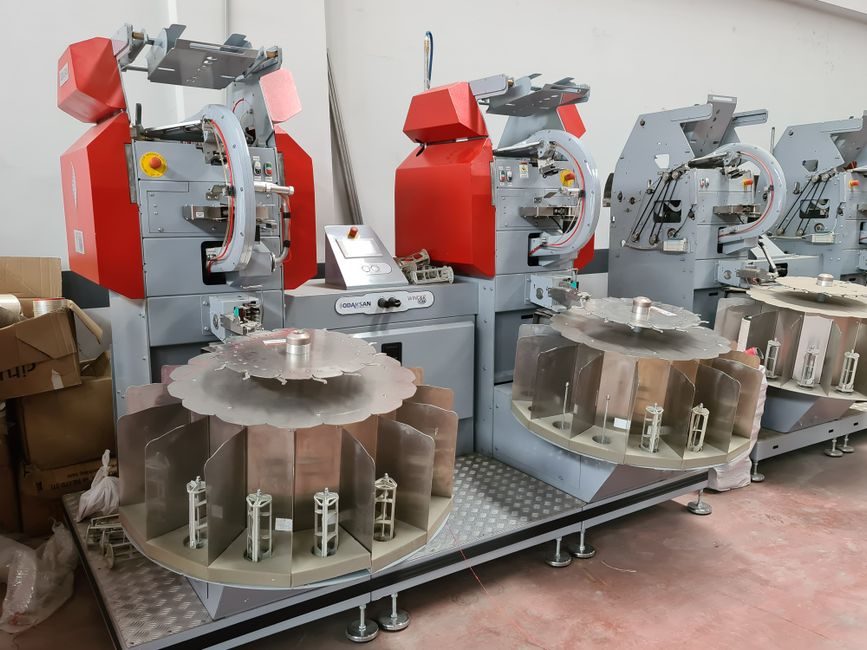
Shell core machines for foundries serving water-treatment OEMs typically run 2-25 kg shot weights with 400-1200 mm platen widths and 30-90 second cure cycles, with stainless-clad frames preferred where casting operators also handle demineraliser and pump housings [S1].
Water-treatment projects consume ductile-iron and stainless valves, pump volutes, strainer bodies and chemical-metering housings; the resin-sand cores that form the internal waterways in those castings are produced on either a hot-box or a shell-core bench, and the spec gates below line up the 2026 buyer's options [S1].
Why Water-Treatment Castings Drive Core-Machine Specs
Water-treatment valve bodies (DN50-DN600) and pump housings (1-12 inch ports) carry internal flow paths with 6-25 mm minimum wall sections, and those internal passages are formed by resin-bonded sand cores rather than machined, because machining internal cavities below ~40 mm diameter is uneconomic in grey or ductile iron [S1].
For a DN300 resilient-seated gate valve, a single body core typically weighs 4-7 kg; a DN600 double-eccentric butterfly valve body-and-disc core pair can run 12-18 kg combined; and a 6-inch end-suction pump volute core lands in the 6-10 kg band — these ranges set the minimum shot-weight floor for any shell core machine the foundry specifies [S1].
Foundries running a mixed water-treatment + general industrial book typically standardise on 5 kg and 12.5 kg stations so 80-90% of valves, strainers and pump bodies fall inside a single machine's envelope without retooling [S1].
Spec Gates: Shot Weight, Platen, Cure, Clamp
Shot weight is the first gate and is set by the largest core in the production mix — a 25 kg upper-capability machine covers most pump-housing work, but a 5 kg bench unit wastes resin on small strainer cores and burns more kWh per kilogram of finished core [S1].
Platen size dictates the largest core the machine can produce in one shot; a 700 x 600 mm platen handles DN400 valve body cores, while 1200 x 1000 mm platen is the working envelope for DN600 butterfly bodies and large pump-volute cores [S1].
Cure time at the resin manufacturer's target temperature of 200-260 °C is the productivity gate — a 30-45 second cure on a 5 kg core versus 60-90 seconds on a 12 kg core moves cycle time by 50-100% and dictates how many core machine stations a foundry needs to hit its daily tonnage [S1].
Clamp force and tie-bar clearance matter less for water-treatment cores than for engine-block work, but any core above ~10 kg still needs 15-30 ton hydraulic clamp to keep flash below 0.5 mm; flashing above that floor drives extra fettling on valve seats and pump eye diameters [S1].
Hot-Box vs Cold-Box vs Shell-Bench Architecture

Three architectures compete for the same water-treatment core work. The hot-box unit is the default for foundries running phenolic or furan no-bake cores up to 12 kg because the heated pattern (200-260 °C) gives the fastest cure; the cold-box core machine with amine-gas-cured phenolic wins on energy and pattern life but adds a gas-scrubber and amine-storage handling burden; the shell-bench / shoot-and-blow unit covers small cores below 2 kg used in chemical-metering housings and small valve bonnets [S1].
Energy draw per kilogram of cured core is a real differentiator: hot-box machines draw 0.4-0.6 kWh/kg from pattern heat alone, cold-box machines drop to 0.05-0.1 kWh/kg once amine gas replaces the oven, and shell-bench units with infrared pre-heat sit in the 0.2-0.3 kWh/kg band; for a 10 t/day foundry, that is roughly 5,000 kWh/day between architectures [S1].
Pattern life is the second axis — hot-box steel patterns last 80,000-150,000 shots before refurbishment, cold-box wooden or PU patterns last 20,000-50,000 shots, and shell-bench aluminium patterns last 100,000-200,000 shots; a foundry changing its mix twice a year is more sensitive to pattern life than a single-product line [S1].
Materials, Corrosion and Plant Integration
Foundries co-located with water-treatment OEMs or chemical-handling plants see chloride-laden and SO2-laden shop air, and standard mild-steel machine frames suffer visible rust within 6-12 months; 304 or 316 stainless-clad frames, or hot-dip galvanised frames with epoxy top-coat, extend service life to 5-8 years in the same service [S1].
Resin storage is a corrosion and fire concern in any foundry: phenolic resins carry flash points of 32-45 °C and require heated tanks (20-30 °C) plus nitrogen-blanketed transfer; the machine's resin tank, hopper and venting must be sized to drain back in under 10 minutes so a shift-end flush does not leave polymerised residue [S1].
Pneumatic blow pressures of 0.4-0.6 MPa are standard on shell-core units and tie into the foundry's 0.5-0.7 MPa compressed-air ring; if the plant runs an online water analyzer on its casting-cooling loop, expect to plumb a side-stream filter on the blow-air dew-point line so moisture-sensitive resin is not cured by steam spikes [S1].
Decision Matrix: Matching the Machine to the Work
For foundries dedicated to DN50-DN200 small valves and meter bodies under 3 kg core weight, a 2-3 kg hot-box or shell-bench unit at 6-8 kW connected load and 30-second cure is the economic fit; expect 200-400 cores per shift with a single operator [S1].
For foundries running DN200-DN400 medium valves and pump volutes in the 4-10 kg range, a 5-10 kg hot-box machine with 700-900 mm platen and 45-60 second cure is the working envelope; two stations cover 800-1,200 cores per shift and give the redundancy maintenance crews need [S1].
For foundries supplying DN400-DN600 large valves, big pump housings and bespoke chemical-plant castings up to 25 kg, a 12.5-25 kg hot-box machine with 1000-1200 mm platen and 60-90 second cure is the baseline; clamp force above 25 ton is mandatory to keep flash under 0.5 mm on thick valve-body sections [S1].
Foundries that already run heat treatment furnace capacity for austempered ductile iron (ADI) water-service valves should specify pattern heating zones matched to the ADI pre-heat cycle; mismatched cure windows cause core distortion when castings go back into the furnace at 850-900 °C [S1].
Failure Modes and Operator Footprints
The four recurring failure modes on water-treatment foundries' shell-core lines are: (1) blow-tube wear after 30,000-50,000 shots, which drives flash above 1 mm; (2) pattern-heater element burnout at 50,000-80,000 hours on hot-box machines; (3) amine scrubber breakthrough on cold-box units after 6-12 months; and (4) hydraulic seal failure on clamp cylinders after 4-6 years in chloride-laden shop air [S1].
Operator footprint is often underspecified: a 12.5 kg hot-box machine needs a 1.5-2.0 m wide bay, 1.8-2.5 m deep (including blow-head swing), and 3.5-4.0 m ceiling clearance for pattern change; the shell core shooter variant can shave 0.3-0.5 m off the depth if a side-loader is integrated [S1].
For an existing foundry considering a shell molding machine retrofit, the upstream sand-handling capacity is usually the binding constraint: a 12.5 kg core station draws 30-50 t/day of resin-coated sand, and reclaim lines under 5 t/h create sand-starved queues that defeat any cycle-time improvement at the core machine [S1].
Standards, Sourcing and What to Track Next
Water-treatment castings shipped into Europe face EN 12255-3 (design of water treatment works) and, where AWWA C110 / C153 ductile-iron fittings are the buyer's spec, foundry process capability must support C110 wall-class tolerances; buyers increasingly demand the foundry's shell-core machine is on a documented preventive-maintenance schedule, with shot-counters and pattern-shot logs on file [S1].
Track two signals going into Q3 2026: (1) whether the hot-box core shooter market continues to consolidate around 5 kg and 12.5 kg standard stations, since that trend rewards foundries already standardised on those shot weights; and (2) whether amine-gas cold-box retrofits keep their cost edge as energy tariffs reset across European and North-American foundries [S1].