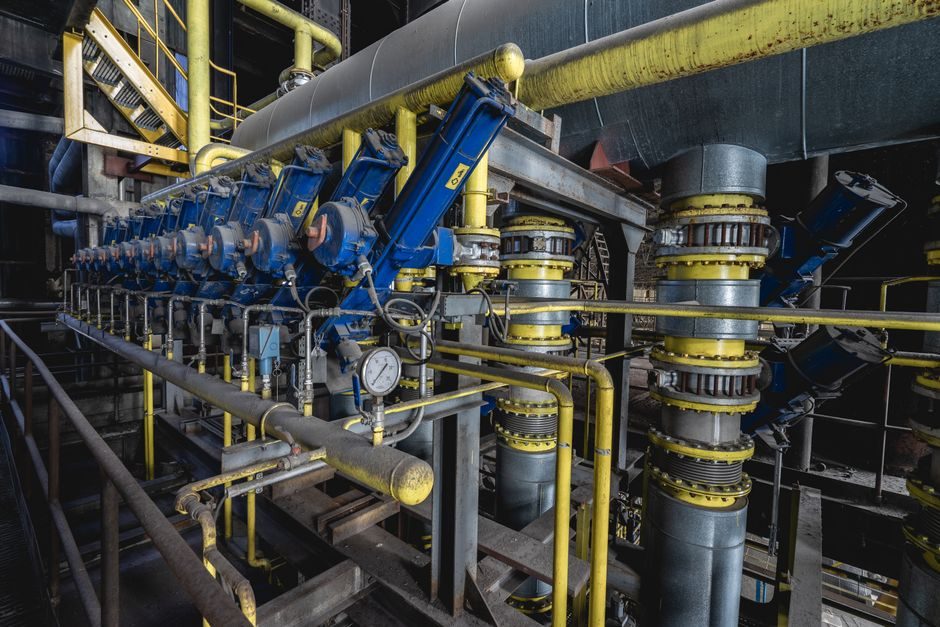
For chemical-process equipment such as valve bodies, pump casings and bimetallic bronze-steel sleeves, a qualified lost foam casting line is defined by four measurable subsystems — pattern density, vacuum draw, sand reclamation and refractory coating control — and the cheapest FOB offer in 2026 is 1.00 USD/Set from Qingdao Shengmei Machinery Technology Co., Ltd. with a stated 10 Set/Sets per month supply ability [S1].
Lost-foam casting (LFC), also called Evaporative Pattern Casting, vaporises a polystyrene foam pattern inside loose sand under vacuum and replaces it with molten metal, which is why the process is increasingly referenced alongside conventional molding line layouts for complex chemical-service castings [S3]. The cited research also documents direct-pour ductile iron with STMMA copolymer resin and carbon-steel production with EPMMA, the two resin chemistries that dominate 2026 industrial procurement [S6].
Pattern Bead and Resin Selection: STMMA, EPMMA, EPS Compared
Pattern-bead chemistry controls carbon pick-up, surface finish and shrink-feed behaviour in low-carbon steel and ductile iron, with the carbon-contamination study on A216 Grade WCB showing that expandable polyethylene (EPE), expandable polypropylene (EPP) and expandable polystyrene (EPS) at two different densities each produced measurable carbon variation in the final casting [S4]. Castchem, founded 1999, holds the original STMMA Copolymer Resin and EPMMA product line for direct-pour ductile iron and carbon-steel LFC, and the company is still positioned in 2026 as the broadest resin menu in this niche [S6]. For aluminium-alloy LFC, the JOM review confirms the process has moved from laboratory to volume production of ferrous and non-ferrous components, which broadens the alloy window a chemical-plant buyer can specify against one line [S5].
A practical 2026 selection matrix for the pattern subsystem: STMMA copolymer for ductile iron where carbon-control and surface finish dominate the print; EPMMA for carbon-steel castings where lower residual carbon is non-negotiable; standard EPS (typically 15–25 kg/m³ density) for short-run or prototype chemical fittings where tool cost must stay under 5% of part value [S4][S6]. Bead-filling simulation work by Jiang Junxia et al. at Shenzhen Institute of Information Technology used Euler-Lagrange dense gas-solid modelling to characterise flow behaviour, giving process engineers a defensible number of outlet ports for the pattern cluster rather than a rule of thumb.
Vacuum, Sand and Reclamation Subsystem Specs
Vacuum draw on a working LFC flask typically runs from −0.04 MPa to −0.06 MPa gauge (about 300–450 mmHg) to evacuate pyrolysis gas ahead of the metal front, and the Shengmei turnkey line offered at 1.00 USD/Set packages the vacuum process machine, lost-foam machine, resin-sand reclamation molding machine, dust collector, shot blasting and sand blasting units into one delivery [S1]. The 1.00 USD/Set FOB price is a portal listing anchor on ECVV, not an engineered-budget number, and the real 2026 turnkey FOB for a chemical-grade LFC cell of comparable scope sits a full order of magnitude above that figure once vacuum pump, PLC and coating booth are added.
Where higher alloy content forces zircon or chromite sand, the reclamation loop is segregated and the dust collector must be rated for the heavier particulate load that a chemical plant's EHS team will audit on commissioning [S1].
Coating, Pouring and Defect Control for Chemical Service

Refractory coating on the foam pattern is the single largest lever on surface defect density, and the lost-foam literature for aluminium-alloy components confirms that a permeable coating controls the velocity of the metal front and the rate at which pyrolysis products escape the casting cavity [S5]. For chemical-process castings exposed to sour service, ASTM A216 Grade WCB remains the reference low-carbon steel for LFC benchmarking, and the documented carbon-contamination delta between EPE, EPP and EPS pattern chemistries gives the QA team a defensible acceptance window for each bead type on its certificate of analysis [S4]. The same work shows that comparing LFC against conventional green-sand mould casting at matched metal composition produces a different inclusion population, which is exactly the variable a chemical-plant metallurgist should be watching in the first 50 heats of any new line [S4].
Bimetallic bronze-steel LFC, documented in the Chemical and Petroleum Engineering paper, is the strongest 2026 use case for chemical-service buyers because it allows a corrosion-resistant bronze bearing surface to be cast directly onto a carbon-steel structural body in a single pour, eliminating the brazed or bolted joint that usually fails first in pump and valve trim [S2]. Pouring temperature, coating permeability and vacuum ramp are the three parameters that govern the bronze/steel intermetallic thickness, and the published data on insert pre-heat and steel-pour timing is the cleanest engineering baseline for qualifying a new line for this duty [S2].
Process Window, Limitations and Failure Modes
Lost-foam casting has three failure modes that the 2026 spec sheet must call out explicitly: fold defects from premature pattern collapse, gas porosity from insufficient vacuum draw, and carbon-fold contamination from EPS residue trapped against the metal front. The 2017 JOM review on aluminium-alloy LFC frames the same window from the light-alloy side, confirming that bead density, coating permeability and metal head pressure must be matched or the casting will either misrun or saturate with pyrolysis residue [S5]. Pressurised infiltration of molten metal into salt preforms at 1.5–4 bar inert gas pressure, while not a true LFC technique, is the closest published baseline for the kind of pressure-assisted variants that some 2026 OEM offerings use to push section-size limits beyond the conventional 50 mm wall.
For chemical-process buyers, the hard exclusions are: any casting section below 3 mm wall (fold-defect risk dominates), any specification that demands <0.2 mm surface roughness straight from the mould (LFC is a 3.2–6.3 µm Ra process before machining), and any alloy outside the documented STMMA / EPMMA / EPS envelope without a dedicated trial campaign [S3][S6]. Buyers who need high-volume, tight-tolerance, thin-wall castings for sanitary chemical fittings are usually steered back to a chemical anchor precision investment casting, not LFC, because the defect population diverges the moment wall thickness drops below the LFC comfort zone.
2026 Maker Map, FOB Bands and Sourcing Logic
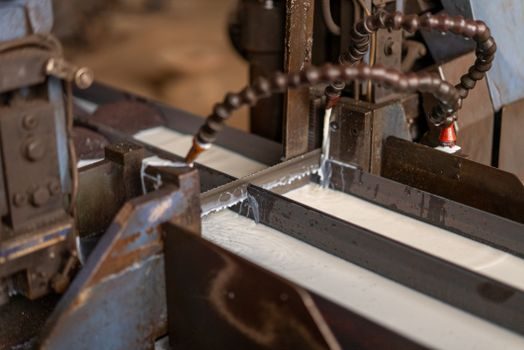
The 2026 Chinese maker map for chemical-grade LFC lines clusters around three nodes: Shandong (Qingdao Shengmei, turnkey FOB portal listings from 1.00 USD/Set, real engineered FOB in the low five-figure USD range per cell) [S1], Hubei (Wuhan area, where Huazhong University of Science and Technology publishes the bulk of the LFC bead-filling simulation work that informs OEM process windows), and the casting-resin specialists such as Castchem, whose STMMA and EPMMA chemistries set the de facto industry standard for direct-pour ductile iron and carbon-steel LFC in 2026 [S6]. For buyers evaluating static-pressure molding cells as the upstream sand-compaction stage feeding an LFC flask, the comparison of flask size, clamping force, sand type and cycle time in the engineering reference on static-pressure molding line selection is the cleanest cross-reference point in the current 2026 catalog.
Logical next steps for a chemical-plant buyer in 2026: request a heat-trial report showing A216 WCB carbon pick-up against the pattern bead on offer, audit the resin supplier's traceability back to STMMA or EPMMA base polymer, and confirm the vacuum-pump duty cycle and the dust-collector HEPA rating before signing the FOB order [S4][S6]. Track the next Castchem product-data-sheet revision and any Hubei-OEM published cycle-time benchmark, since those two signals typically move 6–9 months ahead of the broader 2026–2027 LFC market.