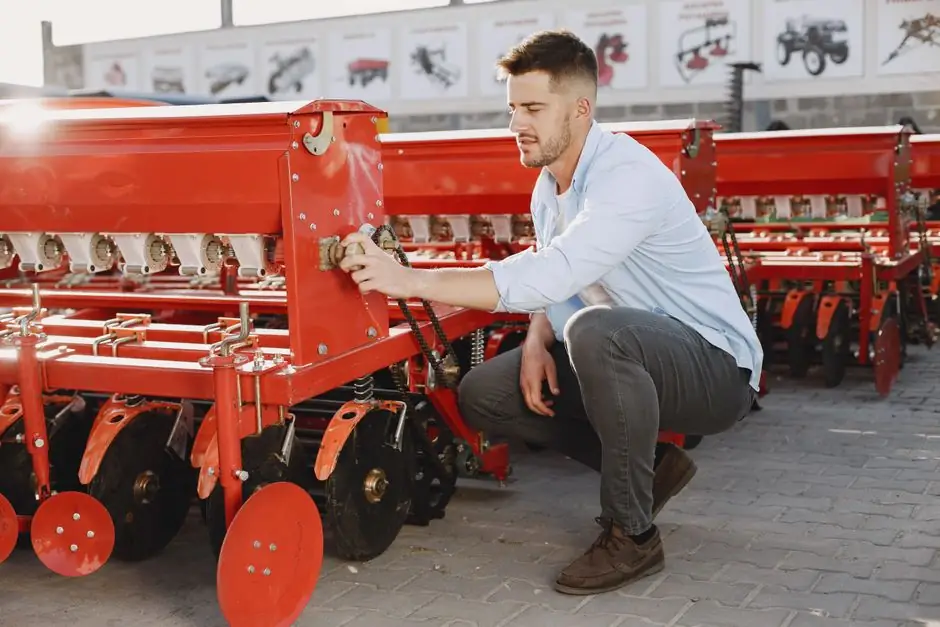
Selection of a shield-type machine for agriculture in 2026 is driven by three converging factors: digital soil mapping at sub-100 Ha scale, hydraulic fluid power rated for dusty and temperature-cycled field duty, and edge-AI compute modules that close the control loop on the implement itself [S1][S3][S4].
The term "shield machine" in an agricultural context is broader than its tunnelling namesake: it covers operator shields, PTO master shields, drive-shaft guards, soil-engagement housings, and the protective enclosures wrapped around edge processors and hydraulic manifolds on smart implements. Fabrication references in the U.S. market anchor to OSHA 1910.212 (general machine guarding) plus relevant ANSI/ASABE agricultural equipment standards for PTO and platform guarding [S2].
What a 2026 agricultural shield machine actually includes
An agricultural shield machine assembly typically bundles four functional blocks: a structural guard frame, a power-transmission shield, a service enclosure, and a sensor/compute housing [S2]. Each block carries a different duty rating, and selection mistakes show up first as corrosion at the guard-to-frame interface or as thermal cutouts on the compute module.
Structural guard frames handle rotating shafts, fan intakes, conveyor belts, and universal joints. OSHA 1910.212 sets the baseline for general-purpose guarding, with proper clearances, visibility apertures, and mounting provisions; ASABE standards then layer on the PTO-specific geometry (free rotation, full shaft coverage, allowance for telescoping and angular movement) [S2]. For comparison, a shield machine used in soft-ground tunnelling shares the rotating-component guarding logic but operates under far higher continuous hydraulic loads than an agricultural unit.
Service enclosures house the engine compartment, electrical controls, and battery boxes, and they are specified with drain provisions, gasketed seams for dust and moisture sealing, and removable access panels sized for in-field service without breaking the IP rating [S2]. The sensor/compute housing on a 2026 smart implement is a new block: it carries an edge AI module, typically an SMARC, COM Express, or COM-HPC compute board, and it must dissipate the heat that SoCs (NXP i.MX, AMD Ryzen Embedded, Intel Core, Renesas RZ) generate when running vision or soil-property inference at 10-30 W TDP [S4].
Selection criteria: load, environment, and the digital stack
Selection criteria for an agricultural shield machine in 2026 fall into three buckets: mechanical duty, environmental exposure, and the embedded compute / control stack. A common failure is to over-spec the steel and under-spec the compute enclosure, or vice versa [S2][S4].
Mechanical duty is set by the implement class. Tractor-loader work, plow lift, combine header tilt, and bale-loader actuation all run through hydraulic cylinders that convert fluid pressure into linear force [S3]. The control valve block above those cylinders is itself a shielding target, because hose-burst shields, valve-mount brackets, and lever guards are OSHA-relevant when an operator reaches across the stack [S2].
Environmental exposure is the second filter. Field equipment faces corrosive contact with fertilizers and crop chemistry, subzero winter to summer heat swings, dust ingestion, and physical impact from field debris [S2]. For a face shield used on a tractor cab, the polycarbonate specification differs from an industrial impact shield; the agricultural variant prioritizes UV stability and chemical resistance over high-mass projectile protection. Material selection for the guard frame itself typically goes carbon steel (hot-rolled or cold-rolled) for structural duty, with stainless or coated options where fertilizer corrosion is documented [S2].
The digital stack is the 2026 differentiator. Edge-AI modules for agriculture (SMARC, COM-HPC, OSM, nanoRISC, plus the Tria XRF RFSoC line) are specified when the implement runs vision-based weed detection, predictive maintenance, or soil-property inference locally, without a round-trip to the cloud [S4]. Pairing these modules with the mechanical shield requires attention to thermal path, EMI gasketing at the enclosure seam, and cable-gland IP rating. A close relative, the coding machine used in packaging lines, faces a similar enclosure problem, but its environment is clean indoor factory air, which is the opposite design point.
Fluid power as the hidden selection axis
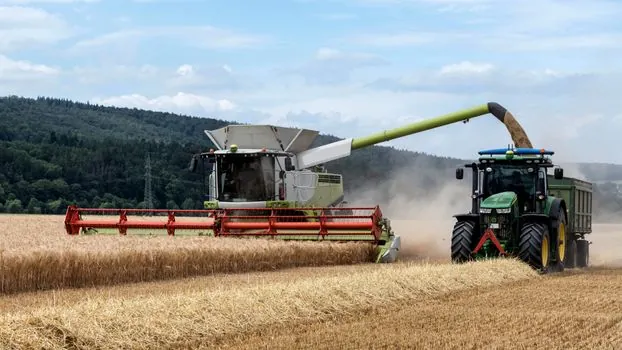
Hydraulic systems dominate agricultural shield machines because pressurized hydraulic oil is nearly incompressible, which lets a small pump deliver large forces to cylinders, motors, and valve manifolds with precise control [S3]. Pneumatics show up only on lighter-duty work such as seeding metering and grain conveying, where compressible air is acceptable.
The standard fluid-power stack on a 2026 agricultural implement is a gear, vane, or piston pump driven off the tractor PTO or engine, feeding a directional control valve bank, a pressure relief valve, and a reservoir with filtration. Hydraulic fluid in this service is formulated for the dust, temperature, and load envelope of the field, and it doubles as the lubricant and the heat-transfer medium for the valve block [S3]. Selection mistakes here propagate directly into the shield machine: an undersized relief valve lets a stalled cylinder pressurize a hose, and a hose-burst shield then becomes the only thing between the operator and a 200+ bar jet of hot oil.
For an implement weighing comparisons against other protection-rated equipment, the cutting machine class shares the same hydraulic-versus-pneumatic debate, with the trade-off inverted: cutting heads favour high-pressure hydraulics for shear force, while agricultural seeding favours pneumatics for gentle metering. The shielding requirements diverge accordingly.
Soil-scale digital mapping and what it asks of the shield
Digital soil mapping at field scale (under 100 Ha) feeds variable-rate fertilization, liming, and irrigation decisions, and it has matured into a machine-learning discipline built on the scorpan framework and covariates drawn from Sentinel-2, Landsat, MODIS, and UAV cm-scale imagery [S1]. Algorithms in active use include Random Forest and XGBoost, with cloud and GPU compute pipelines supporting the training stage.
For the shield machine on a smart implement, the consequence is a new enclosure block. The ML inference runs on edge modules (NXP, AMD, Intel, Renesas, or Qualcomm SoCs) rather than in the cloud, because the latency budget for a variable-rate actuator in a moving tractor cab is sub-second [S4]. The housing must therefore protect a 10-30 W SoC plus its LPDDR4/5 memory and NVMe storage from dust, moisture, vibration, and temperature swing, while still venting enough air to keep the junction temperature inside the SoC's spec window. Selecting a core machine reference architecture helps frame the SoC + memory + storage block, but the agricultural variant must also accept the wider -40 to +85 °C operating range that field service demands.
Spatial autocorrelation is the methodological caveat that the on-board system has to handle: standard cross-validation breaks the independence assumption, so performance metrics can be over-optimistic by 10-20% if the validation is naive [S1]. For implement selection, that translates into a recommendation to overspec the inference hardware by one thermal margin, so the unit still meets latency under realistic, autocorrelated input rather than optimistic lab benchmarks.
Standards, guarding geometry, and what is actually binding
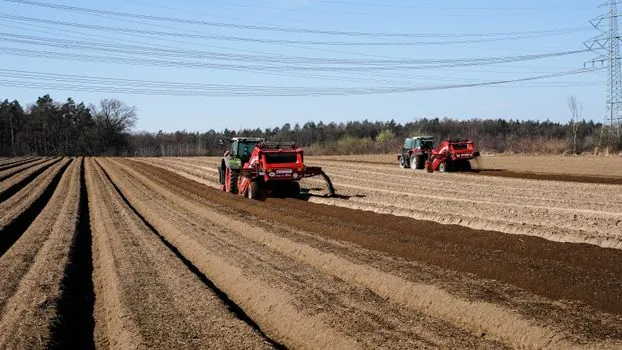
OSHA 1910.212 is the floor: general machine guarding for rotating components, with proper clearances, visibility apertures, and mounting provisions [S2]. For agricultural PTO shafts, ASABE standards add the geometry rules (free rotation of the guard, complete shaft coverage, allowance for telescoping and angular movement of the driveline) that the fabricator must build into the bearing integration and dimensional precision of the guard [S2].
Operator platform and access guarding is its own subset: railings, toe guards, ladder guards, walkway covers, and step covers, all rated for the load cases the field actually generates [S2]. When the implement is autonomous or remotely supervised, guarding geometry does not relax, but the safety-rated I/O on the edge module picks up additional SIL-class requirements driven by functional-safety standards, which the 2026 SoC families address through on-chip safety islands.
For OEM procurement, a workable decision matrix lines up four options against three criteria: (1) material (carbon steel vs stainless vs coated), (2) enclosure rating (IP54 vs IP65 vs IP66), (3) compute platform (entry SoC vs mid-range vs high-TDP COM-HPC), and (4) guarding standard (OSHA-only vs OSHA + ASABE PTO). On duty, carbon steel + IP54 + entry SoC + OSHA-only covers a basic trailer-mounted implement; stainless + IP65 + mid-range + OSHA + ASABE PTO is the spec for a high-value autonomous tractor add-on. A filling machine on a process line uses a similar matrix, but the regulatory floor is hygienic-design standards, not field-safety guarding, so the trade-off curves are different.
Failure modes and limits in field service
Three failure modes dominate agricultural shield machines in 2026. First, guard-frame corrosion at the guard-to-chassis seam, driven by fertilizer and crop-chemistry contact that the carbon steel alone cannot survive; the fix is stainless or coating selection at design time, not in the field [S2]. Second, hydraulic hose-burst events on the high-pressure side of the valve block, where a relief-valve set point that is 5-10% too high turns a controlled stall into a hose rupture; the shield only catches the spray, it does not prevent the rupture [S3].
Third, thermal cutouts on the edge-compute module inside the service enclosure. The SoC at 10-30 W TDP has to dump that heat into a sealed or semi-sealed enclosure, and dust fouling of the heat-sink fins drops the effective dissipation by 30-50% over a season [S4]. Specifying IP65 sealing plus filtered forced-air cooling is a working compromise, but the filter needs a service interval, and a missed interval returns the unit to thermal cutout within a few days of summer operation.
For comparison with a shield machine used in tunnelling, the agricultural unit sees a far lower continuous hydraulic pressure (typically 160-250 bar working pressure versus 300+ bar in slurry TBMs), but it sees a much harsher chemical and thermal ambient, so the corrosion and thermal design points dominate the selection, not the structural pressure rating.
Procurement signals to track through the rest of 2026
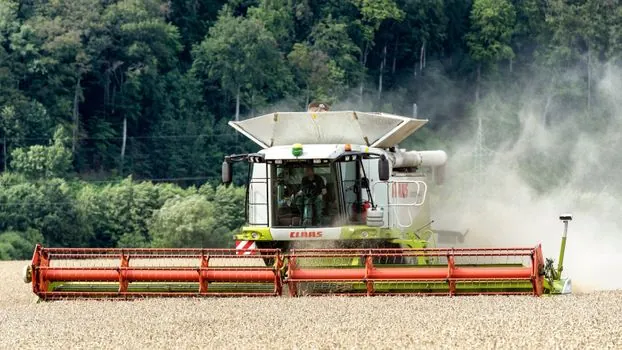
Three signals are worth tracking on the 2026 procurement calendar. First, edge-AI module announcements at the Embedded World 2026 cycle, where the Tria / NXP / AMD / Intel / Renesas / Qualcomm roadmaps are publicly compared, give a forward view on which SoC family will carry the next generation of smart-implement inference [S4]. Second, ASABE standard updates around PTO guarding geometry, which historically lag OSHA by 12-24 months and therefore set the next compliance horizon for fabricators [S2]. Third, soil-mapping benchmarks published through F1000Research and similar venues, which refine the latency and accuracy budgets that the on-board inference must hit [S1].
Related analysis: Order Picker Selection for Port Logistics: 2026 Spec Map.