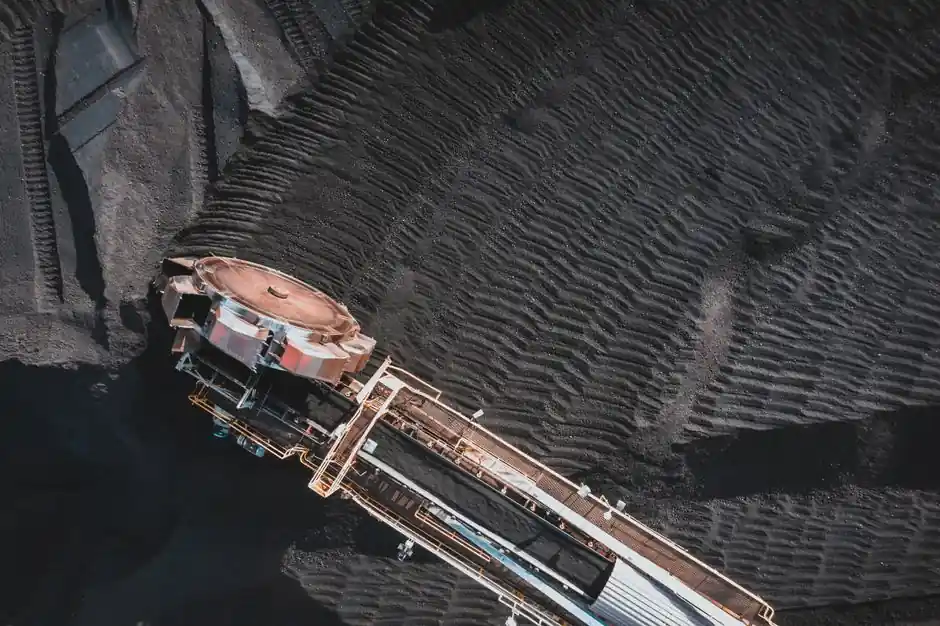
Shield machine selection for mining operations hinges on four binding constraints: rock or coal ground class, seam or tunnel depth profile, methane and dust zoning (ATEX / MSHA / IECEx), and the means to relocate the shield string between panels or drives. Longwall roof shields, double-shield TBMs, and shield haulers address very different parts of that problem set [S1][S5][S6].
Underground coal longwall systems are protected by self-advancing hydraulic roof shields that move forward as the coal face is mined, typically 1.0-1.5 m per shear cycle, while the entire face is governed by ATEX or Class I Div 1 certification rules for methane and coal-dust atmospheres [S1]. A longwall panel is not a static installation: the roof shields must be pulled, loaded, and re-set at a new face, and that transfer defines a separate machine class, the shield hauler [S5].
What a "shield machine" actually means in a mining context
Shield machines fall into three non-overlapping product classes. (1) Longwall roof shields (also called chock shields or self-advancing hydraulic supports) form a continuous canopy over the longwall face and carry the immediate roof load as the shearer passes; the canopy is rated to 7,000-12,000 kN support force per chock in modern heavy-duty faces, with 1.5-2.0 m shield advance per push. (2) Double-shield TBMs combine a gripper shield with a tail-shield segment erector, and are the preferred mechanised excavation method for long hydraulic tunnels in hard or mixed ground [S6]. (3) Shield haulers are low-profile diesel or electric wheel loaders used to relocate longwall shields from a finished panel to the next, and are sized to the heaviest shield in the fleet (up to 55,000 kg lift at 600 mm load centre in the GSH660D class) [S5]. The shield machine category page covers the cutterhead-bearing TBM/segment erector variant in detail.
Selection criteria that drive the spec, not the marketing
Five variables narrow the decision fast. Ground class: stable hard rock over 1,000 m cover favours a double-shield TBM, while a sedimentary coal seam at 200-600 m favours longwall with powered roof supports [S6]. Methane zoning: any face with measurable CH4 needs MSHA-approved or ATEX-certified electronics and intrinsically safe lighting, gas monitors, and face communications [S1]. Seam thickness and panel length: 2-6 m thick coal with 200-400 m panels is the longwall sweet spot, with shearer rated to the seam and shields matched to roof classification. Drive length and curvature: a 5-20 km straight hydraulic tunnel points at a double-shield TBM in the 6-10 m diameter class. Relocation logistics: a longwall operation is judged on its face-to-face transfer time, which is set by the shield hauler fleet capacity and the mine's roadway clearance envelope [S5].
On the hauler side, the binding numbers are lift capacity, machine height under the lowest roadway cross-section, and engine power for steep gate roads. Gainwell's GSH660D runs 9,940 mm long, 3,130 mm wide, with a minimum cab height of 1,980 mm to clear underground roadways, 230 HP (172 kW) of tractive power, and a 55,000 kg lift at 600 mm load centre; the smaller GSH150 weighs 14,000 kg unladen and is intended for lighter shield strings or room-and-pillar work [S5].
Comparison: longwall roof shields vs double-shield TBM vs shield hauler
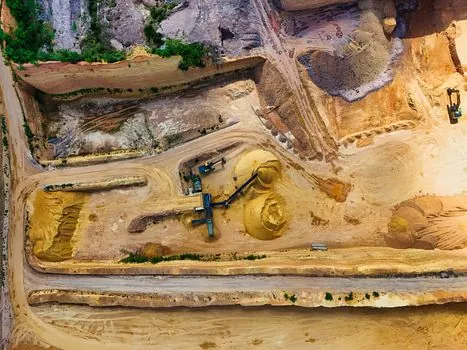
Against a fixed set of decision criteria, the three machine classes line up as follows. Application: longwall roof shields are built for a coal longwall face under a defined shearer; double-shield TBMs are built for a tunnel drive with segmental lining; shield haulers are built for the inter-panel move. Ground regime: roof shields handle weak immediate roof (coal, mudstone) with periodic weighting events; double-shield TBMs handle hard to moderately fractured rock with thrust via gripper shoes; shield haulers run on the mine's own gate roads and seam floor, not on the face. Power train: roof shields are hydraulic, fed by a nearby emulsion pump station; double-shield TBMs run a high-voltage electric cutterhead plus hydraulic thrust; shield haulers are typically diesel 4x4 with hydrostatic drive, sized 172-300 kW [S5]. Crewing: a longwall face runs with 4-8 operators on the shield bank; a TBM runs with 10-20 on the back-up; a shield hauler operates one machine per haul cycle. Standards and zoning: longwall faces require MSHA or ATEX M1/M2 for methane; double-shield TBMs in mining drives follow similar hazardous-area rules where gas is present; shield haulers must clear roadway envelopes and meet the mine's diesel exhaust dilution rules (CANMET-style or equivalent) [S1][S5].
Use cases and where each class fails
A longwall roof shield is the right answer when the seam is continuous, dips under 15 degrees, and the roof is a defined lithology that behaves predictably under load. It fails, quickly, in steeply pitching seams (over 25 degrees), in severe roof-fall-prone ground where canopy ratings cannot keep up, and in any seam thinner than about 1.5 m because the chock geometry and operator clearance disappear [S1]. A double-shield TBM is the right answer for long, straight hydraulic, water, or metro tunnels in hard rock where segmental lining can be erected inside the tail shield; it is the wrong answer for short drives (under 1-2 km) where the machine's capital cost cannot be amortised, and for mixed-face or running-ground conditions where a single-shield or EPB design would handle the ground better [S6].
A shield hauler is the right answer whenever a longwall panel ends and the next one must start; it fails when the gate road gradient exceeds the haulder's tractive limit, when roadway clearances fall below 1.8 m, or when the heaviest shield in the fleet exceeds the hauler's rated lift (55 t for the GSH660D, 40 t for the GSH640D, 20 t for the GSH150) [S5]. On the digital side, intelligent control and optimisation of shield attitude data is now a peer-reviewed research front, with the implication that future shield machine specifications will carry documented attitude-control accuracy figures rather than just thrust and torque [S2].
Standards, gas zoning, and the regulatory floor
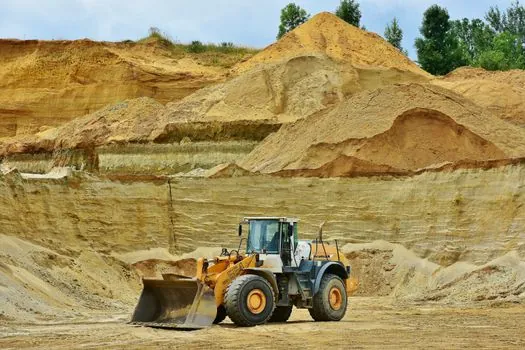
Any electrically powered equipment taken into a coal longwall face must satisfy hazardous-area certification. In the US, MSHA governs permissible equipment, with the relevant electrical equipment for the face typically required to meet Class I, Division 1 group D (methane) rules; in the EU, ATEX category M1 or M2 applies, with the underlying directive being ATEX 2014/34/EU for equipment and ATEX 1999/92/EC for worker protection. Intrinsically safe design, where the available ignition energy in any circuit is kept below the methane minimum ignition energy, is the default for face communications, gas monitors, and lighting per the same guidance [S1]. On the OEM side, full mining machine lines now pair diesel and electric platforms, with articulated and rigid haulers, wheel loaders, and excavators all offered as part of a multi-brand mining portfolio covering extraction through to load-and-haul [S3].
For non-process infrastructure around a mining site, high-density polyethylene (HDPE) geomembrane containment in the 1.5-2.0 mm (60-80 mil) thickness range is a common spec for process-water ponds of 5,000-20,000 m2 footprint, where chemical resistance, UV stability, and thermal-welded seam integrity set the design floor [S4]. This is adjacent to shield machine selection but matters for the mine's overall equipment list, since a process-water spill can shut the face down.
What to put in the spec sheet
For a longwall roof-shield purchase or rebuild, the spec sheet should call out shield capacity in kN per chock, shield advance stroke in mm, leg cylinders' bore and rod diameters, canopy and lemniscate link yield strength in MPa, the face electrical voltage (typically 3,300 V or 4,160 V), and the required ATEX / MSHA certification scope, plus a documented plan for intelligent attitude monitoring if the face is over 250 m long [S1][S2]. For a double-shield TBM, the binding numbers are cutterhead diameter, cutterhead power in kW, total thrust force, gripper shoe contact pressure in MPa, segment erector stroke, and the rated advance rate in mm/min for the expected ground [S6]. For a shield hauler, the spec should fix lift capacity at 600 mm load centre, machine minimum height for the lowest roadway section, engine power in kW, drive configuration (4x4), and the maximum gradient the hauler must climb loaded [S5].
A practical signal to watch is the convergence of intelligent shield attitude data with face gas data, since both are now in scope of published research and the OEMs that close that loop on a single dashboard will set the next reference platform for face safety and advance-rate optimisation [S2]. On the ground side, the appearance of new low-height, high-traction shield hauler models in the 14-48 t unladen class is the most visible procurement event in 2024-2026 [S5], and any longwall operation planning a panel move should benchmark against that capacity band rather than against older 30-35 t units. For guidance on parallel material-handling decisions such as the reducers that feed the conveyor and emulsion systems, the worm gear reducer selection for material handling ratios torque service factor reference covers the same selection logic at a different scale. The general mining dump truck page is the right companion when the question shifts from face-side equipment to load-and-haul.
Spec-level background on the components involved: face shield.