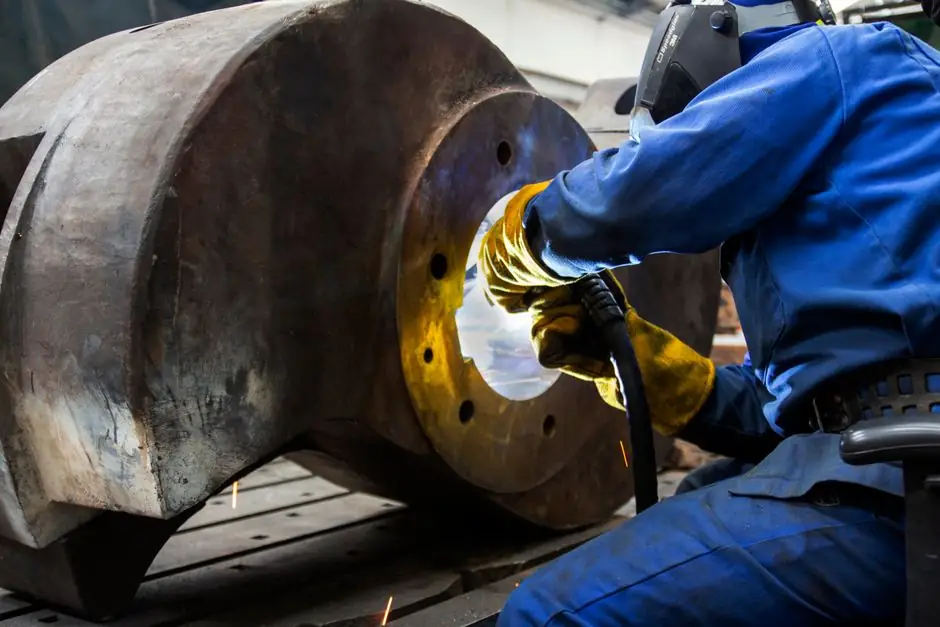
Shot blasting machine selection is governed by three coupled variables: workpiece geometry, the steel-shot grade loaded into the blast wheel, and the choice between a centrifugal wheel-blast architecture and a compressed-air blast architecture [S1][S4].
For industrial buyers, the decision typically narrows to a wheel-blast chamber for batches above roughly 1 m² per cycle, an air-blast cabinet for small or irregular parts, and a tumble-blast or roller-conveyor unit when the duty is continuous descaling of pipes, plates, or cylinders [S5][S6]. A correct match is defined less by the machine's nameplate and more by the Concrete Surface Profile (CSP 3 through CSP 8) the abrasive must produce in one pass [S3].
Wheel-Blast Versus Air-Blast: The Two Main Machine Families
Wheel-blast machines accelerate abrasive through a high-speed blast wheel and throw it by centrifugal force, which is the configuration used for large industrial cleaning, concrete surface preparation, and automotive parts cleaning because the throughput per kilowatt is the highest of any architecture [S1][S4]. Air-blast systems use compressed air to project the abrasive, which makes them the standard pick for precise metal cleaning, maintenance blasting, and confined-space work where a wheel-blast unit cannot physically fit [S1][S5].
The practical sizing threshold sits around component footprint: wheel-blast chambers dominate when the part is large or the production line is continuous, while air-blast cabinets dominate for small or intricate parts that need controlled, low-velocity impact [S6]. For peening duty, where controlled impact is used to increase fatigue resistance in aerospace, automotive, and heavy manufacturing, a separate shot-peening wheel or air nozzle is specified, with the media hardness, shot velocity, and Almen intensity chosen to deliver a verified compressive stress layer [S1].
Steel Shot Size and the CSP Profile It Produces
Concrete and steel profile work uses ten standard cut-wire shot sizes, but the production range is concentrated in six grades from S330 (SS1.0) to S780 (SS2.5), with each grade mapped to a specific removal duty and surface texture [S3].
The S330 grade is the lower end of the working range and is used for a light texture suitable for sealers or very thin coatings, while the S780 grade is reserved for thick coating removal and rapid aggregate exposure, leaving a heavy, aggressive profile [S3]. Mid-range grades S390, S460, and S550 cover the bulk of floor-prep work: S390 for thin coating removal and dirty concrete cleaning, S460 for medium-thickness coating removal and self-leveler preparation, and S550 for thick paint removal and heavy screed texture [S3]. This S330 to S780 grading system, originally formalized for steel abrasives, is the same metric buyers use to order replacement media, and it ties directly to the CSP 3 to CSP 8 surface profile range that coating manufacturers specify [S3].
Sizing the Machine: Capacity, Workpiece, and Throughput
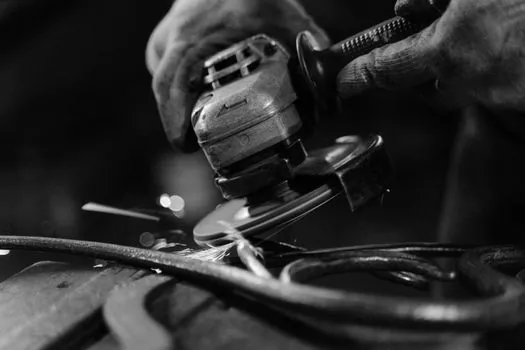
The capacity of a shot blasting machine is not a single number; it is the product of abrasive storage volume, blast wheel power, shot velocity, and the geometry of the workpiece being treated [S4]. Larger machines handle more extensive surfaces and hold more abrasive in the storage hopper, and more powerful blast wheels generate higher shot velocity, which raises the removal rate per square meter [S4].
Fine abrasives are paired with delicate surfaces, while larger and more aggressive abrasives are paired with heavy-duty applications, and the same machine can be re-rated by changing media [S4]. Complex or irregularly shaped workpieces need a higher-capacity unit because the blast stream must wrap into pockets and re-entrant corners that consume shot energy; flat plate or pipe work can be processed in a roller-conveyor or rotary-table unit with a much smaller chamber and lower installed power [S4][S5]. Buyers comparing two wheel-blast units of equal kilowatt rating should look at abrasive throughput in kg/min, blast-wheel diameter, and the number of wheels per chamber, because those three numbers define real-world output more honestly than the nameplate "capacity" figure [S4].
Machine Variants by Workpiece Geometry
Beyond the wheel/air split, the catalogue splits further by the way the part moves through the blast zone, and the variant must match the part shape, not the production target [S5][S6].
Tumble-blast machines batch loose small parts in a rotating drum, which is the standard solution for fasteners, castings, and small forgings; monorail and overhead-conveyor machines hang the workpiece and rotate it in front of fixed blast wheels, which suits engine blocks and gearbox housings; roller-conveyor machines pass flat plates, sections, and welded fabrications under a row of blast wheels, and rotary-table units index heavy stampings between blast and inspection stations [S5]. For large parts, high-capacity wheel-blast chambers are the default, while small or intricate parts route to air-blast cabinets, and pipe-specific machines use internal blast lances to clean the bore of steel pipe in one pass [S6]. A summary view of the common variants and their matched duty is laid out below.
Who Should Not Pick the Mainstream Wheel-Blast Unit
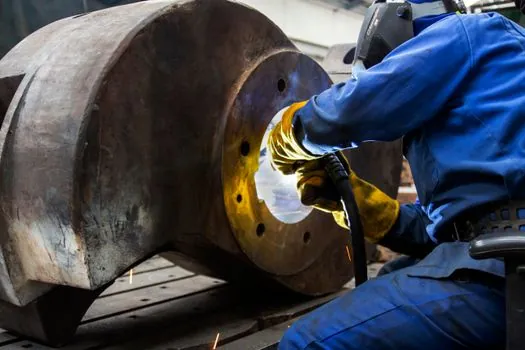
Wheel-blast is the default for most industrial work, but it is the wrong choice when the part has deep pockets, thin walls, or precision-machined surfaces that a high-velocity centrifugal stream would warp or over-cut [S1][S6]. Air-blast cabinets, suction-blast cabinets, or wet-blast systems are the right answer in those cases because they trade throughput for control and let the operator manage impact energy at the nozzle [S5].
Wheel-blast is also wrong for floor-prep work that needs a verified CSP below 3 or above 8, because the standard production range sits at CSP 3 through CSP 8, and finer or coarser work has to move to grinding or to a heavier custom shot [S3]. Buyers who only need to remove glue, carpet, hardwood, or tile from a floor should not buy a shot blaster at all: those materials are outside the process envelope, and the machine will clog and under-perform on them [S3]. For shot-peening duty in aerospace or heavy manufacturing, a generic wheel-blast unit will not meet Almen intensity requirements, and a dedicated shot-peening machine with calibrated media hardness and verified shot velocity is the only acceptable specification [S1].
Operational and Safety Constraints Buyers Must Weight
Modern wheel-blast systems are tuned to use the minimum quantity of shot needed to clean the surface, which reduces media consumption, controls airborne dust load, and limits the risk of damage to thin substrates [S1]. This "minimum-shot" operating point is also the cheapest steady-state, because the abrasive separator, dust collector, and shot-recovery auger are sized to that mass flow [S4].
Safety constraints sit at the enclosure, the dust side, and the operator side: the blast cabinet must be interlocked so the wheel cannot run with the door open, the dust collector must be sized to the abrasive mass flow, and the operator must wear approved respiratory and eye protection, with media selection tied to the substrate so a harder-than-substrate abrasive does not embed in the workpiece [S1][S2]. Steel-shot selection, in particular, is governed by chemistry, hardness, and size together, and the wrong mix will leave a contaminated surface that fails coating adhesion tests [S2][S3]. Buyers looking for adjacent process equipment can compare how this selection logic maps onto related disciplines in the food-grade roller chain selection guide and the stud welder lifespan guide, which use the same duty-to-spec reasoning.
Sourcing, Standards, and the Shortlist Logic

A defensible shortlist is built by writing down four numbers first: the largest single-part dimension in millimeters, the required CSP or surface cleanliness grade, the production rate in m²/h or pieces/h, and the available floor area including the dust-collector footprint [S4][S5]. Those four numbers eliminate roughly two-thirds of the catalogue on the first pass, because most variants cannot physically accept the part or cannot hit the throughput target [S5][S6].
From the surviving two or three candidates, the tie-break is media: a buyer who plans to use steel shot in the S330 to S780 range needs a wheel-blast chamber with a media-recovery system rated for that specific size, while a buyer who plans to use glass bead, plastic, or aluminum cut wire needs an air-blast or suction-blast system that will not break down the media [S2][S3]. For buyers who also need a cleaning standard for steel substrates, surface preparation grades such as Sa 2½ and Sa 3 (defined in ISO 8501-1) are the usual reference points, and the machine shortlist should be cross-checked against the achievable profile in one pass rather than the brochure maximum. Buyers who need a primer on the underlying machine family can read the shot blasting machine encyclopedia entry, and for applications where compressed-air projection is the right architecture, the sand blasting machine reference covers cabinet and pressure-vessel options. Wheel-blast wear parts, particularly the blast wheel itself and the control cage, are consumables, and the shot sleeve reference documents the alloy and dimensional envelope buyers should spec when ordering replacements. Two trackable signals to watch before purchasing: the OEM's stated abrasive throughput in kg/min at the rated CSP, and the published mean time between blast-wheel replacement hours, both of which dominate the lifetime cost calculation more than the purchase price [S4].