Walk-behind concrete shot blasters span 12.6-23 in (320-584 mm) blast widths at 11-23 HP, with mid-frame 15 HP / 12.6 in units covering the largest share of coating-removal jobs [S1]. Picking the right machine is therefore a four-axis problem: workpiece geometry, abrasive type, blast-mechanism architecture, and the target surface profile (CSP for concrete, SA for steel).
Get any one axis wrong and the machine underperforms: too narrow a blast width on a warehouse slab triples labor; too soft an abrasive on a hot-rolled steel plate leaves mill scale; too small a chamber on a structural H-beam causes re-feeding shadows. The rest of this map walks the criteria in the order a process engineer should actually apply them.
Two Architectures: Wheel Blast vs Air Blast
Wheel-blast equipment propels abrasive with a rotating bladed wheel and covers tumble blasters, table blasters, wire mesh belt blasters, spinner hangers, pipe blast systems, roller conveyor blast systems, and monorail wheel blast systems [S4]. Wheel-blast is the high-throughput choice for steel plate, forgings, and structural sections because the wheel can deliver 100+ kg/min of media without the air-supply bottleneck that constrains a nozzle [S4].
Air-blast equipment uses compressed air to push media through a nozzle and ships in cabinet, automated, blast-room, and portable formats [S4]. Air-blast wins on flexibility and gentle media handling: it can use fine glass beads, plastic media, or sodium bicarbonate on a substrate that wheel-blast would peen, and it is the only practical way to reach inside a fabricated weldment or a complex casting pocket.
A third niche is wet / slurry blasting, which mixes abrasive with pressurized water to suppress dust and lower explosion risk; the trade-off is heavy wastewater, mist that reduces visibility, and higher unit cost [S4]. For routine surface prep in a foundry or structural shop, wheel-blast dominates; for delicate, dimensional, or dust-sensitive parts, air-blast or slurry belongs on the shortlist.
Match the Machine Type to the Workpiece
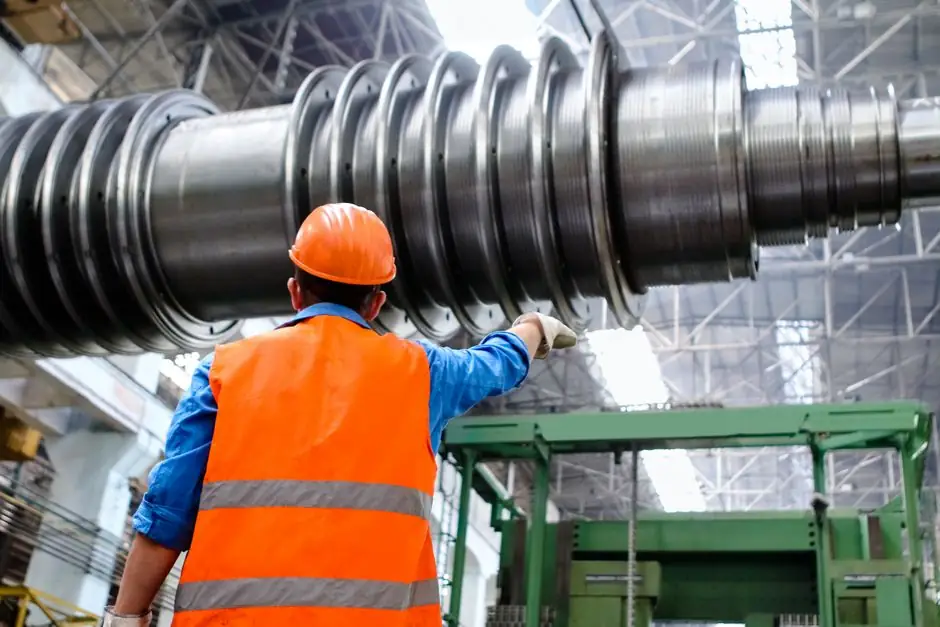
Large steel structures (H-beams, plates, prefabricated sections) require heavy-duty roller conveyors, larger blast chambers, and stronger blasting turbines because the part has to pass through multiple turbine zones to get full coverage on every face [S5]. Hanger-type machines suit smaller fabrications and heat-treated parts that must hang free of contact marks; rotary tables handle flat plate and disc-shaped parts efficiently. Tumble blast machines, including batch and continuous-drum designs, are the right answer for small loose parts such as castings, forgings, and fasteners where batch handling is acceptable.
For pavers, stone, and architectural concrete, dedicated paver and stone-product machines are built to absorb part impact without chipping edges; a generic roller-conveyor steel machine will crush them. For pipes and cylinders, pipe blast machines with internal ID-cleaning options reach surfaces a flat-table machine cannot touch. The mis-spec pattern is taking a general roller-conveyor steel plate machine and feeding it work it was not chambered for: a 0.5 m wide plate chamber simply cannot index a 2 m long H-beam without re-feeding.
For floor prep on concrete, the matched walk-behind units are 12.6 in / 15 HP class machines (e.g., S320E) for coating removal on mid-size projects, and 23 in / two-wheel machines (e.g., S600E) for very large warehouse and parking-garage decks where the wider blast pattern minimizes pass count [S1]. A smaller 8-10 in hand-held unit is correct for edges, vertical surfaces, and detail work but not for area production.
Abrasive Selection: Hardness, Size, Shape
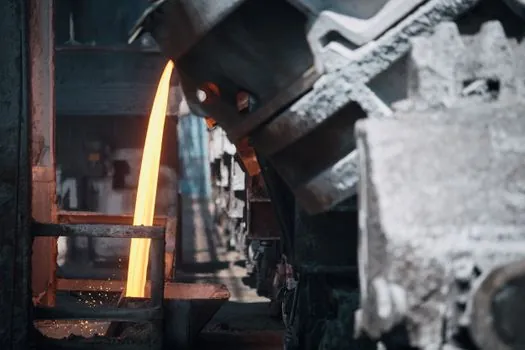
Choose an abrasive with moderate hardness so it can fracture and refresh its cutting edges rather than smearing or embedding in the workpiece; suitable hardness combined with good resilience keeps the abrasive re-circulating through the wheel or nozzle without rapid breakdown [S3]. Cut steel shot (round, S-230 to S-550 per SAE J444) and cut steel grit (angular, G-25 to G-80) are the workhorse media for steel descaling and coating removal, with hardness typically 40-50 HRC for shot and 60+ HRC for grit.
Aluminum oxide and silicon carbide serve harder substrates and aggressive profiling, while glass bead and plastic media are reserved for cleaning, deburring, or cosmetic finishes on softer metals where peening damage is unacceptable. On concrete, the abrasive feed (steel shot, often S-330) and shot size choice set the CSP (Concrete Surface Profile) between CSP 3 and CSP 9, and there are roughly 10 commonly stocked shot sizes for profiling work, each tied to a different profile range [S6].
Wrong abrasive is the second most common spec mistake: a steel-grit run on thin aluminum erodes the substrate, while a glass-bead run on heavy rust is wasted media and time. Match media hardness to substrate, media size to target profile, and media shape (round vs angular) to whether you want peening (round) or cutting (angular).
Power, Capacity, and the Throughput Math
Walk-behind concrete blasters segment cleanly by width and power: 8-10 in units run 5-9 HP for detail and edge work, 12.6 in / 15 HP (11 kW) is the mid-size workhorse, 16 in units step to ~17 HP, and the 23 in two-wheel class reaches 20-23 HP for very large area production [S1]. The HP-per-inch rule of thumb in this class is roughly 0.9-1.2 HP per inch of blast width; deviating well below that line means the machine will not hold profile on a heavy coating.
For a roller-conveyor structural steel line, the design drivers are part length (typically 6-12 m), part width (0.5-2 m), number of turbines (commonly 4-8 for plate lines, 6-12 for heavy section lines), and turbine power (7.5-15 kW per turbine, sometimes higher). Total connected load on a four-turbine H-beam line commonly lands in the 60-90 kW range, and abrasive throughput scales with total turbine kW rather than with conveyor speed. A common rule of thumb in wheel-blast design is 1 kW of turbine power per 10-15 kg/min of abrasive throw, depending on shot size and target profile.
Capacity also covers dust collection: a missing or undersized dust collector is the single most common reason a "fast" machine is slow on the floor. Match the collector airflow (typically 4,000-12,000 m^3/h for a mid-size walk-behind, far higher for a blast room) to the abrasive feed rate, and plan for HEPA or cartridge filtration when downstream coating or bonding requires a dust-free surface. The supporting line on a heavy conveyor machine routinely includes an after-filter, screw conveyors, and an elevator to return media to the storage hopper.
Surface Profile Targets: CSP for Concrete, SA for Steel
Shot blasting produces a measurable surface profile: CSP 3-4 (light) through CSP 8-9 (heavy) on concrete, and SA 2 to SA 3 (near-white metal) on steel, set by abrasive size, machine power, and travel speed [S1]. A profile that is too shallow fails coating adhesion; a profile that is too deep wastes media and can weaken thin-gauge steel or expose aggregate on a thin concrete overlay.
Travel speed is the operator's primary profile control: slower travel = deeper profile, faster travel = lighter profile. For a 12.6 in / 15 HP unit on a 30 mil epoxy, expect 200-400 ft^2/hr at CSP 3-4; double-cut passes or slower travel push it to CSP 6-7 at half the area rate. Specifying the machine without also specifying target CSP, mil coating to be removed, and acceptable production rate is the third classic spec mistake.
For steel prep to SSPC-SP10 / NACE No. 2 (near-white metal), a wheel-blast conveyor system with cut steel shot or grit at 40-50 HRC is the standard choice, and most production lines are rated to deliver SA 2.5 at a stated m^2/hr. Buyers should request documented profile readings (e.g., ISO 8503 roughness comparator or Testex press-O-film) rather than trust nameplate throughput numbers.
Safety, Standards, and Integration
Any shot blasting machine integrated into a production line must be paired with engineered dust collection, abrasive return, and noise control; wheel-blast units in a chamber routinely run 85-95 dB(A) and require hearing protection and acoustic enclosures for sustained shifts. Electrical controls on automated lines should follow IEC 60204-1 for industrial machinery safety, and any equipment used in a flammable dust atmosphere (e.g., aluminum shot, magnesium) needs ATEX or IECEx-rated enclosure and dust-tight conveyor sealing per IEC 60079. [S5]
Operators need supplied-air respirators (NIOSH-approved abrasive-blasting hoods) when the dust collector is bypassed for service, and the work area must be guarded against rebound per OSHA 1910.94 for abrasive blasting operations. Buyers should confirm that the OEM's control package includes emergency stop, interlocked chamber doors, and abrasive-flow interlocks; a unit without these will fail the CE / UL machinery safety review in most jurisdictions.
Who Should NOT Pick the Common Walk-Behind
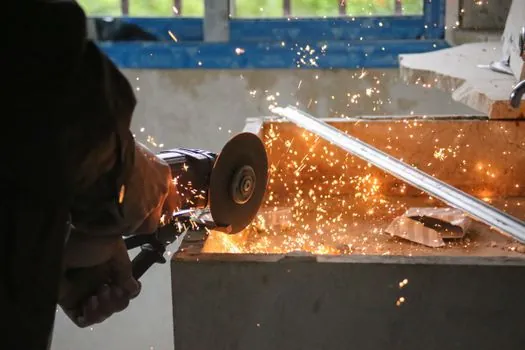
The 12.6 in / 15 HP walk-behind is the default recommendation, but it is the wrong pick for at least four buyer profiles. First, structural steel fabricators producing H-beams over 6 m long should not use a walk-behind at all and must move to a roller-conveyor wheel-blast line. Second, foundries running high-mix small parts (under 50 kg each) get better economics from a tumble or spinner-hanger machine than from any walk-behind. Third, food, pharmaceutical, or precision-machined-parts shops where ferrous contamination is unacceptable should pick a wet-blast or non-metallic-media system, not a steel-shot walk-behind. Fourth, vertical surfaces, inside corners, and detail-edge work need a smaller hand-held unit or a manual air-blast cabinet, not a wide walk-behind that cannot reach the geometry. [S1]
Selection Checklist and Sourcing Signals
A defensible spec sheet for a 2026 shot blasting machine buy should list, in order: (1) target substrate and surface profile, (2) part dimensions and weight per piece, (3) hourly throughput in m^2/hr or kg/hr, (4) abrasive type and size, (5) machine type (walk-behind, roller conveyor, hanger, rotary table, tumble, air-blast cabinet), (6) blast width, turbine count, and total connected kW, (7) dust collector airflow and filtration class, and (8) applicable safety standards (IEC 60204-1, OSHA 1910.94, ATEX zone rating if applicable). [S5]
Trackable signals for the next 6-12 months include: published case-study throughput data from conveyor-line OEMs, any tightening of dust-emission rules under regional air-quality permits, and the migration of more walk-behind lines to lithium-ion / battery drive for indoor jobs where exhaust is a concern. A 2026 buyer should also compare the walk-behind class against the related shot blasting machine and sand blasting machine architectures on the same spec axes before signing a PO, and review how the chosen abrasive flow integrates with any upstream core machine or cutting machine cells in a foundry or fabrication line.
This topic is covered further in Pneumatic Cylinder Installation: A Spec-First Field Guide.