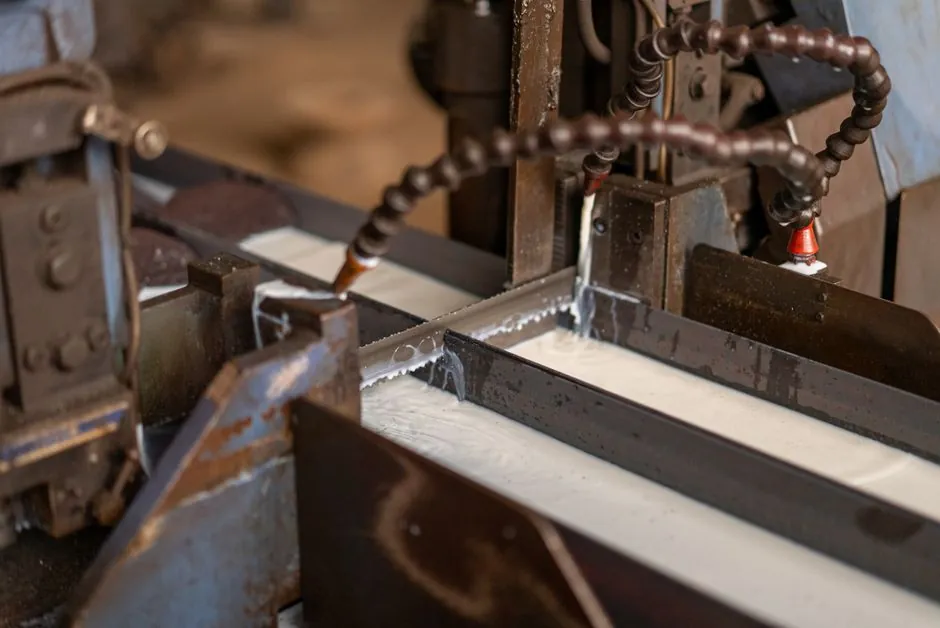
Industrial shell core machines specified for HVAC casting cells are typically dual-station, gas- or electric-heated units with 5-10 kg per-shot core weight, 12 kg maximum shooting capacity, and 4 bar blow pressure at the injector [S8].
Resin-coated silica sand is shot into a pre-heated core box held at 200-280 C, the box rolls 180 degrees to dump excess sand back to the hopper, and the residual shell cures in 30-120 seconds before ejection, with no separate furnace baking step [S6][S2].
Where HVAC Foundries Actually Use Shell Core
HVAC component foundries cast iron and steel valve bodies, pump housings, compressor covers, and large rectangular ductile-iron manifolds, all of which use internal sand cores to form the flow passages, and shell cores are the default for cores in the 5-10 kg range because the cured shell is rigid enough to survive handling into a green-sand or no-bake mold [S1][S8].
The process is a hot-box variant: resin-coated sand enters a heated tool, the heat polymerizes the phenolic or furan resin skin, and the cured hollow shell is ejected while still hot. For HVAC work, this matters because the internal passages in a 6-inch cast iron globe valve or a 4-inch pump volute cannot be machined, they must be cast near-net, and a shell core's dimensional accuracy and surface finish (typically 100-250 Ra micro-inch as-shot) eliminates most hand grinding of the flow path [S1].
Cycle, Platen, and Core Weight Window
The published cycle window for industrial shell core machines is 30-120 seconds per shot, with no furnace baking required, because the cure energy is embedded in the tool itself [S6]. The common platen sizes for HVAC work sit in the 24 by 42 inch range, as seen on B&P SF10A rebuilds offered through the US secondary market, with a 30 lb (about 13.6 kg) upper-bound core weight on the larger SHALCO U-180 and U-900 frames [S4][S5].
Core-shooter sizing on HVAC cells is driven by three hard numbers: core weight, parting direction, and platen electrical load. A horizontal-parting, fully automatic shell core shooter with 5-10 kg core weight, 12 kg shooting capacity, 4 bar blow pressure, and electric core box heating is the standard build for HVAC component work [S8]. For comparison, cold-box cells on the same HVAC line use a 30-liter Gaylord SATB30 with MeF (methyl-formate) gassing and Siemens T1315 PLC controls, but they trade cycle time for tooling cost: a cold-box core machine has a more expensive gas-generator room and a more complex amine scrubber than a shell core machine's gas-fired platen [S4].
Selection Criteria for HVAC Buyers
Four decision criteria separate HVAC shell core machine bids in practice: core weight envelope, platen heat source, automation level, and sand reclamation compatibility. A spec-by-spec comparison is the fastest way to filter a quote stack: [S3]
Criterion 1, core weight: HVAC valve and pump work sits in a 2-10 kg window, so a machine rated to 10 kg with a 12 kg headroom margin covers the bulk of the catalog. If the line is heavy on large rectangular ductile-iron manifolds, jump to the 20-30 lb class, which is the SHALCO U-180 / U-900 range [S5]. Criterion 2, platen heat source: gas-fired platen (natural gas or LPG burner) heats faster and recovers from cold start in 8-12 minutes, while electric platen (cartridge heaters plumbed into gun-drilled plates) is cleaner and preferred in foundries with strict combustion emissions caps. Criterion 3, automation: dual-station machines cut cycle by overlapping cure and sand-fill, which is why they are the default for HVAC cells running two different core patterns back-to-back [S2]. Criterion 4, sand reclamation: shell core sand is resin-coated, so it does not feed a green-sand loop; the foundry needs a separate attrition reclaimer or a buy-back arrangement with the resin supplier, and a machine that tilts and returns excess sand to the hopper (rather than dumping it as waste) typically saves 15-25 percent of coated-sand consumption per shift [S6].
Options Side-by-Side for HVAC Cells
Three machine classes compete for HVAC core work, and a side-by-side check is the cleanest way to pick. Shell core machines (5-30 lb, gas or electric platen, 30-120 s cycle, no amine gas) suit the majority of HVAC iron castings, especially valve bodies and pump volutes in the 2-10 kg range. Hot box core machines share the heated-tool principle but use a different resin system and are often run on the same dual-station frame, which is why Sinto and EMI list hot box, warm box, inorganic, and shell core on the same equipment platform [S2][S3]. Cold box core machines, by contrast, use a phenolic-urethane binder hardened with TEA or MeF gas at room temperature, which means no platen heat but a separate gas generator, a gassing enclosure, and an amine scrubber; for HVAC work, cold box is the right pick only when the core geometry is too complex or too thin to survive a shell cure [S4][S7].
For an HVAC line running 5-10 kg valve cores, 4-12 bar blow pressure, electric or gas platen, dual-station rollover, and PLC-controlled cure, a shell core machine is the lowest-energy, lowest-auxiliary-cost path. For thin-wall compressor cores under 2 kg, the sand-fill mechanics of a shell tool are wasteful, and a cold box cell is the better fit. For cores over 30 lb (13.6 kg) the spec starts to drift into the SHALCO U-900 class, which sits in a different equipment footprint and PLC architecture.
Operating Limits and Failure Modes
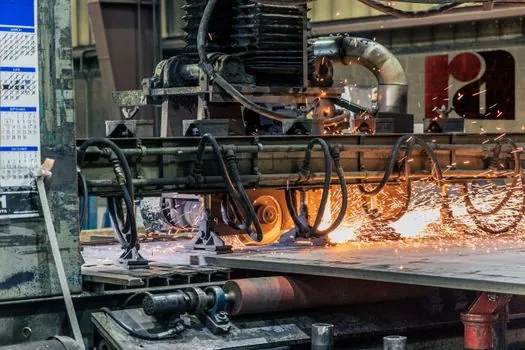
Shell core machines have three operating limits that bite HVAC foundries. First, platen temperature: phenolic resin-coated sand cures in a 200-280 C window; below 200 C the shell stays soft, above 300 C the resin burns off and the core surface goes glassy and brittle. Second, blow pressure: 4 bar is standard, but high-density cores (over 10 kg of compacted sand) often need 5-6 bar to fill thin sections, and pushing past 8 bar erodes tooling vents [S8]. Third, sand coat quality: resin-coated sand has a finite bench life (typically 3-6 months at 20 C) and absorbs moisture; wet sand produces steam blows in the shell, which look like surface craters on the finished core and lead to veining defects in the casting.
Failure modes to spec against on the buy side include platen heater burnout (gun-drilled plates allow heater replacement without plate machining, and rebuilt SHALCO U-180s with gun-drilled heater plates are a common path), PLC obsolescence (newer rebuilds use Allen-Bradley CompactLogix to replace legacy relay logic), and gas-system leaks on dual-gas fired units (look for rebuilt units that ship with a leak-test certificate) [S4].
Standards, Sourcing, and HVAC-Specific References
Shell core machines are not governed by a single product standard; they fall under general foundry machinery safety (ISO 12100 for risk assessment, IEC 60204-1 for electrical equipment of industrial machines), with the actual core-sand chemistry covered by resin-supplier data sheets. For HVAC iron castings, the downstream standard chain is ASTM A48 for gray iron, ASTM A536 for ductile iron, and ISO 1083 for spheroidal graphite cast iron, but those are casting standards, not machine standards. [S3]
Sourcing for HVAC cells runs through three channels: OEM new (Sinto / SHALCO, EMI, B&P), OEM rebuild (FL Sales, World Equipment & Machine Sales for SHALCO U-180s with new CompactLogix controls), and the secondary market (Machine Hub lists 36 active shell core machine listings, 35 in the United States, with 31 in Ohio, 4 in Virginia, 1 in Michigan; SHALCO leads at 11 listings, followed by Dependable Foundry at 9, Redford-Carver at 4, B&P at 3, and Appleton at 1) [S4][S5]. For an HVAC foundry comparing capital cost, a rebuilt U-180 typically lands at 20-30 percent of new price and ships in 8-12 weeks versus 26-40 weeks for a new build.
Trackable next nodes for HVAC shell core procurement: monitor Sinto America's SHALCO product page for 2026-2027 model refresh announcements, watch the Machine Hub used-equipment index for U-180 and U-900 inventory swings (a 10-listing move in a quarter signals a US foundry consolidation), and confirm coated-sand supply contracts before commissioning a new cell, since HVAC-spec resin-coated sand with phenolic or furan binder is a constrained category with two main Asian and two main North American suppliers.
Component reference pages worth checking: shell core machine, shell core shooter, and shell molding machine.
Background reading: Linear Module Selection for Automotive Production: Drive Type, Accuracy, Load.