A cold-chamber shot sleeve in aluminum die casting typically runs 20,000-30,000 shots before the inner bore, especially under the pour hole, wears past service limits [S6]. The single biggest cost driver is not the sleeve blank itself but the production stoppage while a hot, alloy-soaked cylinder is pulled, swapped, and re-bored on a cold machine.
Three field-proven levers extend that interval: thermoregulated envelopes with replaceable inner liners, bore welding of the worn pour-hole zone with W. Nr. 1.2367, and full reconditioning programs run by independent tooling shops. The mechanical baseline remains H-13 / W. Nr. 1.2344 hot-work tool steel, nitrided for surface hardness [S1][S4].
Where a shot sleeve actually fails
Most premature failures are localized: the pour-hole zone washes out long before the rest of the bore is spent, because that region sees the highest thermal load and direct impingement from the ladle pour [S4]. In horizontal cold-chamber machines, the front of the sleeve also takes erosion from the advancing plunger tip, while the rear ride sees stress cycling where the plunger reverses direction.
Castool documents the failure pattern as worn surface under the pour hole even when the sleeve's mechanical integrity is still sound, which is exactly why additive-style repair beats scrapping the assembly [S4]. A separate academic study on horizontal aluminum shot sleeves tracked the same failure map and found surface treatment, not base steel chemistry, is usually the limiting factor [S9].
Liner and material options on the table
Standard H-13 (W. Nr. 1.2344) sleeves remain the workhorse, but W. Nr. 1.2367 offers better high-temperature yield strength and superior nitriding response, with higher-hardness nitrides that resist heat checking [S4]. Copromec markets matched sleeve and plunger tip sets in certified materials, claiming more than 50% lifetime gain when the pair is run together rather than mixed [S5].
HTS's patented integral liner, used inside a thermoregulated envelope, averages 20%-40% longer life than a conventional 1.2343 sleeve, and the envelope itself is kept on the machine while only the liner is swapped, eliminating full sleeve replacement [S2]. The snap-ring design from Castmoulds pushes individual inner cores to 25,000-30,000 cycles before they need to come out, with the outer shell staying in place indefinitely [S6].
Reconditioning versus new: what the numbers say
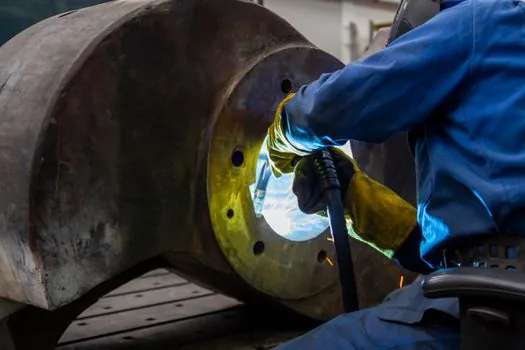
Independent reconditioning routinely returns up to 25% more shots than a new sleeve at up to 50% cost savings once inventory, storage and shorter downtime are factored in [S8]. Bore welding is more aggressive: up to 3 mm of damaged W. Nr. 1.2344 stock is removed from the bore, a 3 mm continuous layer of W. Nr. 1.2367 is deposited, then the sleeve is annealed, re-machined, polished to a 3 RMS surface finish and re-nitrided [S4]. In many cases the rebuilt sleeve out-lasts the original [S4].
Over five replacement cycles, HTS reports up to 60% lower sleeve cost for plants that move to thermoregulated envelopes with replaceable inserts, with the largest savings landing on the fourth and fifth change-out [S2]. For a shot sleeve buyer weighing new versus rebuilt, the decision is rarely about the steel price: it is about whether the machine can swallow the downtime of a full sleeve pull.
Replaceable inserts and thermoregulated designs
Replaceable back inserts sit under the pour hole where erosion concentrates, sold as solid, split or tungsten variants; they cut sleeve change frequency but do not eliminate it, because the front of the bore still wears from aluminum flow [S2]. Thermoregulated sleeves add a cooling circuit that flattens the temperature gradient across the bore wall, reducing warpage and protecting the nitration layer that would otherwise be the first feature to fail [S2][S7].
Taking the next step, a thermoregulated envelope with an integral liner never lets molten alloy touch the envelope, so the envelope stays on the machine for its full life and only the cheaper liner is swapped [S2]. NCC packages this as a two-piece Copromec-style design with an interchangeable bush, where the bush is the consumable and the sleeve body is the asset [S5][S7]. Compared with standard sleeves without thermoregulation, both options extend the interval between interventions; the integral-liner architecture is the most cost-effective in published case data [S2].
Selection criteria: who should pick which route
For high-mix, low-alloy shops running small sleeves under 100 mm bore, standard H-13 with periodic bore welding is the lowest-risk path: 1.5-3.0 mm of weld stock, anneal, re-nitride, return to service [S4]. For plants running medium and large sleeves in steady aluminum or magnesium production, thermoregulated envelopes with integral liners pay back fastest, because the envelope cost is amortized over many liner swaps and the liner itself is cheaper than a full sleeve [S2].
Tooling design choices do not stand alone; a shot sleeve working principle overview clarifies how bore geometry, plunger tip engagement and pour-hole placement set the wear map, while hot-chamber die casting spare parts and consumables is the parallel reference for magnesium and zinc cells that run a different sleeve architecture. For plants standardizing on rebuildable tooling, a shot-blasting machine is often the downstream surface-finish step, and a disciplined maintenance program on related construction machinery and equipment keeps the cell uptime high enough to realize the sleeve-life gains.
Limitations, failure modes and what to watch
Reconditioning only works if the parent bore is still dimensionally true: cracks, deep washout or nitride-layer spalling rule out a simple weld repair and force retirement [S3][S4]. Bore welding removes up to 3 mm of diameter, so each repair slightly reduces the safety margin against the next thermal cycle; most sleeves tolerate one or two welds before the wall becomes too thin for nitriding [S4].
Replaceable inserts shift the wear problem forward: the front of the bore, unprotected by the insert, still erodes, and precise placement becomes harder as the parent sleeve grows [S2]. Thermoregulation only helps if the cooling circuit stays clean, because a fouled circuit re-introduces the temperature gradient it was designed to flatten [S2]. Planned sleeve replacement should be triggered by shot count, bore measurement at the pour-hole zone and visible heat-checking, not by visible leak alone.
Standards, sourcing and traceability
Material certification matters more than brand: W. Nr. 1.2344 (H-13) is the standard reference, with W. Nr. 1.2367 (a higher hot-strength variant) used for weld overlays and premium sleeves [S4]. NCC and Copromec both publish mill-traceable material certificates with each sleeve, including matched plunger-tip sets that lift life more than 50% versus mismatched pairs [S5].
Reconditioning shops should document the removed stock thickness, weld material, post-weld anneal cycle and final nitriding hardness, because that data is what lets a buyer predict the next 20,000-30,000-shot interval [S4][S6]. Plants that keep a sleeve log tied to shot count and alloy chemistry consistently report longer service life and lower cost per casting than those that run until failure [S3][S8].
The most useful next step for any die caster is to baseline current sleeve life in shots, not weeks, and then trial one of the three extension routes on a single cell: thermoregulated envelope, bore welding, or full reconditioning. Track pour-hole-zone bore growth every 5,000 shots and compare cost per thousand shots against the historical new-sleeve benchmark; the data will resolve which option fits the specific mix of alloys and cycle times. Watch for NADCA conference papers and tooling-vendor technical bulletins through the rest of 2026, where new bore-weld alloys and replaceable-insert geometries typically appear first.