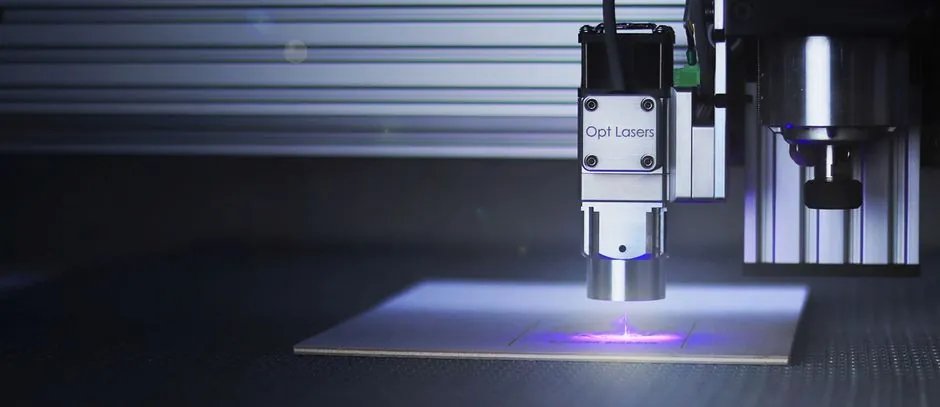
V-Process casting, also called vacuum sealed molding, holds dry unbonded silica sand against a 0.05-0.2 mm EVA plastic film using 50-100 kPa vacuum differential, producing rigid molds that pour and solidify without chemical binders or moisture [S1].
For electronics housing castings, the binder-free process removes smoke and toxic emissions from the foundry floor, an advantage when the same plant also stamps or coats electronic subassemblies, while still achieving Ra 6.3-12.5 µm as-cast surface finish and ±0.2-0.5 mm dimensional tolerance per 25 mm [S1].
Process physics and the vacuum envelope that defines the line
The V-Process relies on a single physical mechanism: atmospheric pressure compresses dry sand into a rigid mass once vacuum is drawn beneath the film, and the mold collapses the moment vacuum is released [S1].
Operating vacuum is typically held in the -50 to -100 kPa range across the flask cavity, with the film (commonly EVA, heat-softened and draped over the pattern) acting as the seal that transmits atmospheric load into the sand pack [S1]. A complete molding line for this process must integrate film heating, pattern vacuum, coating spray, flask setting, vibration sand fill, back-film sealing, stripping, pouring under vacuum, shake-out, and sand return.
Throughput, flask weight, and material envelopes on commercial lines
Published line specifications for commercial V-Process equipment place molding speed at 3-7 molds/hr depending on part weight, with flask capacities covering 50-6000 kg castings across iron, cast steel, high-manganese steel, and alloy steel grades [S3].
Typical reference castings on these lines include counterweights in HT150-HT200 at 500-6000 kg and 4-7 molds/hr, swing bolster and side frames in cast steel at 300-600 kg and 3-6 molds/hr, wear-resistant parts in high-manganese or high-chrome steel at 50-5000 kg and 3-6 molds/hr, and heat-resistant alloy steel parts at 3-5 molds/hr [S3]. A standardized V-process line therefore spans a wide weight envelope without retooling the sand handling system, since the same dry sand recirculates through the loop with only screening and cooling between cycles.
Surface finish, tolerance, and yield claims tied to specific numbers
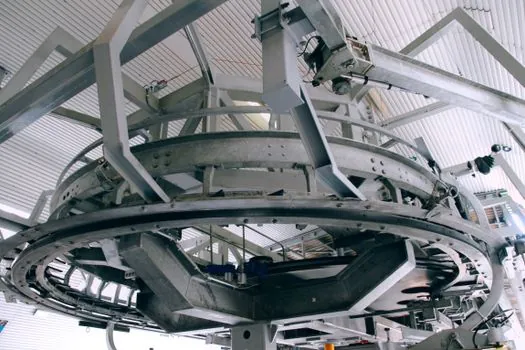
As-cast surface roughness on V-Process castings lands in the Ra 6.3-12.5 µm band, with a typical reported value of Ra 12.5 µm on commercial equipment and dimensional tolerance of ±0.2-0.5 mm per 25 mm of casting dimension [S1][S3].
Sand recovery exceeds 95% because the mold contains no chemical binder, and metal utilization improves by 20% on steel castings and 25% on iron castings relative to conventional green sand systems, because the rigid vacuum-held mold wall eliminates draft and reduces feed metal [S4]. Power draw on a V-method line is reported at roughly 60% of an equivalent green sand line, a figure worth checking against your utility tariff during process calibration of a new foundry cell.
Why electronics housings fit, and where they do not
Electronics housings in cast aluminum or zinc alloys are not the natural fit for V-Process, which targets heavier iron and steel castings at flask sizes from tens of kilograms up to several tons, so the best fit is ferrous or large bronze housings, junction boxes, motor frames, and heavy EMC enclosures [S3][S4].
Where the process does fit electronics-adjacent castings, the binder-free atmosphere means no phenolic or furan outgassing onto nearby PCB assembly lines, a real process control benefit when the foundry shares a building with surface-mount equipment. Draft-free patterns also let foundries hold tighter as-cast dimensions on mating flanges and cover interfaces, reducing post-machining on housings that need flat sealing faces.
Equipment stack on a V-Process line and where to compare
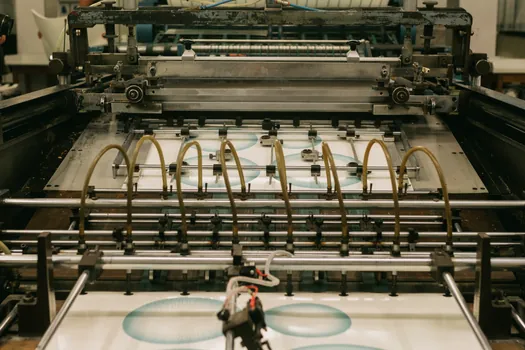
A typical V-Process line is built from a sand box template with suction filter tube, vacuum pump package, EVA film heating and cut-off station, jolt-squeeze or vibration compaction table, coating spray booth, stripping manipulator, pouring station under vacuum, and shake-out plus sand return conveyor [S3].
For higher-volume housing production, an automatic molding line configuration adds flask transfer on a power-and-free conveyor, robotic stripping, and PLC interlocks between vacuum, vibration, and film-seal stations, with Sinto America-class V-process platforms citing no pattern wear, no draft requirement, and no mold wall movement due to high mold hardness as the key repeatability drivers [S2]. Sand-to-metal transport between the molding flask and shake-out uses standard V-belt drives, which match the low-shock duty cycle of a binder-free line.
Selection criteria when sizing a line for housing castings
Five numbers decide whether a V-Process line is the right tool: target flask weight, hourly mold count, alloy grade, required as-cast Ra, and tolerance per 25 mm. [S3]
Decision rule: if your housing castings fall inside 50-6000 kg, need 3-7 molds/hr, demand Ra ≤12.5 µm as-cast, and must hold ±0.5 mm/25 mm or tighter, a V-Process line is competitive; outside that envelope, especially below 50 kg or above the published 6000 kg ceiling, green sand flaskless or resin sand lines usually win on unit cost [S3][S4]. For engineers cross-checking other foundry process options, the hot chamber die casting spare parts map provides a parallel spec-driven comparison frame, and the shot sleeve working principle reference covers the high-pressure die casting alternative for smaller electronics housings.
Limitations, failure modes, and signals to watch on a running line
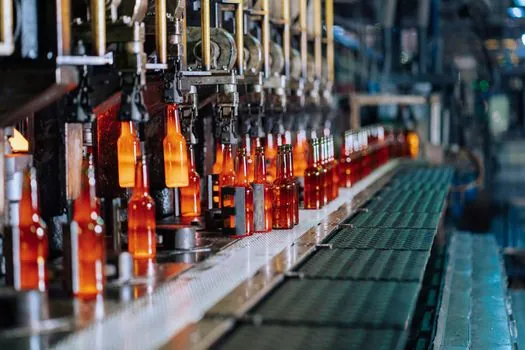
The process fails in three predictable ways: vacuum leak at the film seal, sand moisture pickup from ambient humidity, and film thinning on sharp pattern radii that allows sand breakthrough during pour [S1].
Track these signals on a new installation: vacuum decay rate above roughly 5 kPa/min across a closed flask, as-cast surface pitting clustered near pattern edges, and dimensional drift on parts sampled against a process calibration gauge.
Track the next two signals over the coming quarters: published flask size expansion above 6000 kg on commercial V-Process offerings, and the appearance of integrated Industry 4.0 vacuum decay monitoring on OEM control panels, both already flagged as development directions by Sinto-class equipment builders [S2].