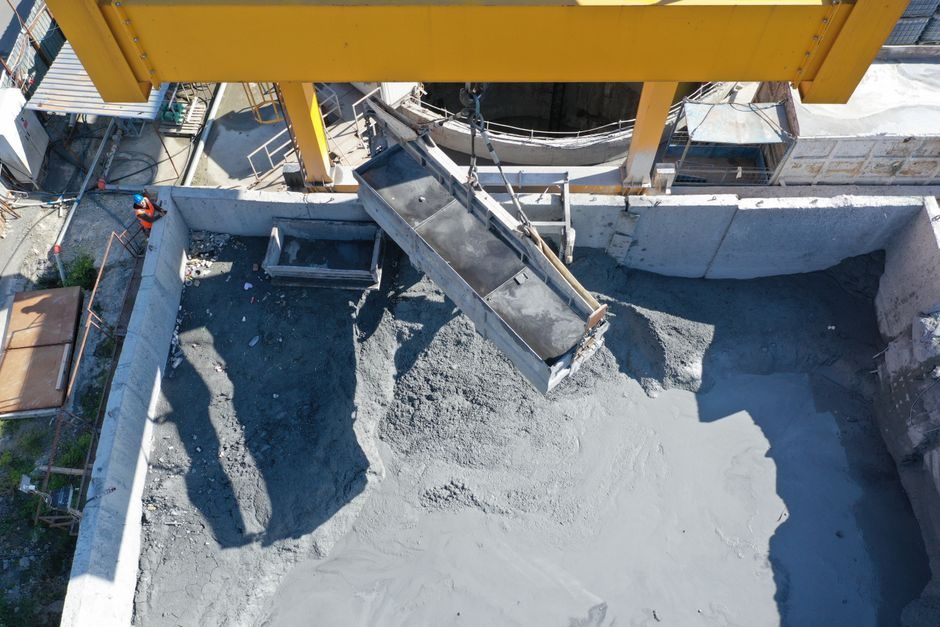
For a process engineer scoping a new fleet, the practical entry-to-mid band runs from compact 5-9 m3/h portable rigs at roughly USD 6,000-8,000 FOB, through mid-size 15-30 m3/h skid or wheeled units, up to large concrete-spray carriers built on dump-truck chassis for high-output mine headings [S1][S3][S4].
Wet-mix vs dry-mix: rebound, dust, and placement quality
Wet-mix shotcrete machines pre-mix water, cement, aggregate and admixtures in the hopper before pumping through a concrete delivery hose to a nozzle, where compressed air and any accelerator are added; this geometry cuts operator exposure to airborne dust and brings rebound loss to a 5-15% range, versus 15-30% on dry-mix setups where water is added at the nozzle [S2].
Dry-mix rigs remain specified on remote patch jobs and small-volume repairs because the equipment itself is lighter and the hose logistics are simpler, but the 2026 tender language on highway tunnel and metro projects now treats wet-mix as the baseline for any continuous concrete-spray layer above 50 mm thickness [S2].
Output rate, pump class, and how they map to job size
The HSP-7 wet-mix platform — a representative mid-class reference in current vendor catalogs — is rated around 7 m3/h theoretical output with a 5-7 kW electric drive, aimed at small tunnels, slope stabilization, and pool-shell construction where a 30-50 m hose reach is enough [S2].
For larger headings, the 15-30 m3/h bracket typically pairs a diesel-driven skid chassis with a peristaltic or piston concrete pump, and 1000-unit/month supply capability is now openly published by Chinese OEM channels for the mobility-class segment, signalling normalized capacity rather than constrained lead time [S4].
Peristaltic hose pumps are the wear-item heart of most wet-mix rigs, and their hose life dominates the operating cost curve on abrasive aggregate, which is why reference pages for linear guide systems on the pump carriage and crossed roller guide choices for the accelerator dosing arm show up in the same maintenance manuals as the pumping elements themselves.
Power, mobility, and chassis decisions
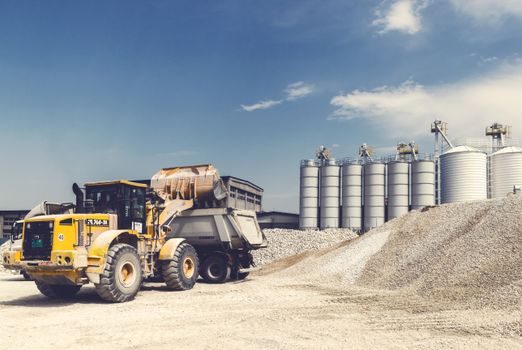
Compact wet-mix units in the 5-9 m3/h class ship on a wheeled frame with an electric motor (commonly 5-7 kW) for indoor civil work and tunnel work where diesel is restricted [S2].
Strong-mobility dry-mix carriers sit on truck or dump-truck chassis with onboard compressors, and the same chassis pattern is reused for the underground shotcrete machine category where the boom needs to reach 8-12 m over a heading face — a configuration that pushes curb weight past 10 t and puts the unit into a different transport-permit tier than the wheeled portable rigs [S3][S4].
When the hose run is short and the site has grid power, an electric skid at 5-7 m3/h will beat a diesel rig on total cost per m3 over a 6-month tunnel cycle, because the electric machine has no compressor duty, no diesel fuel markup, and a smaller wear-parts inventory.
Price bands and what moves the number
The public FOB band on 2026 listings spans roughly USD 6,000 for an entry-level dry-mix portable rig up to about USD 39,000 for a heavy wet-mix or strong-mobility concrete-spray machine, with mid-band skid units clustering around USD 12,000-22,000 [S5][S4].
Three levers move the quotation more than any other spec change: pump type (peristaltic vs piston vs rotor-stator), chassis configuration (skid, wheeled, truck-mounted), and the inclusion of an onboard compressor versus a customer-supplied separate unit. A buyer that fixes pump type and chassis first will see the remaining deltas narrow to nozzle package, accelerator dosing, and hose reach.
Sourcing reality: MOQ, lead time, and verification
Most 2026 OEM channels publish a 1-unit minimum order quantity, with declared supply capability in the 100-1000 unit/month range and standard incoterm FOB Shanghai or Qingdao for export buyers [S4][S5].
Onsite-checked suppliers and trading companies both list shotcrete machines, so the verification step on the supplier page (Onsite Check vs basic verification) is a real signal — onsite-checked manufacturers have audited factory addresses, while trading-company listings can carry similar model numbers with no production line behind them [S1].
Payment terms in the public listings cluster around T/T and L/C, and most 2026 RFQ threads close on a 30-50% deposit with balance against B/L copy; this is worth locking in writing because the peristaltic hose and wear-plate lead times on the pump end are the schedule items most likely to slip.
Selection matrix: matching machine to job
For a small tunnel cross-section (under 25 m2) and a 3-6 month program, a 5-7 m3/h electric wet-mix skid is the lowest-risk spec, and the per-m3 cost will be driven by hose consumption more than fuel [S2].
For slope stabilization on a highway cut where mobility between faces is daily, the wheeled strong-mobility dry-mix class trades some rebound for genuine one-truck mobility, and 1000-unit/month supply is openly published for this class [S4].
For a 30+ m3/h mine heading where the spray boom is the bottleneck rather than the pump, the truck-mounted wet-mix carrier with a piston pump and 8-12 m boom is the configuration that scales, and its price sits at the top of the published 2026 band near USD 39,000 [S3][S5].
Buyers that also need to scope the wider site fleet will find that the same spec-first logic used here — fix output class and pump type, then compare chassis and wear-part support — applies to the Block & Brick 2026 Price and Cost Guide for the materials going into the mix, and to the Concrete Groove Cutter Price 2026 for the joint-cutting pass that follows curing.
The 2026 shortlist signal worth tracking is the gap between peristaltic hose life ratings published by OEM vs independent test data — suppliers that publish a 600-800 hour hose life number with the aggregate size and pumping pressure on the same data sheet are the ones to put on the RFQ shortlist, and the next data point to watch is whether the piston-pump tier at 30 m3/h starts publishing the same kind of wear-part transparency by end of 2026.