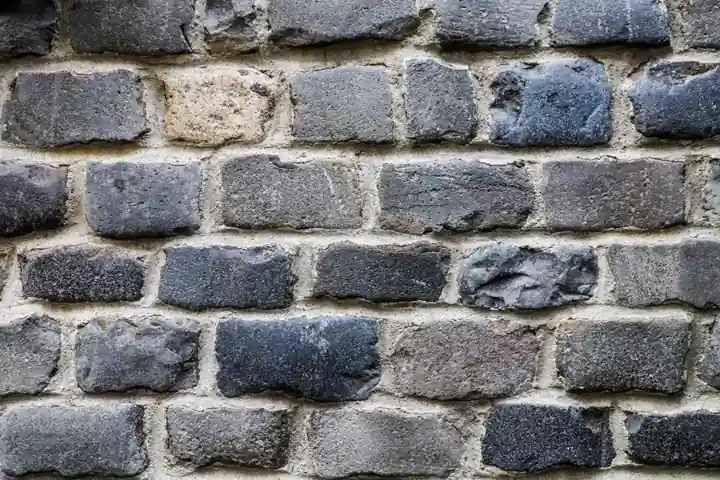
Specifying a shotcrete machine for masonry wall strengthening is governed by wall area, design thickness (typically 50–150 mm), and required output band. For typical 2,000 m² face at 100 mm thickness the volume works out to roughly 200 m³ of in-place shotcrete, which a mid-size wet-mix rig at 8–15 m³/h can place inside one shift, with dry-mix units (3–5 m³/h) reserved for spot repairs and small jacketing [S5][S7].
Concrete jacketing via shotcrete is one of the established wall-strengthening interventions: it raises cross-section, increases concrete cover, and adds shear capacity on masonry and reinforced-concrete walls alike, which is why the equipment class keeps reappearing in retrofit and seismic-upgrade scopes [S1]. A shotcrete machine is a pneumatic projection rig that drives mix through a hose and nozzle at high velocity, available in dry-mix and wet-mix variants that materially change rebound, dust, and quality.
Wet-mix vs dry-mix for masonry: which to pick
Wet-mix shotcrete machines output 8–30 m³/h depending on frame size, with a 15–20 mm aggregate ceiling and 0.4–0.6 MPa working air pressure, making them the default for structural masonry jacketing where lower rebound and better compaction justify the extra mixing plant on site [S7]. Dry-mix rotor machines in the PZ-5 class output 4–5 m³/h and accept damp-mix, dry-mix, and steel-fiber-reinforced recipes, which keeps them competitive for small masonry patch repairs where mobilizing a wet-mix plant is uneconomic [S9].
Rebound is the single largest material-cost driver on a wall-strengthening job: wet-mix cuts rebound from the 20–30% band typical of dry spraying down to under 10%, which directly reduces cement consumption per m² of finished face [S4]. The trade-off is rig footprint and setup time: dry-mix units start faster, weigh 800–1,200 kg in the small-class form factor, and tolerate intermittent site power, while wet-mix needs a compressor sized at 10–15 m³/min plus a concrete pump circuit. The right call depends on whether the scope is continuous jacketing or spot repair.
Output, pressure, and aggregate: the three spec numbers
Small dry-mix rigs run 2–5 m³/h at 0.5–0.7 MPa with 10–15 mm max aggregate; mid wet-mix machines run 8–15 m³/h at 0.4–0.6 MPa with 15–20 mm aggregate; large wet-mix rigs hit 20–30 m³/h at the same 0.4–0.6 MPa pressure band with 20–25 mm aggregate [S7]. Robotic arms (4-telescopic-boom class, KS80 pattern) are specified at 0–25 m³/h programmable output and pair 0.5–0.7 MPa air with 20 mm aggregate ceiling, and they cut operator exposure on overhead and tall wall faces [S7][S10].
Pressure capability is the second gate. ISO 14487-aligned selection guidance calls for pressure capability above 0.7 MPa for optimal material propulsion, while the small-class dry-mix machines typically operate at 0.5–0.7 MPa and the wet-mix band sits 0.4–0.6 MPa, so the 0.7 MPa threshold is best read as a margin target for long hose runs and high aggregate content rather than a hard floor on every rig [S6]. For main pump pressure on long-distance or high-altitude pumping, 15–20 MPa concrete discharge pressure is the working target to maintain flow and avoid line blockage [S4].
Aggregate size is the third gate and ties directly to hose diameter. A typical small wet-mix rig uses Φ50 mm nozzle outlets and Φ90 mm concrete pipe, and crushed stone up to 15 mm passes through without blockage; the larger YG-class truck-mounted wet units run a Φ100×Φ70×1,000 mm main oil cylinder with the same 50 mm outlet and handle the same 15 mm ceiling [S4]. Push the aggregate past 20 mm and you have moved into the large wet-mix or robotic class, which costs more but places faster per shift.
Frame size, reach, and masonry layout
Masonry strengthening typically means working on vertical wall faces with limited overhead, so boom reach and outrigger footprint matter more than raw reach. Truck-mounted wet units in the YG-3016/4016 pattern deliver 16 m spray height, 25 m spray width, a 310° boom slewing angle, 360° nozzle axial rotation, and 240° nozzle vertical oscillation, which covers most building façades and shaft walls without repositioning [S4]. Their concrete output of 30–40 m³/h is well above what a typical masonry retrofit consumes in a day.
For interior partition strengthening, basement wall jacketing, and confined retrofit sites, the KC3017-class 4-wheel-drive wet-mix manipulator with cross-section and slope work capability is the closer match because it trades boom reach for maneuverability and a smaller site footprint [S10]. A robotic arm is only worth the spend on large wall areas (typically 500 m² and above of continuous jacketing) where the labour saving and operator-distance pay back the capital. For small spot repairs, a handheld nozzle on a 4–5 m³/h rotor machine is normally enough.
Power, compressor matching, and site logistics
Electric motor sizing for the pumping system scales with output: 55 kW on a 30 m³/h wet-mix truck, 75 kW on the 40 m³/h version, with engine power of 85–103 kW on the carrier for off-grid operation [S4]. Air consumption for the projection side runs 10–15 m³/min on small-class machines, so the on-site compressor must be sized for the rig's air demand plus nozzle accelerator dosing; under-sized compressors are the most common cause of pulsation and rebound spikes on retrofit sites [S3].
For outdoor masonry strengthening on long sites, diesel-powered wet units are specified to avoid pulling electric cables across the work face; for indoor retrofit in occupied buildings, the electric variants are preferred to handle emissions and noise [S4]. Noise output sits at ≤90 dB(A) per ISO 4871 on small-class machines, and the IP54 rating per IEC 60529 is the typical enclosure class for the control gear, which is adequate for the dust and water exposure of a concrete-spraying environment [S3].
Comparison: dry-mix small, wet-mix mid, wet-mix large, robotic
Decision matrix for masonry wall strengthening, based on the published spec bands in the research: dry-mix small-class fits repair and patch work (2–5 m³/h, 10–15 mm aggregate, 0.5–0.7 MPa); wet-mix mid fits structural jacketing on medium wall areas (8–15 m³/h, 15–20 mm aggregate, 0.4–0.6 MPa); wet-mix large fits continuous large-area jacketing (20–30 m³/h, 20–25 mm aggregate, 0.4–0.6 MPa); robotic arm fits large walls with operator-distance requirements (15–25 m³/h, 20 mm aggregate, 0.5–0.7 MPa) [S7]. On rebound, dry-mix runs 20–30% material loss versus under 10% for wet-mix, which alone can swing cement cost on a 200 m³ scope by tens of cubic meters of mix.
On mobility, dry-mix small-class units weigh 800–1,200 kg and fit through standard door openings; wet-mix truck-mounted units weigh 14–15 t and need vehicle access; robotic arms need a carrier plus a 3-phase power feed and accelerator dosing rig [S3][S4]. For most masonry retrofit scopes, the mid wet-mix class is the right baseline, with robotic arms reserved for the largest continuous jacketing programs.
Standards, certifications, and supplier checks
Equipment compliance is anchored to ISO 14487 for shotcrete equipment and ISO 4871 for noise declaration, while the control enclosure should meet IEC 60529 IP54 as a minimum dust-and-water ingress threshold for site work [S3][S6]. For mining and tunnel scopes MSHA or ATEX certification may be in scope, but for masonry retrofit on buildings these are normally not applicable; specifiers should still confirm with the supplier because the same rig can be sold with or without hazardous-area certification [S6].
The supplier's documentation is the final gate: confirm the model-specific output, working pressure, hose diameter, maximum aggregate size, power requirement, air consumption, conveying distance, hopper capacity, weight, dimensions, noise level, and IP rating before order, because the published ranges are reference bands rather than guaranteed model values [S3]. Always match air consumption to compressor capacity, allow vertical conveying distance to be derated by 50% of the horizontal rating, and check accelerator pump pressure (1.8 MPa is typical on truck-mounted wet units) against the admixture system on site [S3][S4].
Related selection guides for adjacent scopes
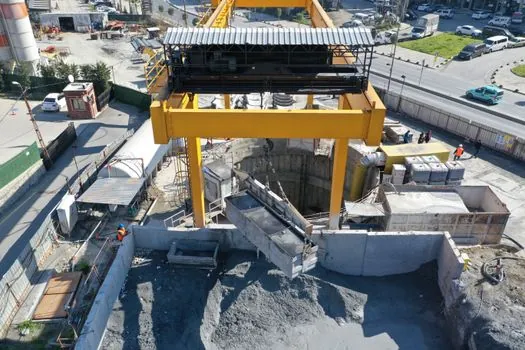
For interior swimming-pool shells and wet-room finishes the criteria shift toward finish quality and hose routing, covered in Shotcrete Machine Selection for Interior Pool Finishing. For road maintenance, output, reach, and service intervals dominate, mapped in Shotcrete Machine Selection for Road Maintenance. For demolition work where wet-mix rebound control matters, Shotcrete Machine Selection for Demolition Work lines the wet-vs-dry and robot-vs-handheld call. [S3]
For readers also scoping adjacent equipment classes, the shotcrete machine encyclopedia page covers core assembly, and the related masonry insulation page covers substrate prep behind the jacketing. The cutoff date for this spec snapshot is 2026-08-23; verify the model-specific output and pressure with the supplier before order, and check whether the next ISO 14487 amendment has been published in the interim, since that document anchors the equipment-class language used throughout this guide.
Component reference pages worth checking: coding machine.