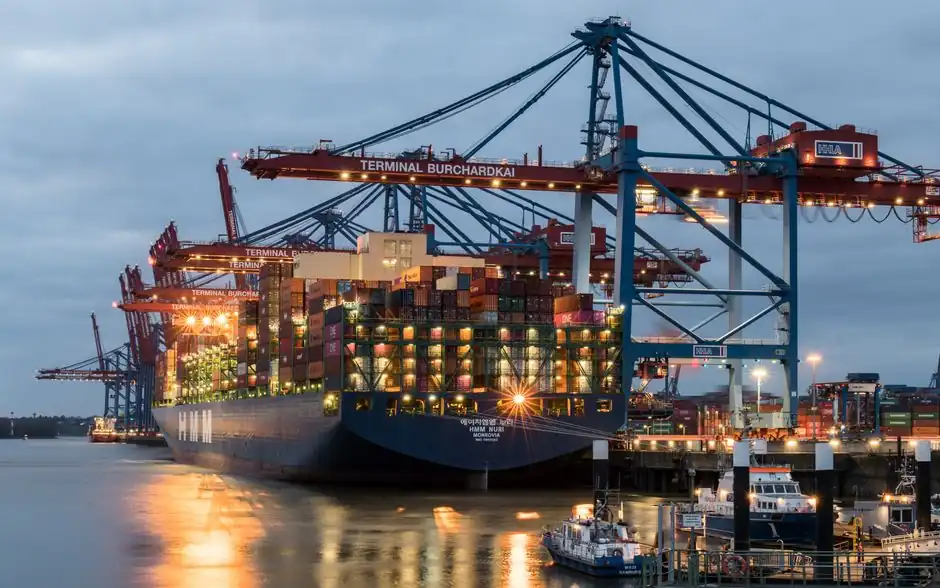
For port logistics, a shrink wrapping machine is rarely the right primary pallet packer: heat tunnels need dwell time, and 1200×1200 mm export pallets move faster through stretch wrappers running cold LLDPE film [S1][S5].
Shrink still earns a slot at the port interface for specific jobs, including sleeve-wrapped bottle and can bundles, hooded timber and steel-coil packs, and tamper-evident retail export cartons [S1][S2]. The KUNBA DFM-5540 integrated seal-and-shrink unit, rated at 4.0 kW, 220-240 V/50-60 Hz, and 500-800 packs/h on a 550×440×300 mm window, shows the throughput ceiling of a benchtop heat-shrink station [S4].
Definition and Scope: What Counts as "Shrink" at a Port
Shrink wrap is a polyolefin or polyester film that contracts when heated and is most commonly specified as POF for retail clarity or PE for heavier secondary packs [S1]. In a port context the film choice branches quickly: POF for clean consumer-goods cartons, PE for bottled water and beverage multipacks, and PETG/OPS where optics or printability dominate [S1].
Three machine families show up in port specifications. L-sealers handle odd-shaped export cartons, side-seal machines (e.g. JOCHAMP ZWG-300, KUKO side sealer) run high-speed bottle bundles, and integrated seal-and-shrink units such as the DFM-5540 cover small-footprint packing lines [S2][S4]. Each requires a downstream heat tunnel whose dwell zone and airflow set the real throughput, not the sealer head.
Selection Criteria: Heat vs Cold for Pallet Loads
For pure pallet containment at a port, the engineering case for heat-shrink is weak: stretch wrap on a turntable such as the YUPACK T1650F, with a 1650 mm turntable and pre-stretched film carriage, wraps a 1.2×1.2 m pallet in roughly 60-90 seconds without the energy cost of a heat tunnel [S5].
Shrink earns its place only when the spec calls for a tight, dust-tight, retail-grade skin, a sleeve label, or a hood over irregular cargo such as a timber bundle. In those cases, the engineer should lock the selection on: max pack size in mm, packs-per-hour rating, supported film (PVC/POF/PP), power supply (110 V vs 220-240 V/50-60 Hz), and the conveyor material (stainless vs aluminum) [S4]. The DFM-5540 lists both, which is a useful signal of build variants offered in the same model line [S4].
Who It Is For, and Who Should Walk Away
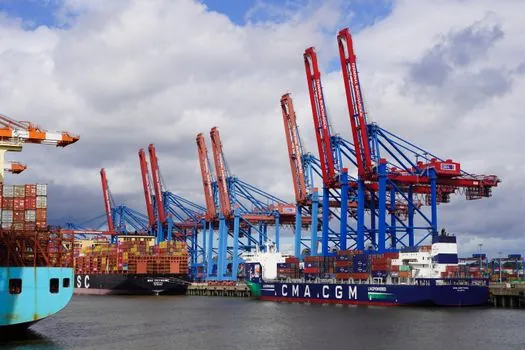
Shrink wrapping is the right tool for beverage and bottle exporters, pharmaceutical and cosmetic export cartons needing tamper evidence, and port-adjacent copackers running mixed-SKU retail packs [S1][S2].
It is the wrong tool for high-volume pallet yards, bulk container stuffing, and cold-chain reefer operations where heat-tunnel exhaust would upset temperature-controlled zones [S1][S3]. Operators running export volumes above roughly 40 pallets per shift should default to pallet stretch wrappers such as the YUPACK T1650FZ, whose PLC-controlled automatic film cut and break removes the operator from the wrap cycle entirely [S5].
Comparison of the Main Equipment Options
Three equipment archetypes compete for the port-side pack station, and they line up differently against the criteria that actually matter at a dock: [S1]
1) L-sealer + heat tunnel (e.g. KUKO, JOCHAMP ZWG-590 at 150 packs/min, ZWG-600 for large products): best for retail-grade skin and odd shapes, slower than inline side-seal systems, higher energy per pack because the heat tunnel must reach shrink temperature before the line stabilises [S2].
2) Integrated seal-and-shrink (e.g. KUNBA DFM-5540, 4.0 kW, 500-800 pcs/h, 125-145 kg machine weight): best for small-footprint export packers and short runs, but limited to a 550×440 mm seal window, so it cannot process a full pallet [S4].
3) Turntable stretch wrapper (e.g. YUPACK T1650F, 1650 mm turntable, pre-stretched film carriage; YUPACK T1650FZ with PLC and remote film cut; M-type variant for manual-forklift loading): best for pallet containment and export logistics, no heat, and the dominant choice in the heavy-duty port supply channel served by suppliers such as Gilmores in Port Melbourne [S3][S5].
Across these three, the crossover is roughly the pallet line: anything that must travel through a heat tunnel at line speed loses to a cold stretch cycle once throughput climbs above a few dozen units per hour.
Failure Modes and Operating Limits
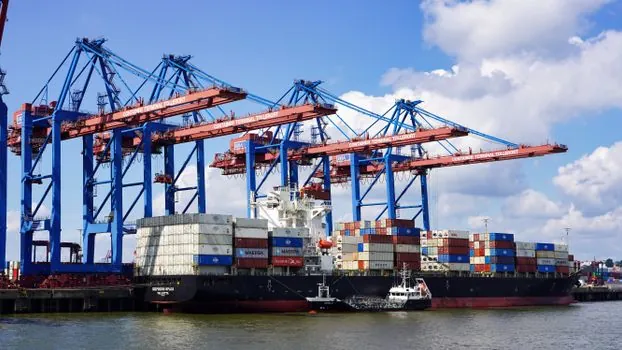
Heat-shrink lines fail first in the sealer, not the tunnel: PTFE-coated ceramic cutter holders (PITFE-type thermostable holders) are the wear item, and the DFM-5540 spec sheet calls this out explicitly, listing a ceramic holder that resists burn-through in long shifts [S4]. Operators should treat the sealer head as a consumable-bearing subassembly, not a fit-and-forget component.
Stretch wrappers fail differently: film breakage on the pre-stretch carriage, turntable motor overload on off-centre loads, and tension loss when LLDPE rolls are stored cold. The T1650FZ automatic film-cut sequence reduces one of these by removing the manual tear step that often triggers film waste at the end of a cycle [S5].
Supply Channel and Sourcing Notes
Chinese OEMs dominate the shrink machine supply base, with at least ten active builders including JOCHAMP (Ruian, founded 2005), KUKO (Shanghai, 2004), Hualian (1989), Finetech (1992), Youngsun (1983) and Fhope (2014) [S2]. JOCHAMP's cGMP-compliant stainless builds and ZWG-590 150 packs/min rating are typical of the medical-grade end of the Chinese supply chain [S2].
For port operators, the practical sourcing path is a regional heavy-duty packaging supplier carrying stretch wrappers, strapping machines, and carton sealers on one floor, such as Gilmores' Port Melbourne operation, which lists semi-automatic stretch wrappers (Model 1001E electromagnetic brake, Model 2000B power-stretch head) alongside strapping and carton sealing lines [S3]. Shrink machines usually sit outside that channel and are ordered direct from an OEM or a specialist integrator.
Decision Gate: Pick the Machine Class First, the Brand Second
The first decision is not JOCHAMP vs KUKO, it is L-sealer-and-tunnel vs integrated seal-and-shrink vs turntable stretch wrapper, and that decision is set by pack size, throughput target, and whether the cargo needs heat-shrink optics or just cold containment [S1][S2][S4][S5].
A useful spec gate: if the max pack dimension exceeds 600 mm in any axis, an integrated benchtop like the DFM-5540 (max packing 550×440×300 mm) drops out and the choice narrows to a tunnel-fed L-sealer line or, more often, a stretch wrapper [S4]. If the line must run above 800 packs/h, the integrated class also drops out and the spec moves to a high-speed side-seal such as the JOCHAMP ZWG-590 at 150 packs/min [S2][S4].
For a working example of the spec path on the adjacent warehouse-automation problem, see the 2026 spec map for shrink wrapping in warehouse automation; for a different end of the distribution chain the apparel distribution center selection map covers the retail-floor criteria that a port packer does not have to meet.
Track three signals over the next two quarters: any new heat-tunnel energy-recovery option that would close the energy gap versus cold stretch; OEM disclosures of cGMP-compliant builds for export pharmaceutical cargo through port free zones; and PLC integration of stretch wrappers with the terminal operating system used at the gate. Each one would shift the equipment-class choice described above.
Detailed specification references: shrink wrapping machine, and logistics packaging.