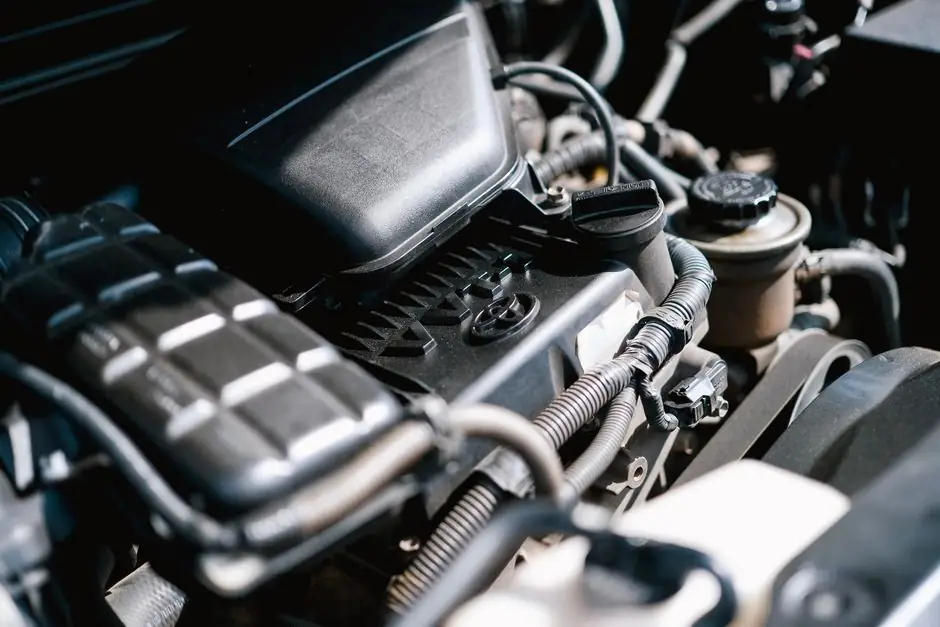
Orbital horizontal stretch wrappers with ring sizes from 17.7 in to 85.4 in and ring speeds up to 90 RPM now dominate Tier 1 line-end packaging for long, irregular automotive parts such as drive shafts, exhaust pipes, bumpers, and leaf springs, where standard turntable pallet wrappers physically cannot load the geometry [S2].
For tier suppliers shipping boxed and palletized components on 1200x1000 mm Euro pallets or 1400x1200 mm blocks, heavy-duty pallet wrapping machines with 2.0 m turntables, 300% powered pre-stretch, and dual-roller film carriages remain the workhorse, with lines typically running 500+ pallets per day at automotive tier warehouses [S2]. The choice between the two lanes is set by part length, throughput target, and destination environment, not by brand preference.
Why a Turntable Pallet Wrapper Fails on Long Automotive Parts
Turntable rotation depends on the load being roughly cuboid, centered, and within the turntable's rated footprint, plus a 50–100 mm clearance margin beyond the pallet diagonal for stable film tension [S2]. A 1.5–2.0 m drive shaft or exhaust pipe with flared tips and brackets snags 20–25 µm stretch film and produces uneven web tension on a rotating platen, which is why turntables are sized to the load diagonal, not the load length.
Horizontal orbital wrappers invert the geometry: the load stays stationary on a belt conveyor while a vertical film ring orbits the part, applying 5–6.7 in narrow stretch film under a mechanical tensioner that conforms the film web to the part's contour without snagging [S2]. This is the standard cell for mufflers, bent heavy steel exhaust pipes, side rails, fascias, trim extrusions, and bumper assemblies exiting a welding or CNC station. For the underlying taxonomy of seal-and-tunnel subsystems versus stretch-film wrap architectures, the shrink wrapping machine reference and the broader logistics packaging entry lay out how the two machine families differ at the film-handling level.
Matching the Orbital Ring to the Part
Ring size is the single most important spec for an orbital wrapper on an automotive line, because the ring must clear the widest cross-section of the part with margin for film and conveyor hardware. Current production ring sizes start at 17.7 in for compact narrow-profile units and extend to 85.4 in on Pro 1100/1400/1700/2200 units built for full truck bumpers and multi-hundred-pound suspension components [S2].
Ring speed is the throughput lever: a Dynawrap Pro 600-class orbital runs at 90 RPM with continuous belt conveyors, specifically engineered to keep pace with upstream CNC and welding stations where a 30-second wrap station would create a backup on the line [S2]. For mixed-model lines, recipe-free autonomy via 3D depth-sensing cameras is offered as an option, scanning irregular parts volumetrically on entry to the wrap zone. Safety integration is non-optional at these ring speeds: light curtains, electro-welded mesh guards, and hard-wired emergency auto-stop must be built into the cell, since a 90 RPM ring is not a benign mechanism to stand next to without guarding [S2].
Pallet Wrapper Specs for Tier Supplier Warehouses
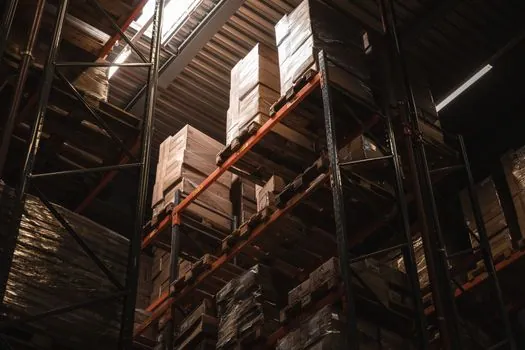
For automotive tier suppliers shipping on 1200x1000 mm Euro pallets or 1400x1200 mm blocks, the turntable diameter must exceed the pallet diagonal by at least 100 mm to prevent overhang, uneven film tension, and load tipping during rotation; a 1.8 m turntable handles 1200x1000 mm pallets safely (pallet diagonal ~1562 mm), but a 2.0 m turntable is the recommended high-volume spec because it covers 1400x1200 mm blocks without centering delays, at a 15–20% price premium over the 1.8 m unit [S2].
Pre-stretch ratio drives film cost, the single largest operating expense on a pallet wrap line, and a powered pre-stretch of 300% reduces film consumption per pallet by stretching each roll meter roughly 4x before it touches the load [S2]. Standard wrap programs for automotive tier warehouses run 4–6 film layers at the pallet base with 2–3 wraps on the top deck, and the full spec sheet on turntable versus rotary-arm palletizer architectures is covered under the wrapping machine encyclopedia entry.
Film Resin, Gauge, and Tunnel Window for Transit Sleeves
Polyolefin (POF) cross-linked film is the default for retail and food-contact packs because it yields a low-temperature seal window, optical clarity, and FDA-compliant grades; PE shrink film is chosen for heavier transit bundles and pallet collation where puncture and tear resistance matter more than gloss; PVC shrink film is used on lighter, smaller consumer packs where shrink force and edge definition are critical, though several EU retailers have phased PVC out of presentation packs [S4].
Standard gauges run 12–25 µm for POF retail sleeves, 40–100 µm for PE transit wraps, and 19–25 µm for PVC, with shrink percentage typically specified at 50–60% in the machine direction and 30–50% in the transverse direction for collation applications [S4]. Typical tunnel operating windows are 160–220°C for POF, 180–240°C for PE, and 130–180°C for PVC, and pack height drives tunnel length: a 100 mm tall pack needs roughly 600–800 mm of tunnel, while a 400 mm tall transit sleeve needs 1500–2000 mm to allow bottom-to-top heat soak without scorching the upper film [S4]. Conveyor speed is the third control handle, with most POF lines running 5–20 m/min and PE collation lines 3–10 m/min, and the speed must be matched to the sealer cycle time or the seal-seam falls on a live product zone [S4].
Throughput, Changeover, and the L-Seal Decision
Chamber machines suit low-volume workshops, delivering 4–8 packs per operator per minute; L-bar sealers, a standard wrapping machine configuration with manual or auto film feed, sit at 6–15 packs per minute for e-commerce and small-batch retail lines; side-seal and continuous-motion wrappers are the high-throughput class, with single-lane cigarette, cosmetics, or box lines reaching 60–100 packs per minute and dual-lane continuous wrappers used for collation of cans, bottles, and cartons reaching 120–200+ packs per minute [S4]. The selection rule is mechanical: a buyer whose true demand is below 20 packs/min is over-spec'd on a continuous-motion wrapper and under-spec'd on a chamber machine [S4].
Selection should start with the pack, not the machine: minimum and maximum product dimensions, stability, fragility, heat sensitivity, and irregular shape set the cell envelope, and a system selected only around the largest product is inefficient on smaller packs while a machine selected too narrowly restricts future work [S3]. Automation should address a real constraint, and a compact semi-automatic system is often the right answer for frequent changeovers, while a continuous line is appropriate when products and flow are consistent [S3]. For high-volume auto-parts operations that pair shrink wrapping with downstream case handling, the coding machine and cutting machine entries cover the marking and slitting cells that typically sit adjacent to a wrap line.
Decision Matrix: Orbital vs Turntable for Auto Parts
The two lanes line up directly against four decision criteria that procurement engineers lock before requesting a quote. Part geometry: orbital wrappers win for any part longer than ~1.5 m or with non-cuboid profile (drive shafts, exhaust pipes, bumpers, leaf springs), while turntable pallet wrappers win for boxed components, dashboards, trim, and fasteners stacked on standard pallets [S2]. Throughput target: orbital wrappers deliver line-end throughput matched to upstream CNC/welding cycle times via 90 RPM ring speed, while turntable pallet wrappers target warehouse-side volumes of 500+ pallets per day on a 2.0 m platen [S2]. Film economics: orbital systems use 5–6.7 in narrow stretch film on stationary loads, while turntable systems rely on 300% powered pre-stretch with dual-roller carriages to cut film cost per pallet, the largest operating expense on the line [S2]. Safety and integration: orbital cells at 90 RPM require light curtains, welded mesh guards, and hard-wired E-stops as a baseline, while turntable pallet cells need only standard pallet-rack clearances and standard lockout-tagout guarding [S2].
Limits, Failure Modes, and Sourcing Constraints
The failure modes split by lane. Orbital wrappers fail when the ring is undersized for the part cross-section, when 3D scanning is skipped on mixed-model lines and recipe calls drift, or when guarding is treated as optional on a 90 RPM mechanism [S2]. Turntable pallet wrappers fail when the turntable is undersized for the pallet diagonal (1.8 m on a 1400x1200 mm block causes overhang and tipping), when pre-stretch is left at 100–150% instead of 300% and film cost erodes the line's operating margin, or when the sealer cycle on a downstream sleeve wrapper is not matched to the tunnel conveyor speed [S2][S4].
Floor-space planning is the other hard constraint: fully automated shrink wrap cells with infeed and outfeed conveyors can be massive, and even a semi-automatic stand-alone wrapping station requires a dedicated operational zone with clearance for staging unwrapped and wrapped pallets, with high-output industrial-grade systems at 110 loads per hour needing noticeably more floor space than entry-level low-volume models [S1]. Two trackable signals for the next buying cycle: the 2026 spec sheet of any Pro-class orbital wrapper on a Tier 1 line, where ring sizes above 85.4 in are now being quoted for full EV battery tray enclosures, and the 2026 procurement shift at tier warehouses toward 2.0 m turntables with servo-driven 300% pre-stretch carriages to replace aging 1.8 m units that no longer cover 1400x1200 mm blocks [S2].
See also our earlier report, Automotive Adhesive Selection: Chemistry, Cure, and Compliance Map.