
Si3N4 and SiC are the two non-oxide engineering ceramics specified when alumina's 1000-1100 °C ceiling or zirconia's room-temperature brittleness are deal-breakers; on a 4-criteria cut (fracture toughness, thermal-shock resistance, hardness, chemical inertness) they win different slots, with Si3N4 leading toughness/shock and SiC leading hardness/conductivity/erosion [S1].
Both families are now routinely machined and lapped by Shanghai and Fujian technical-ceramic shops into bearing balls, valve trim, semiconductor wafer handlers and molten-metal fixtures, with monthly piece capacity for Si3N4 and SiC parts crossing six figures at major Chinese suppliers [S1][S4].
Material Identity: Si3N4 vs SiC at a Glance
Si3N4 is a covalently bonded nitride (Si3N4 stoichiometry) typically densified by sintering aids (Al2O3, Y2O3) into an intergranular oxynitride phase, with α-phase and β-phase polymorphs in the as-sintered body [S1]. It is most often supplied in grades labelled by composition route: GPSSN (gas-pressure sintered), HPSN (hot-pressed) and SSN (sintered + HIP-repressed), each trading grain size for toughness [S1].
SiC is a binary carbide (SiC) that can be sintered with B and C aids (SSiC), bonded with free Si (SiSiC), or bonded with a Si3N4-derived nitride skeleton; nitride-bonded SiC composites with artificial Si/SiC binders have been characterised in the open literature and are a distinct sub-family from sintered SiC [S2][S3]. For a deeper background on the Si3N4 family, see the silicon nitride reference page; for SiC see silicon carbide.
Mechanical and Thermal Numbers Buyers Quote
Typical published-property envelope: Si3N4 lands at 6-7 MPa·m^0.5 fracture toughness, ~1400-1600 MPa flexural strength, Vickers ~14-16 GPa, with thermal-shock ΔT figures of 700-900 °C in air-quench testing and a coefficient of thermal expansion near 3.0 × 10^-6/K (RT-1000 °C) [S1]. SiC posts ~3-4 MPa·m^0.5 fracture toughness, Vickers 22-26 GPa, flexural strength 350-550 MPa for common SSiC, and thermal conductivity routinely 120-200 W/m·K against Si3N4's 20-30 W/m·K [S1].
Density sits near 3.20-3.26 g/cm³ for Si3N4 and 3.10-3.21 g/cm³ for SiC, so mass-driven comparisons rarely pick a winner; stiffness is similar (E ≈ 300 GPa for Si3N4, ≈ 400 GPa for SiC), and SiC wins elastic-modulus-driven deflection calculations by ~30 % [S1]. Innovacera Advanced Materials Co., Ltd., based in Fujian, China, lists silicon nitride ceramic balls and silicon nitride ceramic bearings among its main technical ceramic products, with a listed supply ability of 100,000 pieces per month [S4].
Where Each Material Wins
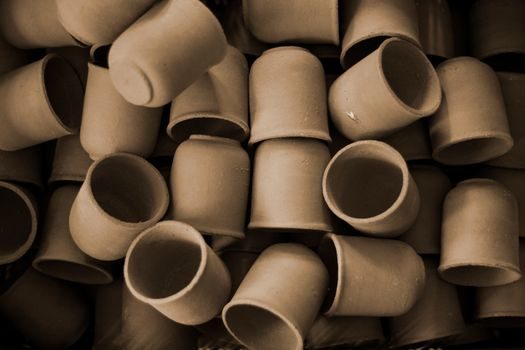
Specify Si3N4 first when the application involves rolling contact fatigue, sudden temperature swings, or impact loading: hybrid ceramic bearings (Si3N4 balls on steel raceways), molten-aluminium handling tooling, and reciprocating pump/valve bushings are textbook fits; the 50 % fracture-toughness advantage over SiC is the differentiator on impact and chipping [S1].
Specify SiC first when the duty is abrasive sliding, fixed abrasive particle impact, or high heat-flux conduction: sandblasting nozzles (SiC life is multi-fold that of alumina and Si3N4 in the same test), wafer-handling chucks, heat-exchanger tubes, semiconductor diffusion-furnace paddles, and chemically aggressive fluid handling parts where the binder chemistry must be inert [S1]. Nitride-bonded SiC variants specifically target refractories, blast-furnace components and zinc/lead metallurgy where the Si/Si3N4 skeleton is engineered, not sintered [S2][S3].
Selection Criteria a Process Engineer Should Write Down
Four filters separate the two: (1) fracture toughness and impact — Si3N4 wins; (2) hardness and abrasive-erosion — SiC wins; (3) thermal-shock ΔT and CTE-driven cycling — Si3N4 wins on ΔT, SiC wins on conductivity; (4) chemical resistance to strong acids/HF — SiC is generally the more inert option, although binder chemistry in the specific grade (Si3N4 vs Si vs oxide) drives the actual envelope [S1][S2].
For bearing and rolling-contact service, default to Si3N4 GPSSN or HIP-repressed grades; for sliding seal faces and high-pressure pump shafts, default to reaction-bonded or sintered SiC; for refractories and molten-metal contact, default to nitride-bonded SiC with engineered Si/Si3N4 binders [S1][S2][S3]. The cost-geometry-MOQ envelope mirrors other technical ceramics and is covered in the alumina price and cost guide and the carbon fibre vs alumina ceramic spec cut; SiC and Si3N4 are routinely quoted on the same RFQ sheet because the grade decisions are independent of the steel vs silicon-steel core material choice downstream [S4].
Limits, Failure Modes and Standards Anchors

Known failure modes to design against: (a) Si3N4 oxidises above ~800-900 °C in air with mass gain and surface β-SiAlON/SiO2 formation — a real ceiling for long-duration high-temperature service; (b) SiC is sensitive to impact at sharp corners (lower K_IC) and to certain metal/oxide couples at high temperature where reaction products form; (c) oxide-impurity binder phases in either family can dominate high-temperature strength loss more than the bulk phase [S1][S2].
For procurement QA, anchor the order to: ISO 26602 for ceramic bearings (Si3N4 balls), ASTM C1161 (or the equivalent ISO/ASTM flexural-strength bar) for strength reporting, ISO 3613 / ASTM B117 family for surface treatments where applicable, and a written trace of starting powder (α-Si3N4 content, β-SiC vs α-SiC), sinter route, and HIP cycle [S1][S4]. One direct industry-spec reference: "Nitride-Bonded Silicon-Carbide Composites Based on Artificial Ceramic Binders," Refractories and Industrial Ceramics, 2020, which is the canonical peer-reviewed source for nitride-bonded SiC composition/firing data on the [S2][S3] side.
Sourcing Levers Buyers Use in 2026
Three procurement levers materially shift lead time and price: (1) forming route (cold isostatic press + green machining vs dry pressing vs slip casting), with CIP+GMM giving the best Si3N4 ball-grade properties and the longest lead time; (2) post-process HIP, which closes residual porosity and is mandatory for bearing-grade Si3N4 but is optional for many SiC refractory and wear parts; (3) finish-grind, lap and polish tolerance, which on SiC is the slower step because of hardness [S1][S4].
MOQ economics from the Chinese supply side: piece-level MOQs as low as 10 pieces, with FOB piece price ranging from USD 0.10 to USD 100 depending on geometry, tolerance and grade, and supply ability on the order of 100,000 pieces per month per supplier for standard Si3N4 and SiC parts [S4]. For European and North American plant buyers, payment terms remain T/T or Western Union through major Chinese technical-ceramic shops, and the engineering question is almost always the same: do I need toughness (Si3N4) or wear/conductivity (SiC) first, and which test certifies the choice in writing [S1][S4]?
The silicon carbide reference page and the silicon nitride reference page are the in-depth material anchors to read alongside this comparison.