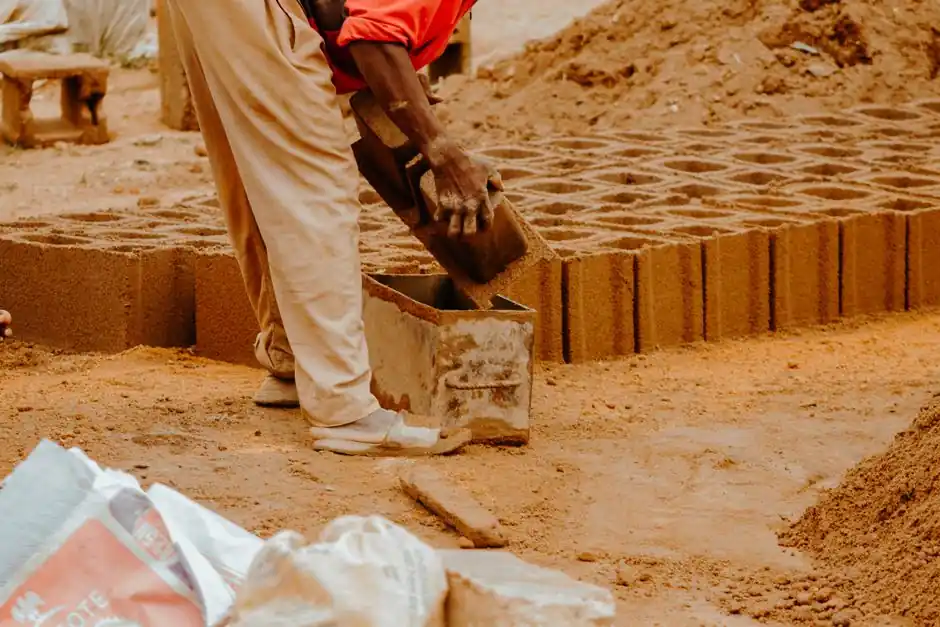
Silica sand (SiO2) is the lowest-cost and most widely used foundry aggregate, but its melting point sits at roughly 1750 °C and its refractory service ceiling lands between 1300-1450 °C, which is why steel foundries specify chromite or zircon on the metal-facing layer [S5].
Chromite sand (FeCr2O4) carries a melting point near 2180 °C, a specific gravity of 4.5-4.8 g/cm3, and a bulk density of 2.5-3.0 g/cm3, while zircon sand (zirconium silicate, ZrSiO4) holds the lowest thermal expansion of the three and the best resistance to wetting by molten metal [S1][S4][S5].
Material Chemistry and Sourcing
Zircon sand is composed of roughly two-thirds zirconium oxide and one-third silica, a ratio that drives its low thermal expansion and high refractoriness; primary foundry sources are Florida and South Africa, which sets a structural floor on price [S1][S7]. Chromite sand is a natural iron chromium oxide, with the major foundry-grade supply coming from South Africa and Zimbabwe [S5]. Silica sand is largely a domestic commodity in most regions, with rounded coastal grains from Hainan-style deposits competing against sharper crushed angular grain [S5]. Particle morphology matters at the binder level: rounded sub-spherical chromite grains reduce resin demand in resin-coated sand systems because the lower specific surface area lets foundries cut binder addition while still hitting tensile targets [S5]. For an overview of how these aggregates fit into the broader casting mold system, the chemistry-first view is the cleanest entry point.
Thermal Performance: Pour Temperature Envelope
Steel castings are poured above 1500 °C, and at that envelope silica grains soften, sinter, and allow liquid metal to penetrate the mold wall, producing burn-in and veining defects; chromite sand with a 1800 °C+ refractory service limit absorbs that thermal load at the mold-metal interface [S5]. Zircon sand matches that refractoriness profile and adds the lowest thermal expansion coefficient of the three, which is why it suppresses expansion-related defects (scabbing, rat-tails, buckles) that silica's higher expansion coefficient creates during the heating phase of the pour [S2][S1]. Chromite distinguishes itself with the highest thermal conductivity of the three, so the mold face pulls heat out of the casting faster, producing a true chilling effect that refines grain structure in iron and steel sections [S4][S5].
Mechanical Hardness and Bulk Density
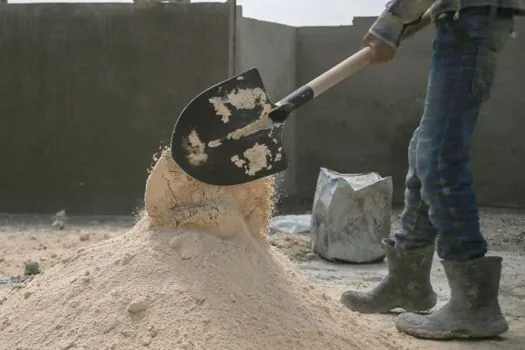
Chromite sand shows a Vickers hardness of 1278-1456 kg/mm2 with a Mohs hardness of 5.5-6, while silica sand actually rates harder on Mohs at 7-7.5 but with a lower specific gravity of 3.6 g/cm3 and a bulk density of only 1.5-1.6 g/cm3 [S5]. The lower bulk density of silica means more sand volume per ton, which is part of why it is cheap per kilogram, but it also means the sand pack is more compliant and easier to ram around patterns in green-sand systems. Chromite's higher mass per unit volume is what gives it the chilling action: denser grains store more heat and conduct it away from the solidifying skin faster [S4][S5]. In a stacked sand mold build, that is why a thin chromite or zircon facing layer over a silica backup is the standard high-temperature pattern.
Decision Matrix: Which Sand for Which Job
Spec the three options against four decision criteria, drawing the numbers from the cited sources: cost per ton (qualitative, silica lowest, chromite mid, zircon highest because of source geography) [S1]; refractory ceiling (silica 1300-1450 °C, chromite and zircon both above 1800 °C service) [S5]; thermal expansion behaviour (silica highest, chromite lower, zircon lowest) [S2][S5]; and chilling/heat-removal (chromite highest, zircon moderate, silica lowest) [S1][S4]. For non-ferrous work in aluminum and copper alloys, silica sand covers roughly 80% of green-sand and chemically bonded applications at the lowest binder cost [S1][S3]. For iron castings above ~1450 °C, chromite is typically specified as a facing sand or shell-mold aggregate where chilling and penetration resistance dominate [S4][S5]. For precision steel, stainless, and manganese-steel castings where dimensional tolerance is tight, zircon is the default facing choice because its near-zero expansion behaviour keeps the mold geometry stable through the thermal cycle [S1][S2]. Olivine and ceramic sands sit outside the three-way comparison but fill the niches where alkaline chemistry (olivine) or multiple-reclaim cycles (alumina-based ceramics) are the deciding factor [S1].
Limitations, Failure Modes, and Health Constraints
Crystalline silica dust is a regulated respiratory hazard, and foundries are tightening restrictions on airborne SiO2 exposure, which pushes some operations toward chromite, zircon, or ceramic facing layers purely on occupational health grounds even when the alloy would tolerate silica [S1]. Chromite sand reacts poorly with some acidic binder systems and can introduce chrome-related variables in stainless melt control, so binder compatibility must be trial-poured before specifying a full chromite facing [S4]. Zircon's cost means it is rarely used as a full mold or core fill; foundries reserve it for facings, cores, and chills where its expansion behaviour earns the price premium [S1][S4]. Resin-coated sand processes, shell molding, and resin no-bake all sit in the chromite-sand comfort zone per the HAIXU technical write-up, with the sub-spherical grain geometry reducing resin addition while keeping core strength and shakeout behaviour in spec [S5]. For operations running a resin sand line, chromite as the facing aggregate and silica as the backup fill is the most common 2026-era build for steel work. A related note for foundries that reuse facing sand: chromite and zircon are denser and harder than silica, which changes sand cooler residence time and sand mixer blade-wear budgets.
Sourcing Signals Worth Tracking
Two verifiable signals to watch through 2026: chromite supply remains import-dependent for Chinese and European foundries, so logistics and South Africa/Zimbabwe production reports move chromite spot prices more than they move silica or zircon [S5]. Zircon pricing tracks Florida mining and South African output, and any sustained zircon price softening would be a direct trigger for foundries currently running silica facings on mid-range steel work to test a zircon upgrade. For context on binder-side decisions that travel with sand selection, see the engineering guide on No-Bake Sand Reclamation: Typical Recovery Rates and What Governs Them; on the metal-removal side, Shot Sleeve Fill Ratio in Aluminum Die Casting: The 40-70% Engineering Window covers the pouring-window numbers that determine whether silica is even an option for a given alloy.