Silicon carbide (SiC) ceramic grades for machine guarding frames are selected on five engineering axes: Vickers hardness, fracture toughness, bulk density, thermal conductivity, and net-shape machinability [S2][S3].
Polycrystalline SiC exists in reaction-bonded (RB-SiC / SiSiC), sintered (SSiC), hot-isostatic-pressed (HIP-SiC), and SiC-fiber reinforced composite forms, each of which produces a different balance between impact tolerance, mass, and fabrication cost for structural guarding members [S2].
Hardness and Wear Resistance of SiC Grades
Vickers hardness values of commercial SiC ceramics are typically reported in the 20-28 GPa band, materially higher than alumina (≈15-18 GPa) and engineering steels, which translates into direct abrasive-wear resistance for guarding frame edges that face repeated chip or fixture contact [S2]. Sintered and HIP-SiC grades sit at the top of that hardness range because of lower residual silicon and tighter grain-boundary phases, while reaction-bonded grades trade a small fraction of hardness for higher fracture toughness and lower sintering cost [S2].
For machine guarding frames that double as work surfaces — fixturing jigs, chip-shield panels, sliding windows — the higher hardness directly extends service intervals and reduces surface scoring that would otherwise mark workpieces.
Fracture Toughness and Impact Loading
Phase-field modeling of polycrystalline SiC and diamond-SiC composites shows that introducing a tertiary grain-boundary phase raises both strength and ductility metrics versus monolithic reference ceramics [S2]. Reaction-bonded SiC generally delivers higher apparent fracture toughness than monolithic sintered SiC because the free-silicon phase bridges crack fronts; this matters for guarding frames that must survive a dropped tool or a kicked casting without shedding shards into the work envelope.
Where the guarding frame also acts as a containment barrier for high-energy moving parts, a SiC-fiber reinforced composite lay-up can be specified to absorb impact through controlled cracking rather than catastrophic brittle fracture — at the expense of higher per-part cost and more involved NDE.
Density, Mass, and Frame Inertia

Bulk density of SiC ceramics falls in the 3.0-3.2 g/cm³ range, roughly one-third the density of alloy steel [S2].
Lower frame mass also simplifies manual swing-gate or lift-off panel hardware, and reduces the holding torque required at the servo-motor drives that index rotating guarding sections on automated cells.
Thermal Conductivity and Heat Dissipation Near Hot Machines
SiC ceramics carry thermal conductivity in the order of 120-200 W/m·K for sintered grades, well above alumina and most engineering plastics used as machine windows [S2]. In guarding frames that adjoin laser enclosures, friction-stir weld cells, or hot-press stations, this heat path moves incidental thermal load into the frame mass and away from seals, bearings, and adjacent pressure sensor cabling.
The same thermal channel is a reason SiC is increasingly specified for guarding window inserts that double as IR or stray-beam attenuators — the panel self-cools under continuous radiation rather than softening like polycarbonate.
Machinability and Net-Shape Cost
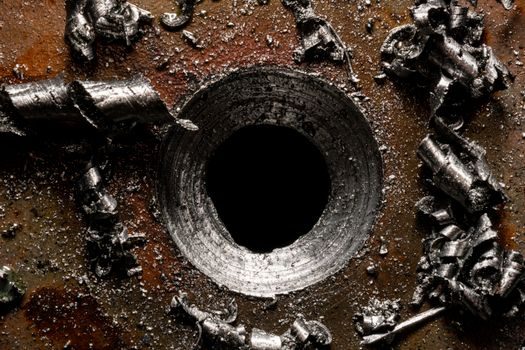
Compound machining combining end electrical-discharge milling with mechanical grinding has been demonstrated as a viable route for shaping SiC ceramics into finished components, addressing the long-standing problem that conventional milling alone drives rapid diamond-tool wear [S3]. For guarding frames, the implication is that complex mounting cut-outs, hinge pockets, and view-port rebates can be produced in SiC without forcing the design into a pressed near-net shape, provided the shop is tooled for ED milling or has access to a job shop running the hybrid process.
Lead-time and unit-cost decisions therefore hinge on whether the frame geometry is simple enough for a pressed RB-SiC blank or requires a sintered/HIP grade with full 5-axis grinding — a comparison that mirrors the cost-versus-precision decision engineers already make on industrial valve trim parts.
Comparison of SiC Grades Against Selection Criteria
Across the five selection axes, the three common SiC families line up as follows for guarding frame duty: reaction-bonded SiC wins on cost and toughness, with moderate hardness; sintered SiC wins on hardness, thermal conductivity, and chemical inertness, with lower toughness and higher tool wear; SiC-fiber reinforced composites win on impact tolerance and damage-tolerant failure mode, at the highest unit cost and longest lead time. The trade is summarised in the table below. [S1]
Criteria / Grade: RB-SiC (SiSiC), SSiC, SiC-fiber composite. Hardness: medium-high, high, medium. Fracture toughness: high, low-medium, highest (damage-tolerant). Density: ≈3.1 g/cm³, ≈3.15 g/cm³, ≈2.6-3.0 g/cm³ depending on fiber volume. Thermal conductivity: medium, high, medium-high. Machinability / cost: best net-shape, lowest cost; grind-only, mid cost; lay-up + cure, highest cost and lead time [S2][S3].
Limitations, Failure Modes, and Specification Pitfalls
Brittle fracture under tensile or bending load remains the governing failure mode for monolithic SiC grades; impact energy that would dent a steel panel will chip a sintered SiC panel, and any through-thickness crack can propagate abruptly [S2]. Specifiers should therefore treat guarding frame designs as compression-loaded wherever possible, add generous fillet radii at corners, and avoid threaded bosses in tension.
Galvanic and chemical compatibility with the surrounding machine must be checked: SiC is largely inert to water, oils, and most coolants, but free silicon in RB-SiC can react with strong alkalis, and any stainless fasteners embedded in the frame should be isolated to avoid bimetallic corrosion that would loosen the joint long before the ceramic fails [S2].
Standards, Inspection, and Sourcing Discipline
For frames that also carry pressure transmitter manifolds or flow-meter bodies, the same SiC blank can act as a rigid mounting plate, but the interface should be designed for differential thermal expansion rather than a rigid clamp. [S2]
Trackable signals to watch: new ED-milling + grinding job-shop capacity announcements in EU and US industrial ceramic machining centres, and revised ISO/IEC test-method references for SiC ceramic property reporting landing in 2026 - 2027.