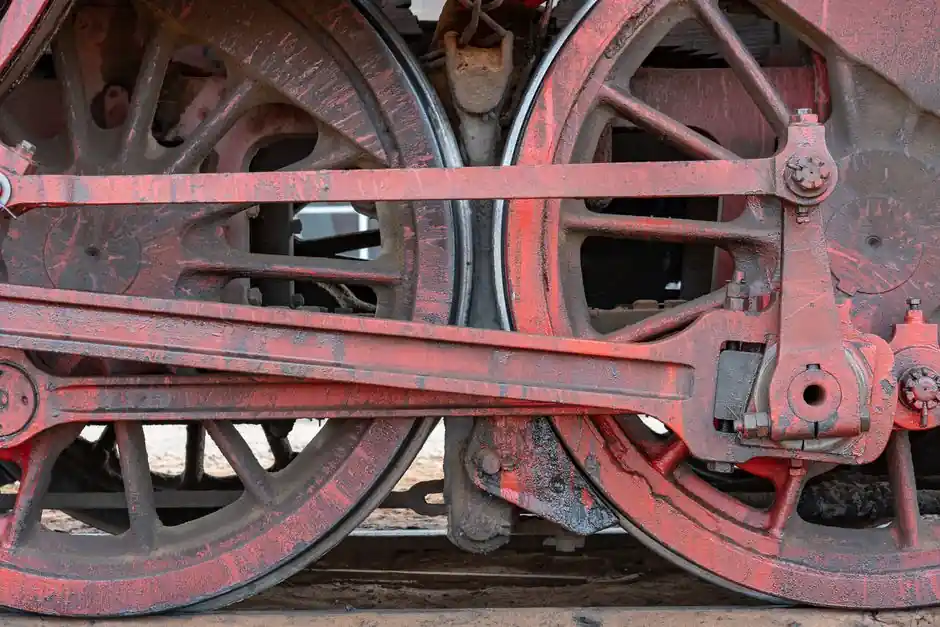
Silicon carbide (SiC) is now the default candidate for rail-spec friction pairs, pantograph contact strips, traction motor bearings and brake disc friction layers, with four bond systems (OBSC, NBSC, RBSC, SSiC) offering different operating envelopes from 1,400°C to 1,800°C [S1]. Mohs hardness 9.2-9.5 and thermal conductivity above 100 W/m·K make SiC the hardest and most thermally conductive structural ceramic in regular rail-industry use [S1][S2].
Rail applications split into three load cases: rolling/sliding contact (wheel tread, brake disc, pantograph), rotary support (traction motor and gearbox bearings), and structural wear liners (sander nozzles, dust guards, coupler sidebear). Each load case pulls a different SiC sub-grade; mis-selecting RBSC where SSiC is required is the most common rail-procurement failure logged by Highland Refractory's B2B engineering team [S1].
SiC Material Sub-Grades Mapped to Rail Subsystems
Silicon carbide ranks approximately 9.2-9.5 on the Mohs scale, behind only diamond and cubic boron nitride, which is the headline property that makes it a wear-resistant candidate for wheel/rail and pantograph/catenary pairs [S1]. Microplan Group's technical brief lists SiC alongside alumina ceramic as one of the two highest-performing industrial ceramic families for severe-service components [S2]. The four engineering bond systems have sharply different operating envelopes: oxide-bonded SiC (OBSC) tops out around 1,400°C and is the cheapest route, used in low-stress sander nozzles and dust-guard liners; nitride-bonded SiC (NBSC) extends to 1,550°C with better thermal-shock tolerance, used in aluminum smelter sidewalls but only marginally in rail [S1]. Reaction-bonded SiC (RBSC) and pressureless-sintered SiC (SSiC) are the rail-relevant grades, with RBSC offering near-net-shape forming at moderate cost and SSiC delivering the highest purity (free silicon below 1%) and the best corrosion resistance for traction-motor bearing cages and pantograph contact strips [S1].
For high-speed EMU traction motor and axlebox bearings, SSiC or SiC/Si₃N₄ hybrid ceramic rolling elements are increasingly specified, with reported service life 5-10x bearing steel and 30% friction reduction in the FAG/INA hybrid product line [S4]. A typical high-speed rail application including silicon carbide materials is documented in our Silicon Carbide Selection for Medical Devices spec map, which uses the same four-tier bond-system decision tree that rail buyers should adopt.
Mechanical and Thermal Data Rail Engineers Should Anchor On
SiC has extremely high elastic modulus, high thermal conductivity, and a low coefficient of thermal expansion, which is precisely the property stack rail applications need: low thermal expansion suppresses bending stress under repeated braking thermal cycles, while high modulus keeps the disc flatness under clamp load [S5]. Hardness 9.2-9.5 Mohs directly converts to low wear rate on the wheel-rail contact and on the pantograph strip-catenary wire interface, the two highest-maintenance rail wear points [S1].
Ceramic bearings built from SiC or Si₃N₄ rolling elements run at densities around 60% of bearing steel, cutting centrifugal load and unlocking dmn values in the million-plus range that all-steel bearings cannot reach, which is why high-speed rail traction motor redesigns above 250 km/h are moving to hybrid ceramic bearings [S4]. A rail-grade ceramic bearing must combine SiC or Si₃N₄ balls with bearing-steel or stainless rings (hybrid), or go all-ceramic for the most corrosive tunnel and coastal-rail environments [S4]. SSiC purity is the single most important rail procurement number: free silicon must be specified below 1% to avoid corrosion pitting in axlebox grease and to keep dielectric breakdown high for insulated traction motor cages [S1].
Note: most rail bearing and brake disc applications actually use Si₃N₄ rather than SiC because Si₃N₄ has higher fracture toughness; SiC is selected only where the dominant failure mode is abrasive wear (brake disc friction layer) or where thermal conductivity above 100 W/m·K is mandatory (heat-sink backplates behind SiC friction pads) [S4][S5].
Selection Criteria: SiC vs Si₃N₄ vs Alumina for Rail

SiC wins on the first criterion (up to 1,800°C in inert atmosphere, 1,400-1,600°C in air for SSiC) and on abrasive wear; Si₃N₄ wins on impact and thermal-shock resistance; alumina alumina ceramic wins on cost for non-critical wear liners [S1][S4].
The rail-relevant comparison, in a single block:
Silicon carbide (SSiC): Mohs 9.2-9.5, thermal conductivity above 100 W/m·K, peak use 1,600°C in air, best for brake disc friction layer, pantograph strips, sander nozzles, traction motor heat-sink backplates; life multiplier vs steel 5-10x in hybrid bearings [S1][S2][S4].
Silicon nitride (Si₃N₄): density 60% of steel, hot-pressed strength undiminished to 1,200°C, decomposes at 1,900°C, best for traction motor and axlebox rolling elements and high-speed bearing cages; life multiplier 5-10x [S4][S5].
Alumina (Al₂O₃): cheaper by roughly 3-5x per kg, lower thermal conductivity (~30 W/m·K), best for non-critical wear liners, dust guards, and insulation bushings; not used where SSiC or Si₃N₄ are specified for wear or thermal reasons [S1].
For a rail bearing buyer, the practical rule: specify Si₃N₄ hybrid bearings for traction motors and axleboxes, specify SSiC friction-layer segments for brake discs and SiC inserts for pantograph contact strips, and specify alumina only as a cost-down liner where wear severity is low.
Who SiC Is For, and Where It Should Be Rejected
SiC is the correct rail selection for buyers specifying brake disc friction layers, pantograph contact strips, sander nozzles, dust-guard liners exposed to abrasive brake dust, traction motor heat-sink backplates, and high-speed ceramic-hybrid bearing rolling elements in motors above 250 km/h service [S1][S4]. CoorsTek lists rail and marine as a core end-market for its engineered SiC portfolio alongside chemicals and semiconductors [S6].
SiC is the wrong selection for traction motor and axlebox rolling elements when the dominant failure mode is impact or shock load (Si₃N₄ wins on toughness), for any structural piece subject to tensile bending stress rather than compressive wear, and for any cost-sensitive liner where abrasive severity is low (alumina delivers 3-5x cost advantage) [S1][S4]. Hybrid ceramic bearings that pair SiC rolling elements with steel rings are a niche configuration; the mainstream rail design uses Si₃N₄ balls in steel rings (FAG/INA hybrid family), not SiC balls [S4].
Standards, Test Methods and RFQ Specification Format

Rail ceramic procurement should anchor on a small set of standards: ISO 9001 quality management, ASTM C20 (apparent porosity), ASTM C373 (water absorption), ASTM C133 (refractoriness), and EN 12663 for rail vehicle structural integrity, plus IEC 60085 for electrical insulation thermal class where SiC is used as a dielectric in traction components [S1]. Material and test standards for SiC plates and shapes are referenced in Highland Refractory's specification guide, which is the rail-buyer-friendly format most B2B RFQs follow [S1].
Recommended specification format for an RFQ: state bond system (OBSC / NBSC / RBSC / SSiC), target density (SSiC ≥ 3.10 g/cm³, RBSC ≥ 3.00 g/cm³), free-silicon limit (≤ 1% for SSiC, ≤ 10% for RBSC), Mohs hardness 9.2-9.5, peak operating temperature with margin, dimensional tolerance, and ISO 9001 plus any rail-specific accreditation (IRIS, RISQS) [S1]. For traction motor and axlebox bearings, the buyer should additionally specify ISO 15 boundary dimensions, ISO 492 radial runout, and a vibration grade per ISO 15242 [S4].
Market Context: 2025-2035 SiC Supply and Pricing Pressure
The global silicon carbide market reached USD 5.14 billion in 2025 and is projected to grow from USD 5.67 billion in 2026 to USD 13.26 billion by 2035, a 9.9% CAGR, with Asia-Pacific holding approximately 48.9% share and North America 22% [S3]. Black SiC captured about 45.6% of the 2025 market, primarily steel manufacturing and wear-resistant materials, the same wear-resistant category rail friction layers fall into [S3].
This matters for rail buyers because the supply curve is dominated by electronics-grade SiC demand (8-inch wafer transition, EV 800-volt platforms, AI datacenter power modules), not by rail demand; rail is a small share of an electronics-dominated market and is therefore a price-taker, not a price-setter [S3]. A secondary signal: Sumitomo Corporation's July 2026 project to convert CO2 and silicon-based waste into SiC indicates a long-term supply diversification push, which could ease raw-material volatility for non-electronic grades by the late 2020s [S7]. For rail procurement teams, the practical implication is to lock 12-24 month supply contracts for SSiC and RBSC grades, and to qualify a second source within the Asia-Pacific supplier base where 11.3% CAGR capacity expansion is concentrated [S3].
Installation, Inspection and Lifecycle Constraints
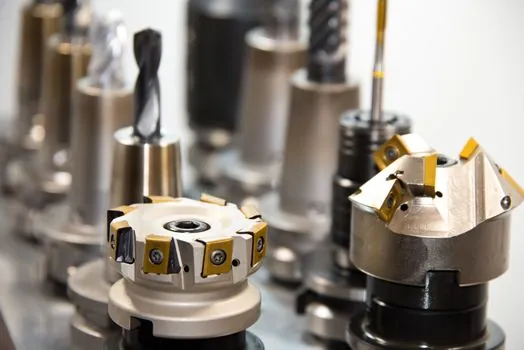
SiC is hard but brittle: impact during installation is the most common in-service failure mode, and the rail-industry rule is to handle SiC components with soft slings, never steel hooks, and to avoid point loads during press-fitting of bearing rings [S1][S4]. Thermal cycling must respect the bond system: SSiC tolerates rapid heating and cooling better than RBSC because of its near-zero free silicon and uniform grain structure, but neither tolerates the thermal-shock rates that Si₃N₄ can absorb [S1].
Lifecycle numbers from real deployments: Schaeffler's FAG/INA silicon nitride and silicon carbide hybrid ceramic ball bearings are documented at 30% friction reduction and 50% life extension versus all-steel bearings in comparable service [S4]. In rail-served semiconductor fabs and in kiln furniture, SSiC setter plates and process plates routinely run service life multipliers above 10x versus oxide-bonded alternatives, which is why the same material is now being specified for the most demanding rail wear interfaces [S1]. Inspection intervals for SiC rail components are typically aligned with the wheel-set or brake disc overhaul cycle, and in-service inspection focuses on crack initiation at press-fit shoulders and on free-silicon corrosion in axlebox environments, not on bulk wear, because bulk wear on SiC is negligible versus steel [S1][S4].
For buyers comparing the rail-relevant SiC and Si₃N₄ material families against the broader engineering ceramic catalog, a useful cross-reference is our SiC Ceramic Selection for Electronics spec gate, which uses the same bond-system taxonomy and adds the wafer-grade purity constraints that any traction-motor SiC buyer should also consider. Closing signals to track: SSiC free-silicon limit convergence below 0.5% as electronics-grade capacity scales through 2026-2027, and IRIS-certified rail ceramic bearing suppliers adding to the qualified vendor list, both of which will tighten the rail SiC supply curve over the next four quarters.
Spec-level background on the components involved: silicon carbide, and silicon nitride.