Silicon steel selection for marine engineering is zone-driven, not grade-driven: splash, immersion, and atmospheric exposure each dictate a different Si level, base chemistry, and protection scheme, and the global annual cost of corrosion is approximately US $2.5 trillion, about 3.4% of world GDP, per a 2016 NACE International figure cited in 2026 review work [S1].
Silicon itself is one of the principal alloying levers a marine engineer has, and Si additions on the order used in 550 MPa-grade high-strength low-alloy marine steel measurably shift corrosion behaviour in simulated marine atmosphere tests [S3]. This article lays out the decision logic, the data behind it, and where the boundaries still fail.
What "silicon steel" means in a marine context
Silicon steel in marine engineering covers three distinct families that are easy to conflate. First, electrical steel (grain-oriented and non-oriented, typically 3% Si) used in marine motors, generators, and transformers is governed by magnetic-loss specifications and is covered in the silicon steel reference. Second, constructional low-alloy marine steel where Si is one of several alloying elements, with total alloy content not exceeding 5%, per the standard low-alloy steel definition used in marine corrosion reviews [S1]. Third, silicon-rich stainless and duplex grades (for example 316 with roughly 1-2% Si as a residual, or silicon-bearing duplex variants) where Si contributes to pitting resistance.
The 2026 corrosion-potential review distinguishes carbon steel (high strength, low cost, abundant raw materials) from low-alloy steel produced by adding small amounts of Mn, Si, Cr, and Ni, total alloy content not exceeding 5%, with improved strength, toughness, and corrosion resistance at a moderately higher cost [S1]. For a spec engineer, the takeaway is that "more Si" is not a free upgrade: each application zone has an optimum, and Si beyond that optimum can hurt toughness and weldability.
The three exposure zones, and what Si does in each
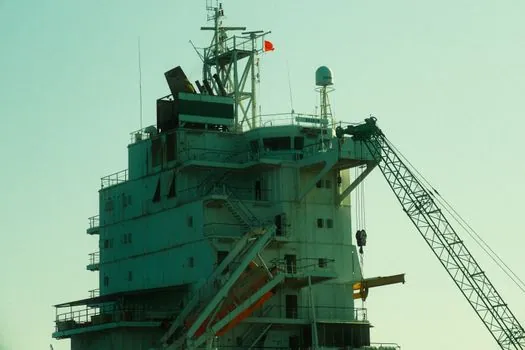
The 2026 selection guide partitions marine service into three zones with different primary needs, and each zone maps to a different optimal Si strategy [S4]. In the structural zone (hull, frames, supports) the primary need is high strength, good toughness, excellent weldability, and fatigue resistance, with corrosion managed by coatings plus cathodic protection, so the base material is marine-grade carbon steel such as AH36 (355 MPa yield) or DH36 (355 MPa yield with enhanced toughness at -20 °C) certified by ABS or DNV [S4].
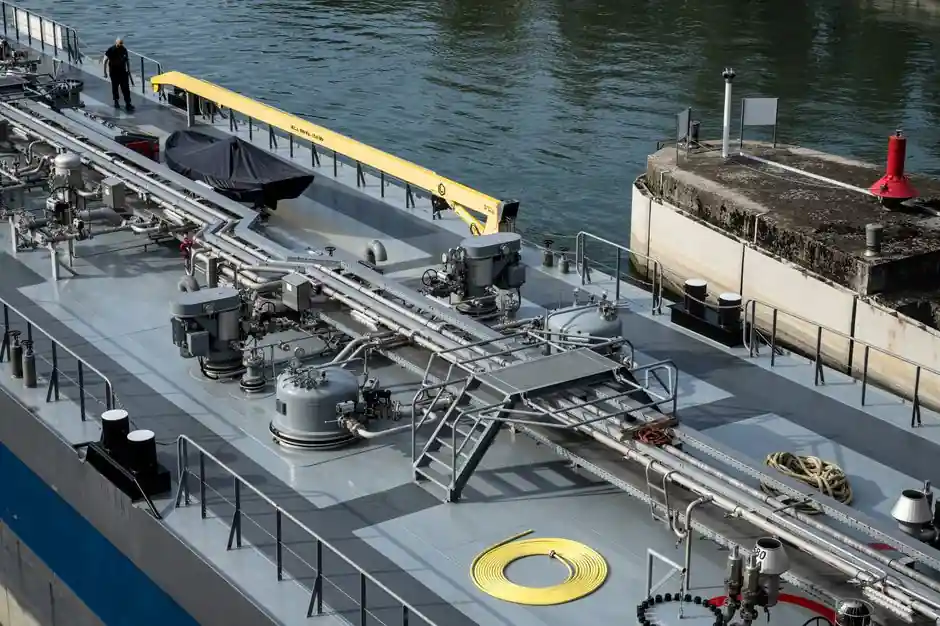
In the splash and atmospheric zone (deck hardware, railings, superstructure) the primary need is extreme corrosion resistance under constant wet/dry salt cycles with high oxygen exposure, the most corrosive marine condition, and austenitic stainless steel, typically grade 316, is preferred because the chromium and molybdenum create a passive layer that resists saltwater attack [S4]. Si enters here as a minor alloying element that supports passivation. In the fully submerged zone (piling, subsea structures) the primary need is corrosion resistance often combined with cathodic protection and resistance to marine growth under constant immersion and lower oxygen; marine carbon steel with robust coatings and sacrificial anode systems is standard, with duplex stainless or nickel-copper alloys reserved for critical unmanned components [S4].
The mechanistic role of Si is clearest in the atmospheric zone. Work on 550 MPa-grade HSLA marine steel shows that varied Si content measurably changes corrosion behaviour in simulated marine atmosphere, with the corrosion layer composition and protectiveness shifting as Si moves [S3]. For selection purposes, treat Si as a tunable knob on the 0.2-1.5% range for low-alloy constructional marine grades, not a "set-and-forget" addition.
Selection criteria ranked by decision weight
Putting the criteria in order, marine steel selection for any given component should follow this priority stack [S4][S5]. First, environment zone: splash, immersion, or atmospheric, because this single decision rules out roughly half the candidate grades. Second, mechanical load and required toughness at the operating temperature, where DH36 (355 MPa yield with enhanced toughness at -20 °C) is the workhorse for cold-service hulls [S4]. Third, corrosion allowance versus corrosion-resistant alloy: 2016 NACE data put global corrosion cost at US $2.5 trillion per year, 3.4% of world GDP, so this trade-off has real budget weight [S1]. Fourth, fabrication: weldability and formability, where higher Si tends to harden the heat-affected zone. Fifth, classification society certification (ABS, DNV) for primary structure [S4]. Sixth, section geometry for piling: section modulus, interlock integrity, and corrosion resistance for sheet pile systems in waterfront construction [S5].
For sheet pile systems specifically, designers weigh section modulus, interlock integrity, and corrosion resistance, and projects in saltwater environments often rely on protective coatings or corrosion allowance strategies to ensure long-term performance [S5]. The interlocking profiles that make sheet piles attractive in confined-space waterfront work also create crevices that trap moisture, so corrosion allowance and coating strategy are not optional.
Material comparison across the main candidate options
A criteria-based comparison is the fastest way to keep these grades straight for a procurement spec. The table below lines up the three workhorse material families against the four decision points that come up on every marine project. [S4]
Marine carbon steel (AH36, DH36, 355 MPa yield, ABS/DNV certified) is the lowest cost per tonne and the easiest to weld, with toughness at -20 °C available in the DH36 variant, and corrosion handled by coating plus cathodic protection; it is the right pick for hull plating, frames, and primary structure [S4]. Austenitic stainless 316 (roughly 16-18% Cr, 10-14% Ni, 2-3% Mo) has excellent splash-zone corrosion resistance, low maintenance, and good appearance but a much higher unit cost and is typically reserved for deck hardware, railings, and piping fittings [S4]. Low-alloy HSLA marine steel with 3-5% total alloying including Si sits in the middle on cost, offers higher strength than carbon steel and better atmospheric corrosion resistance via Si-tuned passive layers, and is a common pick for offshore superstructure and crane pedestals [S1][S3].
Duplex stainless (roughly 22% Cr, 5% Ni, 3% Mo, with nitrogen) extends stainless performance into the submerged zone for critical unmanned components, with higher strength than 316 and better chloride resistance, at the highest unit cost in this set [S4]. Sheet pile systems, typically hot-rolled carbon steel in Z or U profiles, are selected on section modulus and interlock integrity with corrosion managed by coating or allowance, and are the standard for seawalls, cofferdams, and bulkheads [S5].
Where Si earns its keep, and where it does not
For low-alloy constructional marine steel, the role of Si is to support the formation of a more protective rust layer in marine atmosphere, which is why Si is treated as a deliberate alloy addition rather than a residual. In 550 MPa-grade HSLA marine steel tested under simulated marine atmosphere, varied Si content shifts both the corrosion rate and the protectiveness of the corrosion product layer, with the optimum depending on the combination with Mn, Cr, and Ni [S3]. The 2026 corrosion-potential review frames Si as one of the small-alloying levers, alongside Mn, Cr, and Ni, that the machine-learning models for corrosion potential use as input features alongside processing parameters and corrosion medium [S1].
For electrical steel on board, the Si specification is set by core loss and magnetic flux density at the motor or transformer operating frequency, and is not selected for corrosion resistance at all. Engineers specifying marine propulsion motors or generator sets should not reuse the same Si logic as hull plating, and the silicon steel reference covers the electrical-grade trade-offs separately. The most common spec error on marine retrofit work is to use a 3% Si electrical-steel core in a structural context, or to specify a low-alloy constructional grade for a motor lamination stack.
Limitations, failure modes, and standards to watch
The hard limits on silicon steel selection for marine engineering come from the environment, not the datasheet. Splash-zone components fail fastest because constant wet/dry salt cycles with high oxygen exposure is the most corrosive marine condition, and that is where 316 or coated carbon over cathodic protection earns its premium [S4]. The 2016 NACE figure of US $2.5 trillion per year in global corrosion cost, 3.4% of world GDP, is the budget envelope that justifies that premium on critical components [S1].
Selection guidance from classification societies (ABS, DNV) governs primary hull structure, and the structural grades AH36 and DH36 are explicitly certified to that regime, with DH36 specified where -20 °C toughness is required [S4]. For sheet piling in waterfront construction, the dominant standards relate to section modulus, interlock integrity, and the chosen corrosion-protection strategy (coating, cathodic protection, or corrosion allowance) [S5]. Where the research does not give a specific standard number, the requirement is described here without naming a standard, per the editorial rule on not inventing standard references.
Machine-learning work on corrosion-potential prediction for marine engineering steel is moving fast, with established techniques including SVR and ANN widely reported, and XGBoost recently identified as a strong performer for stress-corrosion cracking prediction in simulated marine environments [S1]. The practical implication for a 2026 spec is that corrosion-potential inputs now include alloy composition, processing parameters, and corrosion medium as model features, which means the procurement spec sheet itself is becoming a model input rather than a static document [S1].
Sourcing notes and what to verify on the supplier side
Supplier evaluation for marine silicon steel should run through three filters. First, confirm the classification-society certificate (ABS, DNV, or equivalent) is current for the specific grade and thickness ordered; AH36 and DH36 plate is the most counterfeited category in this space. Second, request the actual heat-analysis chemistry, not just the grade name, and check the Si value against the range the corrosion model in the 2026 review uses as input [S1]. Third, for sheet pile systems, confirm the interlock geometry and section modulus match the project soil and water-retention requirements, and confirm the coating system or corrosion allowance is sized to the project service life [S5].
For structural components exposed to marine atmosphere, the 2024 work on Si content in 550 MPa-grade HSLA marine steel is the cleanest public reference for how Si moves the corrosion-rate needle, and is a good anchor when pushing back on a supplier proposing a generic "low-alloy" substitute [S3]. For 316 stainless fittings and fasteners, the splash-zone justification in the 2026 selection guide is the strongest single argument for paying the premium over coated carbon [S4]. Related spec-anchored reading on coating strategy is in the industrial coating types guide, and broader alloy cost trade-offs are covered in the copper material TCO analysis.
Trackable signals to watch over the next procurement cycle: revised classification-society notes on Si limits in DH36 and EH36 welds, the publication of standardized corrosion-potential datasets for XGBoost and SVR models referenced in the 2026 review [S1], and any move by major marine operators to publish Si-range specifications on low-alloy hull plate rather than leaving it to the steel mill default.
Component reference pages worth checking: engineering plastic, and marine hvac.