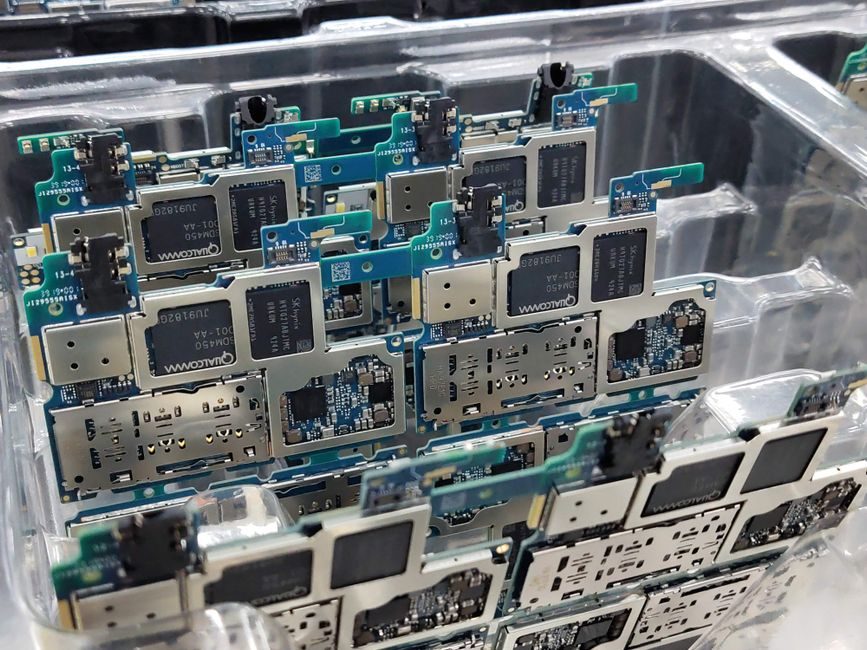
OEM and ODM describe two different ownership models for the same physical wafer: in OEM the buyer owns the design, mask set, and process recipe and the foundry only runs it, whereas in ODM the supplier ships a ready-engineered wafer — typically a 2–12 inch dummy wafer, test wafer, or reclaim/recycled wafer — that the buyer rebrands [S2][S7].
Both routes converge on the same SEMI-spec output (diameter, thickness, TTV, bow/warp, surface metal counts), but the contract scope, IP allocation, and minimum economic order differ by an order of magnitude between the two models [S7][S8].
Definition and IP boundary between OEM and ODM wafer work
OEM in the silicon wafer context means the customer supplies the wafer specification — diameter, crystal orientation (typically <100> or <111>), doping type and resistivity range, surface finish (polished, etched, or polished-back), and the relevant SEMI standard (e.g. SEMI M1 for prime silicon wafers) — and the foundry produces to that spec without contributing design IP [S2][S8]. ODM goes further: the manufacturer has already designed a generic platform (a standard 6-inch or 8-inch test/dummy wafer, a polished Si wafer with TT<5 µm, or a Film/glass wafer stack) and licenses or rebrands it to the customer, with only the brand label and a small parameter window being customer-specific [S7]. Under ODM, the ODM firm owns the design and may also hold the patent; under OEM, the buyer's design team writes the spec and the foundry is paid for conversion [S2][S9].
Decision matrix: which model fits which buyer
Choose OEM when the wafer is destined for a specific device (power MOSFET, MEMS sensor, advanced logic node) and the fab line must be qualified to SEMI M1 prime-grade cleanliness (particles <0.03/cm², metals <1×10¹⁰ atoms/cm²) — GlobalWafers-class producers explicitly target this OEM/merchant-supplier slot, serving 100% of the top 25 semiconductor customers with custom resistivity and thickness profiles [S8]. Choose ODM when the wafer is used as a tool — equipment monitor, process-dummy carrier, or package-test substrate — where the 2/4/6/8/12-inch dummy wafer catalog from a Chinese supplier such as Shanghai FSM (founded 2008, ~1,200 m² class-1000-class cleanroom footprint, team with 5+ years of process experience) drops in with little to no design effort from the buyer [S7]. A side-by-side comparison of the two models on the four criteria that drive sourcing decisions:
1) IP ownership — OEM: customer owns mask/recipe; ODM: supplier owns platform design [S2][S9]. 2) Time-to-first-wafer — OEM: 8–16 weeks for process lock-in; ODM: typically 1–3 weeks for catalog dummy/test wafer [S7]. 3) MOQ — OEM: tied to ingot/wafer run, often 25–100 wafers per lot; ODM: 1-piece sample widely listed (e.g. 20,000-piece tiers on adjacent silicone product lines indicate catalog scale) [S3]. 4) Unit cost — OEM: 2–4× higher per wafer due to qualification and yield loss; ODM: catalog-priced, often quoted in USD per wafer in the single-digit to low-tens range for dummy/test grades [S7].
Process-node and product-type fit
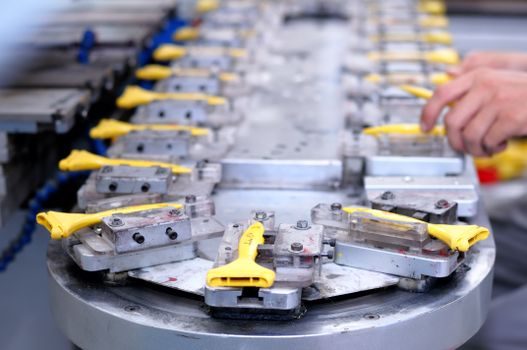
For prime wafers feeding a fab's front-end equipment, OEM with a fully audited merchant supplier (GlobalWafers, Sumco, SK Siltron, Okmetic, Siltronic) is the default; GlobalWafers itself states it serves 100% of the top 25 semiconductor customers through R&D and manufacturing facilities in the U.S., Europe, and Asia [S8]. For back-end test, equipment-maker dummy loads, or non-electronic wafer-based products (silicone ring covers, silicone catheter valves, silicone-coated wire), ODM dominates because the underlying part is a mature catalog item — the buyer's job is brand, packaging, and distribution, not process design [S1][S3][S6]. A practical threshold: if your application can accept a standard 6-inch or 8-inch polished Si wafer with TTV<5 µm and a published resistivity window, ODM will land inside 4 weeks; if the device requires tight resistivity grading (e.g. <0.01 Ω·cm for a power diode vs >1,000 Ω·cm for a photodiode), the OEM path is non-negotiable [S7][S8].
Standards, QA, and audit signal
Both models ride on SEMI M-series dimensional standards and ISO 9001 quality systems; the Made-in-China supplier listings for adjacent silicone/wafer-handling parts show the typical certification stack buyers can demand — ISO 9001:2015 (quality), ISO 14001:2015 (environmental), and ISO 45001:2016 (occupational health and safety) [S6]. A second concrete signal is the R&D capacity flag published on the same listings: an explicit "OEM" or "ODM" badge, plus an "Own Brand" flag, gives an at-a-glance read on whether the supplier is a pure converter or a designer-converter [S1][S3][S6]. A third, often-overlooked data point is the annual-revenue band the same listings publish: suppliers quoting <1 M USD annual revenue are typically ODM-only job shops, while the 5–10 M USD band correlates with audited OEM/ODM dual-capability factories in Guangdong, Anhui, and Jiangsu [S6].
Limitations, failure modes, and risk-control

The largest single failure mode in OEM wafer sourcing is silent spec drift — resistivity window creep between ingot lots, and metal-contamination excursions that only show up on the customer's SPC chart, not the foundry's CoA. Mitigate by demanding per-lot ICP-MS metal data and a SEMI M1-compliant CoA template [S8]. A second ODM-specific risk is warranty coverage: ODM contracts usually exclude field-failure liability because the supplier never saw the end-device design, so any end-customer claim stops at the buyer's brand.
Selection rule and sourcing handoff
Use the rule of three: if the wafer goes into a qualified fab recipe with published SEMI-spec acceptance criteria, contract OEM with a tier-1 merchant supplier [S8]. If the wafer is a back-end test, dummy-load, or non-fab tool consumable and your timeline is shorter than one quarter, source ODM from a Guangdong or Shanghai-based factory offering 2/4/6/8/12-inch catalog SKUs with sample service and ISO 9001:2015 certification [S1][S6][S7]. For fabs scaling capacity across regions in 2026, the silicon wafer capacity planning build-out decisions sit one layer above this OEM/ODM choice and will dictate which model the merchant supplier can offer at your volumes. Trackable next signals: (a) whether the ODM shop discloses a SEMI M1 CoA template, which is the single fastest way to graduate from ODM to OEM; (b) the supplier's R&D-capacity badge — explicit "OEM" + "Own Brand" = hybrid capability, OEM-only = converter, ODM-only = designer-converter [S1][S6][S8].
For the relevant spec sheets and selection criteria, see additive manufacturing material, silicon carbide, and silicon nitride.