
Industrial silicone rubber is a polymer family based on high-molecular-weight dimethyl siloxane, supplied in three industrially recognised forms: heat-curing gum (HTV), room-temperature-vulcanising liquids (RTV), and heat-curable liquid rubbers (LSR) used in injection moulding [S2].
Commercial stock shapes — strips, sheeting, sponge, extrusions, and pad-printing compounds — map back to these three families, with temperature capability most commonly quoted between -40 °C and +250 °C for general-purpose grades and -60 °C to +250 °C for low-temperature phenyl-modified compounds [S3][S6].
Base chemistry and the three industrial families
Industry classifies silicone elastomers into two distinct product types — heat-vulcanising rubbers (semi-solid, gum-like, requiring traditional rubber processing) and RTV liquids (flowable, ready-to-use, for potting, encapsulation, mould-making, and sealants) — with heat-curable liquid rubbers for moulded parts representing the third generation that emerged after the HTV/RTV split [S2].
Industrial grades are built on dimethyl siloxane with small substitutions along the chain: vinyl groups improve cure performance, resilience, and compression set, while phenyl groups push low-temperature flexibility downward [S2]. Filler/polymer interaction in HTV gums is what allows non-milling, ready-to-use compounds to be supplied directly to fabricators [S2].
Cure systems: HTV, RTV, and LSR compared
Heat-curing gum silicone is processed on conventional rubber equipment — extruders, calenders, compression and transfer moulds — and is the dominant form for wire and cable insulation, automotive hose, and dynamic seals [S2]. LSR closes the gap to plastics processing: it is pumped through injection-moulding machines, curing in hot moulds to produce parts with no secondary vulcanisation step in many modern formulations.
RTV silicone is supplied as pourable liquids that crosslink at ambient temperature by condensation or addition cure; it is the standard format for potting, encapsulation, mould-making for casting, and field-applied sealants — and is not generally used to produce moulded or extruded industrial parts [S2]. For extrusion-dedicated converters, the entire process chain stays inside the HTV family: one Australian extruder, for example, runs exclusively on silicone polymers and ships cut profiles rather than cast parts [S1].
Stock-form families: solid, sponge, strip, and pad-printing compounds

Within HTV, fabricators subdivide stock into solid sheeting, closed-cell sponge sheeting, and extruded strip — each mapped to a duty cycle. Solid kSil®-type silicone sheeting is positioned for gaskets and seals where extreme temperature or chemical inertness drives the spec; silicone sponge sheeting from the same supplier line targets insulation, vibration dampening, and gasket duty where compressibility matters more than a dense section [S6].
General-purpose solid silicone strip is sold in transparent, smooth, non-toxic form with continuous operating range of -40 °C to +250 °C, soft and elastic, and listed as weatherable for outdoor gasket and sealing service [S3]. Pad-printing silicone rubber is a separate compounding branch: it acts as the carrier that transfers patterns from a steel plate onto plastic toys, pens, glass, and electroplated parts, with the grade optimised for high print counts, abrasion resistance, and permanent imaging rather than mechanical sealing [S4].
Form, format, and converter specialisation
Silicone converters tend to specialise by process rather than chemistry. Dedicated extrusion houses run only HTV gum through extruders and supply cut profiles; moulders run LSR through injection machines; casting shops handle RTV for mould-making and potting [S1][S2]. One Shenzhen-headquartered silicone compounder founded in 1998 covers the full range — silicon, silicone rubber, liquid rubber, RTV silicone for plaster mould-making, and mould-making silicone for plastics — illustrating how a single supplier can hold HTV, LSR, and RTV under one roof [S7].
End-use form is also fragmented: silicone labels and patches — softer than PVC and marketed as a more environmentally friendly alternative — are produced for apparel, footwear, automotive, and packaging branding [S5]. Downstream, recovered silicone rubber scrap from mobile keypads, sealant waste, insulators, and pipe-grade production is itself a tradable commodity, listed at roughly $400 per tonne minimum-order on B2B trading desks [S9].
Additives, fillers, and property modification
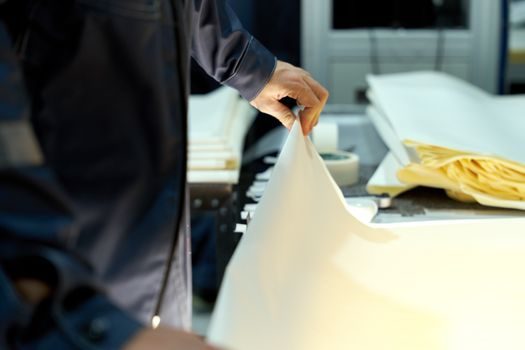
Silicone rubber compounding relies on filler/polymer interaction to reach usable mechanical properties — without fillers, unfilled dimethyl-siloxane gum has poor strength. The Springer reference notes that controlling this interaction is what allows ready-to-use, non-milling compounds to be supplied, and that a steady stream of new additives has historically been used to improve processing and vulcanisate properties [S2].
Vinyl substitution raises cure speed, resilience, and compression-set resistance; phenyl substitution widens the low-temperature window [S2]. Fluorosilicone rubber — a related, higher-cost branch — is referenced alongside HTV silicone in the same technical lineage, used where both extreme temperature and solvent/fuel resistance are required [S2].
Standards, approvals, and selection boundaries
Selection of a silicone grade is normally driven by four criteria in this order: continuous operating temperature window, compression set at service temperature, chemical/fluid exposure, and required cure format (HTV vs LSR vs RTV). Standard solid grades are routinely rated -40 °C to +250 °C [S3], with phenyl-modified low-temperature grades extending the floor to roughly -60 °C [S2][S6].
Sponge and foam grades trade upper-temperature strength for compressibility and insulation value, and are specified where gasket deflection or vibration damping dominates [S6]. Pad-printing compounds and label-grade silicones are not interchangeable with sealing grades: their property targets — print cycles, abrasion, colour stability, hand-feel — are different and not validated against the same duty cycles as a flange gasket [S4][S5]. For a broader polymer comparison, silicone rubber sits next to EPDM and nitrile rubber in most elastomer-selection tables, with industrial rubber covering the wider compounding and processing context.
Limits, failure modes, and sourcing signals to watch

Silicone rubber is not a universal elastomer: it has poor tear strength compared with many organic rubbers, swells in some fuels and solvents (which is why fluorosilicone exists as a branch), and is more expensive per kilogram than commodity nitrile rubber or EPDM [S2]. Pad-printing and label grades are additionally constrained by their converters' colour-matching and adhesion workflows, not by temperature or pressure duty [S4][S5].
Sourcing signals to track over the next quarter: LSR capacity additions from Chinese compounders reporting monthly volumes in the tens of tonnes [S3], continued extrusion-house specialisation on single-polymer lines [S1], and secondary-market pricing for silicone scrap as a proxy for upstream silicone-polymer demand [S9]. Cost-of-ownership context for adjacent fluorocarbon selections is tracked in FKM total cost of ownership 2026.