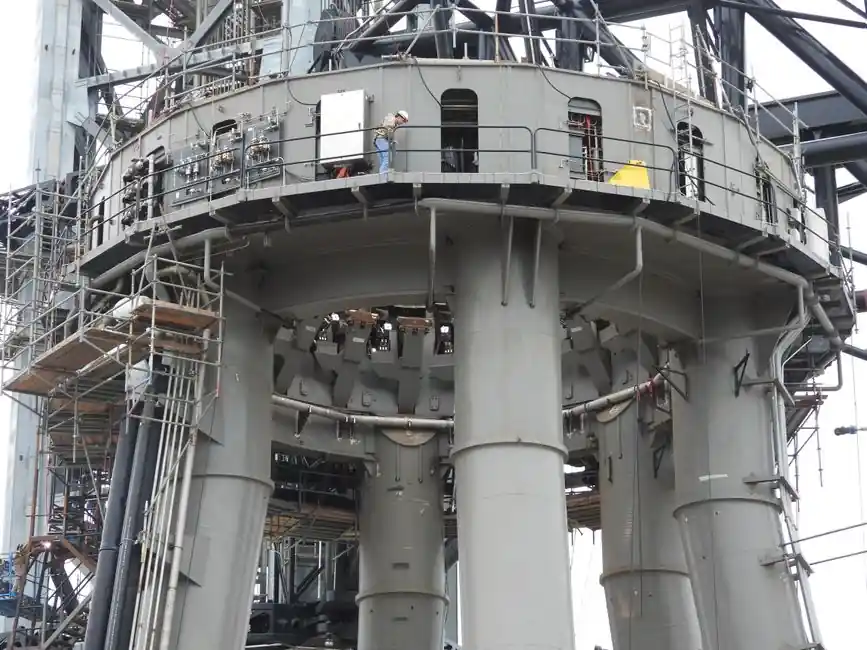
A VLM configured with a single extractor serves standard industrial storage, while access frequency and throughput targets drive the choice between single and twin extractor layouts [S2]. The mast count (one or two) is a structural decision layered on top of that extractor decision, and the two axes are commonly conflated in the field [S2].
The single-mast lift keeps the platform to 0.76 to 0.81 m wide and 1.36 m long, weighing as little as 325 kg, narrow enough to roll through a standard single door [S3]. Twin-mast lifts reach 18 m working height with 250 kg capacity, with the second mast added specifically to eliminate the sway that shows up on single-mast platforms at full extension [S3].
Working Height and Platform Stability: Where Twin-Mast Wins
Single-mast push-around platforms top out near 12 m of working height with 120 to 150 kg capacity, and the limiting factor is column stiffness, not lift mechanism choice [S3]. Above that band, single-column designs accumulate lateral compliance that the operator feels as platform sway under load [S3].
Twin-mast lifts extend that ceiling to 18 m working height at 150 to 250 kg platform capacity, and the second column acts as a direct stiffness multiplier for vertical alignment [S3]. The warehouse-class twin-mast platform from Rees Industries targets the 8 to 12 m band specifically because that range is characteristic of modern large-format distribution centers, and the twin-mast configuration provides superior column stiffness within a 1.2 m aisle envelope [S1].
Aisle Footprint and Warehouse Integration: Single-Mast's Edge
Single-mast platforms fit a footprint roughly 0.76 by 1.36 m and weigh from 325 kg, so a single operator can push the unit into position without powered drive [S3]. For sites finished floors, narrow aisles, and work points under 18 m, the single-mast format is the simpler, lighter, and less expensive tool against any boom or scissor alternative [S3].
Twin-mast warehouse platforms trade some of that compactness for a stowed profile under 2.2 m, a 1.6 m turning radius, and a 5.5 km/h ground travel speed, sized for the cross-aisle conveyor and mezzanine structures of a distribution center floor [S1]. The 48 V / 200 Ah lithium-ion battery on that twin-mast design recharges from 20% to 80% in 90 minutes on a standard meal break, so shift-long operation is feasible at warehouse duty cycle intensity [S1].
Payload and Operator Sizing: 150 kg vs 250 kg
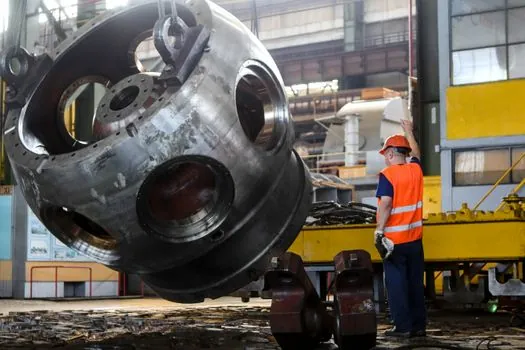
Single-mast lifts are rated for one or two workers with a 120 to 150 kg platform capacity, typically used for retail stores, hotel maintenance, office buildings, and school facilities [S3]. The rating is set by the mast column, not the platform, so adding outriggers on a swing-outrigger twin-mast does not raise the platform capacity past what the mast column carries [S5].
Twin-mast platforms carry 150 to 250 kg and are built for warehouses with high-bay racking, factory maintenance with tall ceilings, and airport terminal work, where the height limit or the sway of a single-mast unit disqualifies it [S3]. Self-propelled twin-mast units add electric drive motors and zero turning radius, covering significant floor area without repeated setup cycles, which is the case in distribution centers and large-format retail [S3].
Decision Matrix: Single-Mast vs Twin-Mast on Four Criteria
Working height: single-mast up to 12 m, twin-mast 8 to 18 m with structural sway control [S3]. Platform capacity: single-mast 120 to 150 kg, twin-mast 150 to 250 kg [S3]. Minimum aisle width: single-mast passes a standard single door at roughly 0.76 m unit width, twin-mast warehouse units operate in 1.2 m aisles with 1.6 m turning radius [S1][S3]. Drive format: single-mast units are push-around from 325 kg, twin-mast units are commonly self-propelled at 5.5 km/h for shift-long warehouse duty [S1][S3].
For sites that sit below the 12 m line, below 150 kg, and inside a 0.8 m envelope, single-mast remains the correct economic pick; for anything above that, twin-mast takes over [S3]. The single-mast platform extension is also the choice when the lift has to ride in a passenger elevator between floors, a constraint the light single-column format meets that twin-mast units generally do not [S3].
Extractor Count Is a Separate Decision Layer
VLM extractor count (the central carrier inside the enclosed storage column) is governed by access frequency, throughput, and separation-of-duties requirements, not by mast count [S2]. A standard VLM uses a single extractor, and adding a second extractor is justified when pick frequency, redundancy, or dual-aisle access at the operator window drives higher cycle rates [S2].
For tool rooms and MRO cribs, a single VLM, possibly two, is the typical configuration, with the second unit added for separation of duties or operational redundancy rather than for a higher single-aisle pick rate [S6]. White Systems fields Compact Lift, Compact Twin, and Compact Double VLM models, where Compact Twin and Compact Double name the cabinet or extractor topology, not a mast architecture in the personnel-lift sense [S2].
Material and Construction Notes That Affect the Call
Single-mast push-around units use high-strength aluminum alloy construction, and the slim design with a small base is what makes the 0.76 m width achievable at under 400 kg [S9]. Vertical single-mast man lifts are compact, self-propelled aluminum aerial platforms designed for one person, with the single aluminum column forming the entire lift structure [S8].
Twin-mast designs switch to steel-reinforced column assemblies where higher payloads and 18 m working heights demand the second column's added rigidity [S3]. The added mass and the wider track are what take twin-mast units out of the elevator-rideable category and into dedicated warehouse equipment classifications [S3].
Where the Comparison Breaks: Use-Case Limits

Single-mast units are not a fit for 18 m work points or for 250 kg loads, because the column stiffness limit is reached before that envelope [S3]. Twin-mast warehouse platforms are not a fit for sub-0.8 m aisles or for facilities that require the lift to roll into a passenger elevator, because the footprint, mass, and turning radius exceed those envelopes [S1][S3].
For a straight vertical reach under 12 m with one operator and a light tool load, a single-mast push-around is the right tool, and the comparable decision logic for adjacent material-handling equipment follows a similar pattern, for example the single-pump vs tandem-pump HPU selection matrix where the simpler architecture is preferred until throughput or redundancy forces the second pump. For heavier MRO crib storage where the question is cabinet count rather than mast count, the underlying VLM question, as discussed in the Kardex VLM sizing guidance, is operational redundancy, not column stiffness [S6].
Track the next two signals: (1) whether the 1.2 m aisle twin-mast envelope becomes the default for retrofit distribution-center builds through 2027, and (2) whether VLM extractor-count references in the major OEM catalogs move from single-extractor default toward twin-extractor standard for SKUs above a defined daily cycle threshold [S1][S2].
The underlying component specifications are covered under vertical lift module, single girder crane, and linear module.