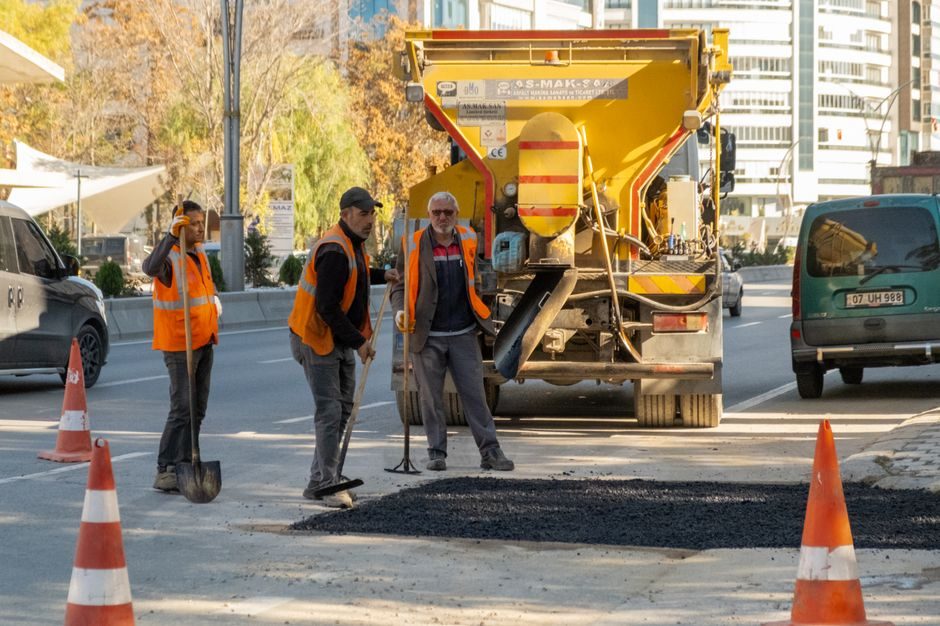
Compact tool carriers in the skid steer loader class span operating weights from 1,311.8 kg (Bobcat S70, 23.5 hp) to 4,224.8 kg (Bobcat S770, 92 hp), with lift capacities starting at 345 kg on the smallest frame [S2][S3].
The backhoe loader, by contrast, is a self-propelled tractor-loader-backhoe (TLB) with a rear excavator boom and a front bucket; integrated units such as the 18.2 kW / US$8,950–9,989 compact TLB class ship with a CE-rated diesel and quick-change front attachments [S7].
Frame, Steering and Travel Geometry
A skid steer steers by differential speed between left and right wheels (or tracks), giving it a near-zero tail swing and the ability to turn inside its own wheelbase — the defining advantage of the skid steer loader on a 1.8–2.4 m jobsite lane [S3].
A backhoe loader is a four-wheel steered (or two-wheel with articulated frame) tractor with a center-articulated chassis; the rear overhang carries an excavator boom that swings 180° on a kingpost, so total machine length runs 5.0–5.8 m on the 18.2 kW compact class [S7]. Wheelbase, not turning radius, is the layout bottleneck.
Engine Power, Weight and Lift Capacity Bands
Compact skid steers cluster into three power bands: sub-30 hp (1,100–1,500 kg ROC, e.g. S70 at 23.5 hp / 1,311.8 kg); 50–75 hp (1,800–2,500 kg ROC); and 80–100 hp heavy class (3,500–4,500 kg ROC, e.g. S770 at 92 hp / 4,224.8 kg operating weight) [S2][S3].
Backhoe loaders in the compact TLB segment sit in the 18–37 kW (25–50 hp) band at 2,500–3,800 kg operating weight, with a 0.3 m³ class loader bucket up front and a 0.06–0.10 m³ class backhoe bucket on the rear [S7]. For heavier roading-class TLBs the envelope opens to 55–75 kW, 6,000–8,500 kg, and 1.0–1.3 m³ loader buckets, but that is outside the compact-sub-3,800-kg class the Chinese OEM catalog lists.
Digging Depth, Reach and Trenching Use Case
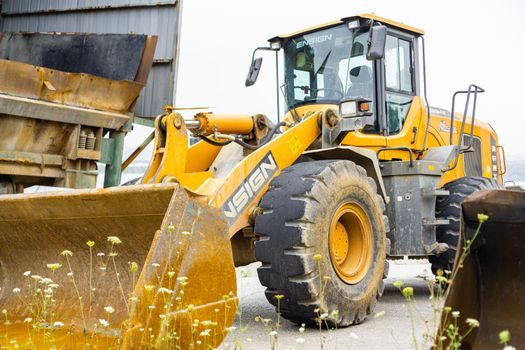
Skid steers dig only with rear attachments; the Bobcat backhoe attachment delivers 1.5–3.5 m maximum digging depth depending on boom length, mounted on a standard quick-attach plate [S1]. With that attachment the skid steer competes on light trenching, but the operator sits sideways to the cut and visibility is constrained.
A purpose-built backhoe loader puts the operator facing the trench with a curved-boom geometry that routinely reaches 3.0–4.5 m digging depth on the compact class and 4.5–5.5 m on the 55–75 kW class, with hydraulic thumb and offset swing as standard. For a 2 m deep utility trench in cohesive soil the backhoe is faster per metre and safer around existing services.
Attachment Versatility vs Integrated Work Tool
Skid steers win on attachment count: the S70 and S770 both use the Bob-Tach quick-attach system, with hydraulic augers, breakers, trenchers, brooms, and the backhoe attachment itself all in the catalog [S1][S2][S3]. One prime mover covers landscaping, demolition cleanup, snow work, and light excavation.
Backhoe loaders trade that versatility for integrated digging geometry. The compact 18.2 kW TLB ships with a front 4-in-1 bucket and a rear swing-boom with hydraulic extendable dipper, so a contractor gets loader + excavator in one roading chassis [S7]. For a fleet that runs the same machine 1,500+ hours a year on mixed load-and-dig, the TLB utilization is higher.
Comparison: Skid Steer vs Backhoe Loader on Four Decision Criteria
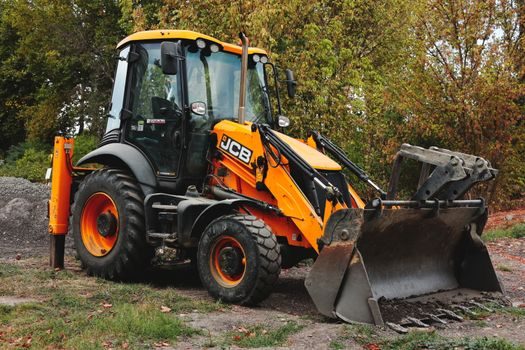
On a 2,500–3,500 kg mid-size compact frame the four buying criteria line up as follows. (1) Lift capacity to full height: skid steer 750–1,200 kg, compact backhoe loader 800–1,500 kg ROC at the front bucket — backhoe edges skid steer on lift. (2) Maximum trench depth: skid steer with backhoe attachment 1.5–3.5 m [S1], compact TLB 3.0–4.5 m — backhoe wins by 1.0–1.5 m. (3) Tail swing / site footprint: skid steer zero tail, fits 1.8 m gates; TLB needs 4.5–5.5 m swing arc — skid steer wins on tight urban sites. (4) Acquisition cost (FOB China, July 2026): skid steer attachments from US$1,750–2,250 (Samtra, Shandong Sunco, AET) [S6]; compact TLB US$8,950–9,989 [S7] — skid steer route is 4–5× cheaper on entry hardware, but the integrated TLB ships complete with both work tools.
Who Each Machine Is For — and Who It Is Not
Spec the skid steer when the job is demolition cleanup, landscaping, livestock yard scraping, or sub-1,200 kg palletised load handling, and the site gates and lanes are under 2.4 m. The S70-class 1,311.8 kg / 23.5 hp frame is the floor of the category; below that you are in stand-on mini loaders, not skid steers [S3].
Spec the backhoe loader when the workflow is roading between sites, opening 2–5 m utility trenches, and carrying a 0.3–1.0 m³ bucket of spoil or aggregate per cycle. A TLB is the wrong tool for indoor demolition, finished-floor scraping, or work where the rear swing arc would clip a wall. In a related segment selection, wheel loader selection criteria applies once payload climbs past 1.5 m³ per pass and the work shifts to bulk earthmoving, not trench-and-load cycles.
Failure Modes and Operating Constraints to Bake into the Spec
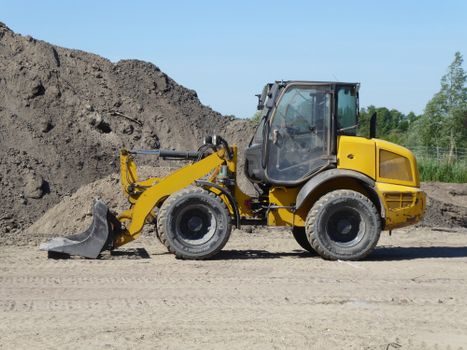
Skid steer operators chew tyres and chains because the machine steers by skidding; the S770's maintenance-free chaincase is an OEM response to that wear pattern [S2]. On a hot 35 °C asphalt pour the smaller S70 (23.5 hp) bogs under a full bucket; reserve at least 20% engine margin when sizing to attachment hydraulic demand.
Backhoe loader failure modes are different: kingpost bushing wear, rear stabiliser pad sinkage on soft shoulders, and hydraulic-hose chafing on the boom crowd cylinder. The 18.2 kW compact TLB class published at US$8,950–9,989 ships with a CE-rated diesel, EP attachments, and bucket quick-change — but the spec sheet does not list a roading-light kit, so on-highway use needs a separate compliance check against local vehicle code [S7]. For deeper buying-decision structure on this segment, backhoe loader selection walks the five spec gates a procurement engineer should gate the order on.
Pricing, Sourcing and the 2026 Compact-Class Floor
Entry-level compact skid steers (Xc760K-class, 0.6 m³ bucket, Tier-equivalent diesel) are listed at US$5,000–20,000 FOB with 1-piece MOQ and a one-year warranty on Chinese B2B catalogs as of May 2026 [S4]. Aftermarket backhoe attachments for skid steers sit at US$1,750–2,250 (Samtra) and US$1,850–2,120 (Shandong Sunco AET), MOQ 1 piece, FOB Shandong [S6]. Compact TLB machines start near US$8,950 and reach US$9,989 with attachments, MOQ not stated [S7].
These are catalog numbers, not delivered-and-commissioned prices; budget 12–18% on top for crating, ocean freight, and the first 100-hour service. Compared with the wheel loader 2026 buying guide envelope, the skid steer + backhoe attachment path is the lower-capex route to trench-and-load capability; the integrated TLB is the higher-utilization route once a single machine runs 1,200+ hours a year.
For component-level specifications, see wheel loader.