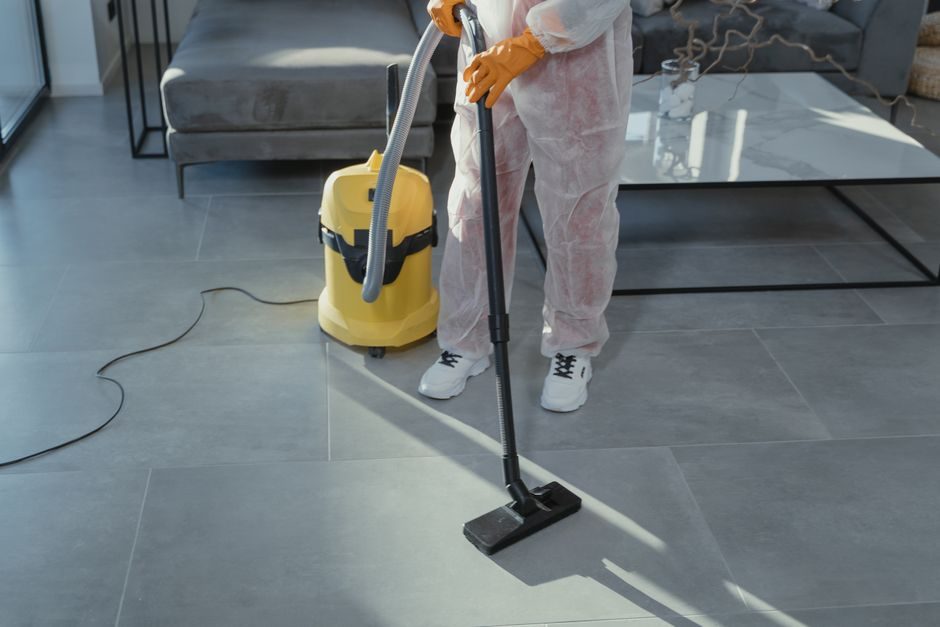
A sludge pump is built to displace liquid-solid mixtures at positive discharge head (commonly 10–80 m) and tolerates slurries up to 70% solids by weight, while a vacuum pump only removes gas to reach sub-atmospheric pressures typically down to 1×10⁻³ mbar in two-stage rotary-vane designs [S5].
Specifying one where the other belongs is the single most common pump misapplication in 2026 procurement, with liquid-ring, dry-claw, and Venturi ejector branches listed separately on industrial OEM catalogues of 89+ vacuum products from 27 manufacturers [S1].
Core Function and Operating Envelope
A sludge pump's job is mass transfer of liquid plus entrained solids at positive ΔP; a vacuum pump's job is removal of gas molecules to create a pressure gradient, with no liquid-handling intent beyond seal-fluid or seal-water service [S2][S5].
Liquid-ring vacuum pumps are the only vacuum sub-class that tolerates some liquid carry-over, but they still need a continuous seal-water circuit and a gas-solids separator; they are not sludge pumps and will erode if fed abrasive slurry [S3].
On the OEM side, refurbished dry vacuum pump stock (Alcatel, EBARA, Kashiyama, TAIKO, ULVAC dry-pump families) is a separate inventory stream from centrifugal slurry pumps listed at the US$178–185 per-piece price band for T6 vane pumps on Chinese factory listings [S4][S6].
Spec Criteria: Viscosity, Solids, Suction Head, Gas Load
Four parameters separate the two categories cleanly. Solids content: sludge pumps rated to 70% w/w and particle sizes to 50 mm; vacuum pumps require gas-phase media and use inlet filters or separators to keep particulates below 5 µm [S2][S5].
Suction pressure: vacuum pumps reach 1×10⁻³ mbar absolute in two-stage rotary-vane, 1–10 mbar in dry claw, and 50–200 mbar in single-stage liquid-ring; sludge pumps generate +0.2 to +0.8 bar gauge discharge, with suction lift limited to ~6 m at sea level [S3][S5].
Gas vs liquid mass flow: a 100 m³/h sludge pump moves roughly 100 m³/h of liquid; a 100 m³/h vacuum pump moves the same volumetric gas rate at vastly lower mass — typically under 1 kg/h at deep vacuum because of the ρ·Q relationship [S5].
Compatibility: for comparison, decision-makers running hybrid duties (suction + slurry transport) should match the pump class to whichever phase carries the mass load; attempting to pull sludge with a vacuum generator destroys the ejector nozzle within hours, and using a sludge pump to draw vacuum starves the suction and breaks the suction-side seal [S1][S2].
Technology Branches Compared on Decision Criteria
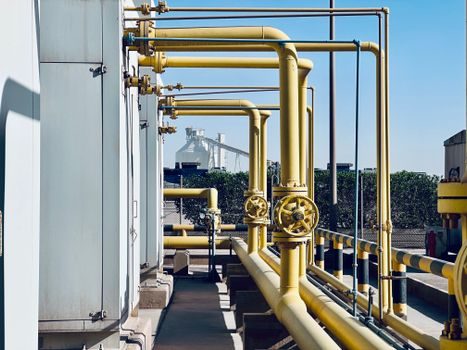
Three branches dominate: centrifugal sludge, positive-displacement sludge (progressive-cavity, peristaltic, diaphragm), and vacuum (oil-sealed rotary vane, dry-claw, liquid-ring, Venturi ejector) [S1][S6].
On viscosity: progressive-cavity handles 50,000 cP and abrasive grit; centrifugal sludge handles 5,000 cP with low–medium abrasion; vacuum pumps see gas at <0.001 cP and seal-water at 1 cP [S3][S5].
On temperature: liquid-ring vacuum pumps tolerate up to 80–95 °C seal water; oil-sealed rotary vane caps at ~80 °C; dry-claw runs to 120 °C; progressive-cavity sludge pumps routinely run at 70–120 °C with EPDM or FKM stator options [S2][S3][S5].
On maintenance: oil-sealed rotary-vane vacuum pumps trip on motor overload when bearings seize or oil carbonises at high temperature, and the standard remedial chain is stop, isolate, inspect bearing and oil cooler, then resume; progressive-cavity sludge pumps trip on stator binding when dry-run occurs, and require flush-water make-up, not seal-oil changes [S2].
On supply: a vacuum gauge reading in mbar or microns is the diagnostic instrument on a vacuum train, while a pressure transmitter on the discharge side is the equivalent on a sludge pump train — never cross-apply the gauge ranges [S5].
Use Cases: When to Pick Which
Sludge pump wins when the duty is mining tailings with 60% solids, WWTP digester transfer at 8% TS, dredged harbour mud, or paper-mill stock at 4–6% consistency — duties that need positive displacement and a 50 mm spherical-passage impeller or an open-face progressive-cavity rotor [S6].
Vacuum pump wins when the duty is holding a chamber at 1×10⁻² mbar for metallurgical coating, drying pharmaceuticals at 50 mbar, or driving a vacuum packaging machine for food MAP at 10–50 mbar absolute — duties that need gas extraction and a clean, dry inlet stream [S1][S5].
For hybrid lines such as vacuum die casting, a vacuum die casting machine train uses a dry rotary-vane or dry-claw pump with a 50–100 mbar working point, and never a sludge pump, because any molten-metal splash will coke the oil and seize the vanes within minutes [S1].
Limitations, Failure Modes and Standards
Common sludge-pump failure: dry-run of progressive-cavity, causing stator burn-through in 30–60 minutes; remedy is flush-water make-up and a run-dry probe tied to the motor starter. [S1]
Common vacuum-pump failure: motor overload trip from oil carbonisation, blocked cooling fan, or hot ambient above 40 °C; the field-proven diagnostic is to log the bearing-housing temperature and compare with nameplate rise, per service bulletins covering oil-sealed rotary-vane units [S2].
For refurbished dry vacuum pumps, the OEM service standard is to meet the manufacturer's original performance curves at the overhaul bench, including ultimate pressure and pump-down time at standard inlet conditions, as documented for Alcatel, EBARA, Kashiyama, TAIKO and ULVAC dry-pump families on Tainan-based service benches [S4].
Selection also requires matching ISO 5199 or ISO 2858 for centrifugal sludge pumps, and ISO 21360 for vacuum-pump performance rating; never use a vacuum-pump flow rate in m³/h as if it were a positive-displacement slurry flow, because the gas mass scales with absolute pressure [S5].
Sourcing Signals and 2026 Price Bands
Centrifugal water pumps and slurry pumps from Chinese factory listings on 2026-06 trade portals show 1-piece MOQ for vane-pump SKUs at US$178–185, while 27 Venturi-ejector vacuum-pump manufacturers offer 89 products with multi-brand catalogue depth — confirming that the two are bought from distinct vendor pools with distinct lead times [S1][S6].
For 2026 industrial pump sourcing, broader market makers, price bands, and spec levers are tracked in the Industrial Pump Suppliers 2026 maker map, which lines up centrifugal, positive-displacement, and vacuum families side by side.
Where duties mix sewage transfer with chemical dosing, a sister comparison — Sewage Pump vs Metering Pump: Spec-Driven Selection for 2026 Pumping Duties — applies the same selection logic and reinforces that pump class, not brand, must be matched to solids, viscosity and pressure range before price is even considered.
Trackable signals: monitor the 27 Venturi-vacuum maker count for a 5-quarter trend, watch oil-sealed rotary-vane motor-overload service-bulletin revisions on the EVP documentation set, and benchmark Chinese-factory MOQ pricing on 1-piece T6 vane SKUs around the US$178–185 band for vane-pump calibration; a +/−10% band shift usually flags steel and motor-copper input moves [S1][S6].