
Spec-first buyers of submersible sewage pumps lock the duty point (flow × total dynamic head), the solid-handling particle size, and the wet-end material grade before they ever open a vendor catalog; on commercial builds in 2026, 1 hp (0.75 kW) SUS stainless submersible units are listed near $914.61 list price and 316-grade light-weight submersible platforms (BKW series) are the common spec on corrosive or salt-water effluent duty [S1][S2].
The category is broader than the residential sump pit: sewage pumps move solids-laden wastewater with particle sizes typically from 10 mm up to 50–80 mm on grinder/cutter models, run fully submerged (IP68 minimum), and pair with discharge hose or hard-piped 2″–4″ lines driven by single-phase 220 V or three-phase 380 V motors in the 0.75–15 kW band. Treat the selection as a 5-gate filter — duty curve, impeller geometry, wet-end alloy, sealing/cable spec, and control package — and most catalog noise falls away.
Duty Point: Match Flow, Head, and NPSH Before You Match Horsepower
Spec-first selection starts with the system curve, not the motor nameplate: a 1 hp (0.75 kW) SUS submersible sewage pump in the ATO-SSSSP-1HP class delivers a flow/head envelope typical of light commercial and lift-station duty at 220 V single-phase, while heavier BKW SUS-316 light-weight submersible platforms are built for continuous industrial effluent service [S1][S2].
Buyers who skip the duty curve end up over-spec'ing motor power to chase a head number the impeller cannot reach. The correct workflow: plot the required Q (m³/h or GPM) against TDH (m or ft), confirm static lift + friction + losses, and only then read off the published pump curve at the Best Efficiency Point. For a sewage pump used on raw sewage, the operating point should sit between roughly 60–110 % of BEP to keep solids moving without cavitation stall.
Impeller Geometry: Vortex, Channel, Cutter — Each Has a Particle Limit
Three impeller families dominate 2026 sewage-pump spec sheets, and the choice is set by the largest solid in the stream: open multi-vane channel impellers pass 10–25 mm spherical solids, vortex (recessed) impellers pass stringy fibrous material because the solids never contact the vanes, and grinder/cutter impellers macerate soft solids down to a few millimetres at the cost of head per stage [S1][S3].
Burks' BW/BWP/BWJ/BWJP/BWG/BWGP/BGW/BWL/BYW submerged-pump series spans this whole range — from the BW and BWP base lines for clean wastewater, through the BWJ/BWJP stainless and big-flow variants, to the BWG/BWGP grinder series for sewage with rag, wipes, and fibrous content [S3]. A buried spec note most catalogs omit: a vortex impeller tolerates 50–80 % gas entrainment better than a channel impeller, so on septic or septic-side lift duty vortex wins on gas slugs; on raw unscreened sewage from a combined sewer, a cutter/grinder stage protects the downstream pipework from ragging.
Wet-End Material: Cast Iron, 304, or 316 — Set by Chloride and pH
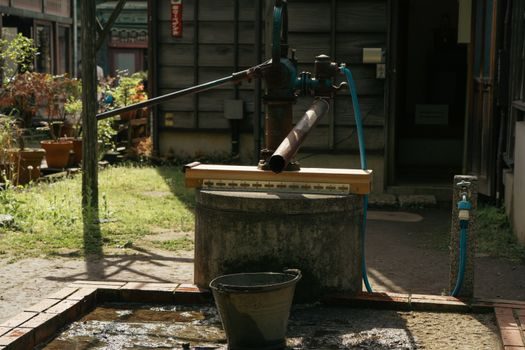
Material selection is gated by chloride level, pH, and abrasive solids content, not by budget: cast iron ASTM A48 Class 30 housings with cast-iron or brass impellers remain the default for municipal sewage at near-neutral pH and low chloride, SUS 304 is the common step-up for food-processing and light industrial effluent, and SUS 316 is specified for saline, brine, or chemically aggressive waste streams [S1][S2][S3].
The BKW SUS-316 light-weight submersible platform is the line repeatedly spec'd by buyers who need both the corrosion envelope of 316 and a lower-mass build than cast-iron industrial frames — a Burks-specific design point where the 316 wetted parts are paired with a reduced-weight mechanical structure to ease handling on-site [S1]. For a side-by-side material decision, the centrifugal pump family shares the same wet-end alloy rules: 316 over 304 once free Cl⁻ crosses roughly 200 ppm continuous, and pH swings below 4 or above 9 push the spec toward 316 or duplex.
Sealing, Cable, and IP68: Where Real-World Failures Start
Most submersible sewage-pump warranty returns trace to cable-joint ingress, mechanical-seal face wear, or oil-chamber water ingress — not to the impeller or the stator, and the spec that filters these out is the IP68 + double mechanical seal + oil-chamber moisture-sensor package with a factory-terminated cable gland [S1][S2].
Single-phase 220 V / 50 Hz and three-phase 380 V / 50 Hz are both common; single-phase units in the 0.75–1.5 kW band are aimed at light commercial lifts, three-phase units run 2.2 kW and up. Spec items worth writing into the PO: IP68 rating at a stated submersion depth (commonly 5 m or 10 m), double silicon-carbide-on-silicon-carbide mechanical seals in an oil chamber, Class F or H motor insulation, thermal overload embedded in the stator winding, and a moisture probe in the oil chamber that trips a controller relay. The diaphragm pump category shares some of this sealing discipline (double-diaphragm leak detection), and the same logic applies to cable-entry potting compounds — epoxies fail in hot oil, hot-melt polyamides survive longer.
Selection Criteria Matrix: Cast Iron / 304 / 316 vs Duty

Putting the three common wet-end materials against the duty envelope gives a clean four-criterion comparison: (1) chloride tolerance — cast iron <200 ppm, 304 up to ~500 ppm short-term, 316 above 500 ppm and into brine; (2) pH window — cast iron 6–8, 304 5–9, 316 2–11; (3) abrasive solids — cast iron tolerates the highest silt load, 316 needs hardened cutter edges in heavy-sand service; (4) cost per kW — cast iron baseline, 304 typically +15–25 %, 316 typically +30–60 % over the equivalent cast-iron frame [S1][S2][S3].
Reading the matrix, the BKW 316 light-weight submersible wins the salt/brine and low-pH cells; the BW/BWP cast-iron lines win the high-abrasion municipal cell; and a 304 unit sits in the food-and-beverage or light-chemical middle. The broader selection logic — duty curve first, impeller geometry second, material third, sealing/cable fourth, control fifth — is the same one used across most rotating equipment, including the gear pump and metering pump families, where the duty envelope and the wetted-material list are the first two filters applied before vendor selection.
Control Package: Float Switches, VFD, and Soft Starters
The control package is the last spec gate, and it is where a lot of cheap bids under-deliver: a basic tethered float switch handles on/off in a small basin, a set of three or four narrow-angle floats gives better pump-down depth and redundancy, and a VFD or soft starter is the right answer on 5 hp and up to limit inrush and extend seal life [S2].
On 1 hp (0.75 kW) single-phase units the controller is typically a piggyback float plugged into a wall outlet, while three-phase 2.2 kW and larger units run a panel-mount contactor with thermal overload, hand/off/auto, and a high-level alarm float. Buyers spec'ing lift-station duty in 2026 should also write in a seal-leak relay wired from the moisture probe in the oil chamber and a run-hour counter for scheduled service — both are common in OEM data sheets for the BW/BWGP series [S3]. For higher-pressure, lower-flow dosing service upstream or downstream of the wet well, the metering pump page covers the matched-capacity logic.
Failure Modes and Sourcing Signals to Track
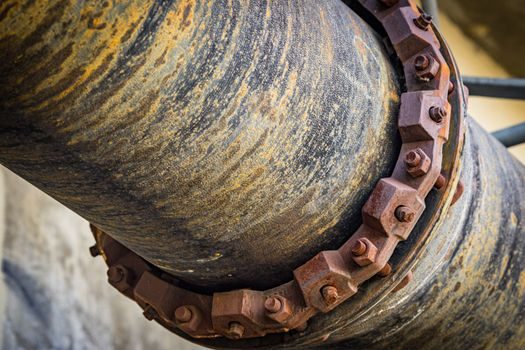
The most common field failures on submersible sewage pumps are rag wrap on the impeller (a cutter or vortex geometry fixes it), seal face scoring from running dry (a moisture probe in the oil chamber + run-dry thermal cutout fixes it), and cable-joint wicking (factory-terminated glands with epoxy potted leads fixes it); buyers who write all three protections into the PO typically see 3–5 year mean time between failures instead of the 12–18 month baseline [S1][S3].
For an adjacent selection decision on clear-water versus solids-bearing duty in a basin, the Sump Pump vs Screw Pump: Spec-Driven Selection for 2026 Pumping Duties walk-through covers the geometry trade-off; for raw lift-station sizing logic the Sump Pump 2026 Buying Guide: HP, GPH, Switch Type and Basin Logic reference carries the basin-sizing math that the sewage-pump datasheet assumes the buyer already has.