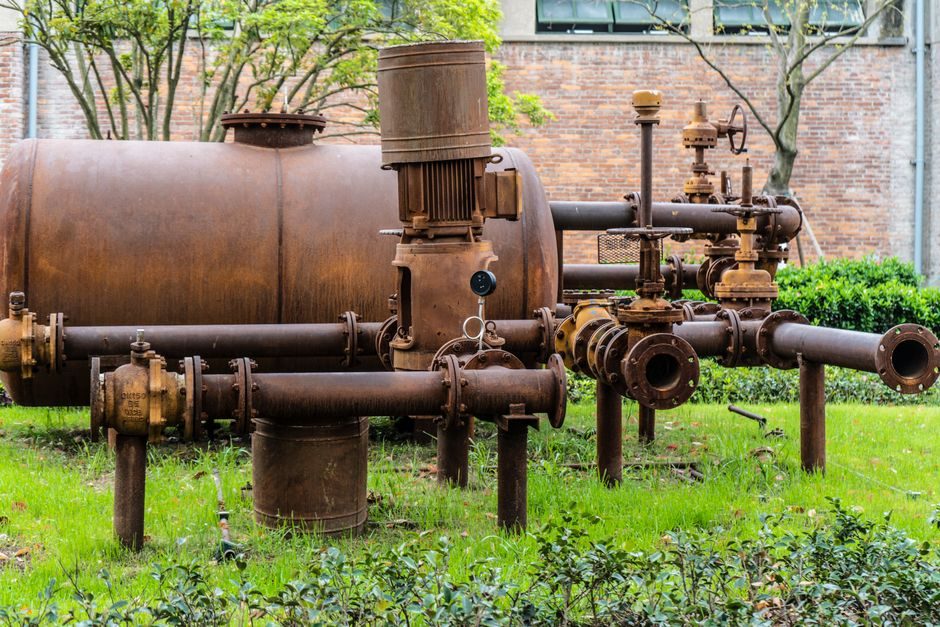
Single-stage single-suction centrifugal sludge pumps such as the PN/PNL family handle slurries up to 50-60% conveying weight concentration in mining and dredge service, with cast-iron or wear-resistant alloy volutes sized for 50-300 mm solids passage [S2].
The 2026 sourcing market is dense: Alibaba lists 1,676 active sludge-pump-truck suppliers and Made-in-China indexes the broader waste-pump truck category under concrete-machinery distributors, while Atlas Copco's WEDA line anchors the submersible dewatering end with modular sealing [S3][S4]. For the spec engineer, the job is cutting that catalog down to the 4-5 unit specs that actually decide reliability.
Five Spec Gates That Decide the Skid
The first gate is solids-handling: a 50 mm spherical-passage submersible and a 200 mm vortex impeller are not interchangeable, and matching this number to the upstream screen or grit classifier is non-negotiable on wastewater bids [S4]. The second gate is slurry concentration — PN/PNL units are rated by the OEM for slurries under 50-60% weight, beyond which a lined slurry pump or a positive-displacement unit is required [S2].
Third is head and flow envelope: a 7.5 kW submersible dewatering pump will deliver roughly 50 m³/h at 15 m, while a 75 kW dredge unit pushes 800 m³/h at 30 m — oversizing the motor by 1 service factor over nameplate is the cheap insurance against stalled shafts [S2][S4]. Fourth, seal arrangement: WEDA's modular seal cartridge (single mechanical + lip seal as standard, double-mechanical upgrade for abrasive duty) is the de facto 2026 baseline [S4]. Fifth, material selection — high-chrome white iron (27% Cr, 550 HB) for cutter-dredge impellers vs. ductile iron volutes for sewage transfer is a cost-vs-life decision that buyers should price in hours, not invoices.
Centrifugal vs Submersible vs Positive-Displacement: When Each Type Wins
Horizontal end-suction centrifugal sludge pumps (PN, PNL, ZJL series) dominate high-flow low-pressure duties, with single-stage single-suction architecture and replaceable wear liners that a maintenance crew can swap in 4-6 hours [S2]. Submersible agitator-sludge pumps win on floor-space and priming-free operation, with the WEDA family rated for 10-25 m heads at 5-100 m³/h flows across 0.6-25 kW power bands [S4]. Positive-displacement (progressive-cavity and lobe) units own the high-viscosity, low-shear niche above 60% solids or where metering accuracy is required for flocculant-conditioned cake.
On a cost-of-ownership ledger, submersibles carry a 15-25% acquisition premium over dry-installed horizontals but reclaim that delta in civil works — no pump house, no suction pipe, no foot-valve. For a 24/7 clarifier underflow at 4% DS, the centrifugal horizontal with a recessed vortex impeller is the default; for a tank-bottom digester at 8% DS with rag content, the progressive-cavity pump with a bridge-breaker hopper is the default. Pairing the wrong type to the duty — a vortex pump on a 60% weight tailings line — is the single most common 2026 warranty-voiding error.
Abrasion, Corrosion and Material Selection in 2026
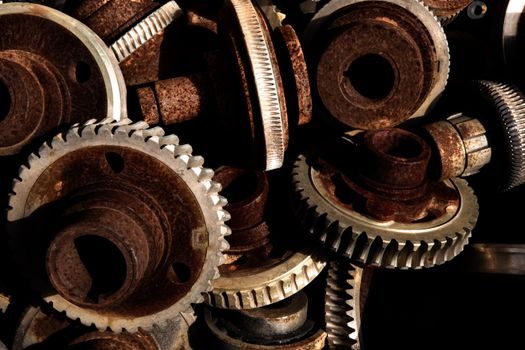
Slurry pump wear tracks the square of tip speed and is dominated by particle hardness: a 35 m/s tip speed on 9 Mohs silica cuts elastomer life by half versus 20 m/s. High-chrome (27-32% Cr, 600+ HB) impellers and volutes now ship standard on most PN-class units, with natural rubber and polyurethane liners offered for pH 4-10 corrosive service where chrome is overkill [S2].
For seawater desalination brine or RO concentrate, the spec is duplex (2205/2507) wetted ends — material cost roughly 2.5x high-chrome but life multiples of 4-6x. Atlas Copco's WEDA line ships standard with aluminum-alloy or cast-iron housings and nitrile/stainless mechanical seal faces, both of which fall short on chloride service above 1,000 ppm Cl⁻ [S4]. Buyers on combined abrasion + corrosion duty should request an SDSS upgrade quote, not a generic "sea-water" option.
Sealing, Cooling and Cutter Options Engineers Forget
Double-mechanical seal with a glycol barrier (or oil-lifter) extends seal life past 8,000 hours on continuous-run submersibles and is now the procurement-line default for any duty over 12 hrs/day [S4]. Elastomer selection is the second silent cost driver: nitrile (NBR) covers 90% of municipal duty; EPDM is required for ferric-chloride dosing; Viton/FKM is needed for any hydrocarbon or solvent carryover above 5% volume.
Cutter/agitator options are the third miss-spec: a vortex impeller passes stringy rags and wipes; a grinder/cutter ring macerates them to 10 mm; an agitator shroud at the suction keeps settled solids in suspension for thickener underflow. Skipping the cutter stage on a sewage-lift station handling wipes is the leading cause of 2025-2026 rag-binding callouts, a known failure mode across the sewage pump selection spec-gate guidance.
Sourcing Map: China Catalog, OEM Brands and Landed Cost
The 2026 China supplier base is wide: Alibaba indexes 1,676 sludge-pump-truck suppliers with horizontal V750 and V1100F submersible vacuum models listed among the most-quoted [S3]. Shandong Luyuan's PN/PNL single-stage series anchors the industrial-mine end with weight-concentration ratings and 50-300 mm discharge sizes [S2]. Made-in-China folds waste-pump trucks into the concrete-machinery category, a sourcing quirk to remember when filtering by Industry rather than by function [S1].
Landed-cost math for a 2026 CIF delivery to Houston or Rotterdam typically adds 12-18% over FOB for a 1,500 kg skid: 8-10% ocean, 2-3% duty (HS 8413.70 for centrifugal pumps in most tariff schedules), 1-2% port handling. For 2026 budget prep, a 75 kW PN-class horizontal lands at $14,000-22,000 FOB China; an equivalent WEDA-Submersible from a tier-1 OEM lands at $18,000-28,000 — a 20-30% premium that often disappears once the pump-house and suction piping drop out of the BOQ. Buyers mapping wider pumping-station budgets should cross-check the sewage pump price bands and 2026 sourcing map for adjacent lift-station price points.
Selection Checklist Before Issuing the RFQ
Lock five numbers before the first vendor email: (1) design flow in m³/h with min/max turndown, (2) total dynamic head in meters at design flow, (3) max particle size in mm and slurry SG, (4) continuous-run hours per day and ambient temperature, (5) solids concentration by weight at the worst-case feed point. These are the inputs that distinguish a PN-class horizontal from a progressive-cavity unit, and they map directly to the sludge pump family spec sheets. [S1]
Then lock four commercial gates: (a) nameplate motor power and IE3/IE4 efficiency class, (b) seal arrangement and barrier-fluid spec, (c) wetted-end material with hardness certificate, (d) QA package including hydrostatic test certificate, MTRs, and performance-test curve per ISO 9906. Cross-link the auxiliary flow-control side of the skid — gate, pinch, and check valves — against the industrial valve spec family so the actuation, seat, and bonnet ratings match the pump curve, not just the line size. For dewatering stations with high-DS liquor, also reference the flow meter spec family to size the magnetic flow tube and the calibration plan for custody-transfer billing on cake solids.
Failure Modes Buyers Should Pre-empt in 2026
Cavitation from NPSH shortfall remains the most expensive avoidable error: on a 2025-2026 clarifier retrofit, a one-meter drop in available NPSH cuts bearing life by roughly 40% — measure the suction pipe, not just the tank level. Seal-chamber overheating on continuous-run submersibles at 60 Hz without a flow inducer voids most mechanical-seal warranties above 8,000 hours; insist on a thermistor or RTD in the seal chamber and a control-trip at 80 °C. [S2]
Rag-binding on vortex impellers is the third repeat failure — a grinder-ring upgrade is typically 4-6% of the pump cost and eliminates 80% of the callouts. Liner wear on elastomer-lined volutes accelerates sharply above pH 10 or below pH 4; budget a 4,000-6,000 hour replacement interval when chemistry drifts out of spec. On trackable 2026 signals, buyers should monitor the IEC 60079-series alignment for any ATEX Zone 1 digester-gas application, and watch for ISO 5199 updates on heavy-duty centrifugal slurry pumps — both are the next compliance gates the supplier base is aligning to.