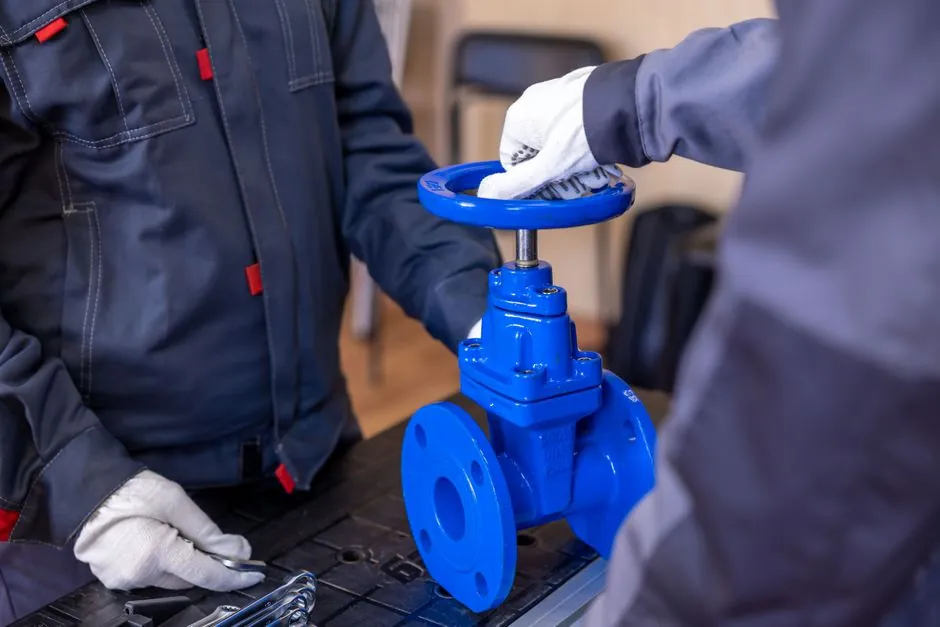
On-board microprocessor diagnostics in modern smart valve positioners cut unplanned control-valve failures by detecting packing wear, actuator seal leakage, and stem-friction drift days before a hard fault [S2]. Higher-tier digital valve controllers capture valve position, actuator chamber pressures, I/P pressures, and travel counters, then run automated diagnostic tests that flag subclinical degradation a walk-around cannot catch [S2][S5].
The business case is now quantified: one pulp-mill comparison showed 80 critical control valves without smart devices versus 74 retrofitted units, and the smart-instrumented line delivered over 80% reduction in maintenance cost, roughly USD 200,000 in saved shutdown spend [S4]. The driver is straightforward: smart positioners convert each actuator into a continuously instrumented node, so the question for 2026 plant engineering teams is no longer whether to instrument, but which diagnostic tier and which protocol stack to specify.
What Smart Positioner Diagnostics Actually Measure
Inside every digital valve controller a microprocessor runs, analyses, and stores diagnostic tests, then exposes the results over the plant network for trending and alarm evaluation [S2]. The sensor set covers stem position, actuator chamber pressure, supply pressure, and on higher-tier units a dedicated I/P converter pressure, so the firmware can compute friction, dead-band, seat load, and packing leakage trends without taking the valve out of service [S2][S4].
Azbil's online diagnostic algorithms are a direct example of condition-based maintenance logic built into the positioner firmware, correlating stroke time, air-mass consumption, and travel deviation against baseline curves [S8]. The practical implication: a maintenance planner no longer needs to remove a valve from the line to characterise it, and the diagnostic test routine that previously required a laptop in the field is now a scheduled asset-management task running against a historian.
Diagnostic Tiers and Protocol Options
Emerson's positioner portfolio distinguishes base, mid, and high tiers, with the top tier adding both on-line and off-line tests plus full network publishing of the diagnostic variables over HART, WirelessHART, or FOUNDATION Fieldbus, depending on plant backbone [S5]. For plants already standardised on smart valve positioner architectures, the selection question is which tier matches the criticality of each loop: a tank-level letdown does not justify the same diagnostic spend as a slurry letdown on a critical service line.
Protocol selection is not free: HART rides as FSK on a standard 4-20 mA loop, so a brownfield plant can keep its existing wiring and still pull full diagnostic variables, while FOUNDATION Fieldbus or PROFIBUS PA require a digital segment and a linking device, but they deliver the variables natively into the control system without an extra multiplexer [S5]. When the diagnostic data matters more than the wiring cost, FOUNDATION Fieldbus wins on data density; when the priority is reusing installed 4-20 mA cable, HART is the pragmatic call.
Symptoms the Positioner Catches Before the Operator Does
The control loop's job is to mask small disturbances, so a packing leak that costs 5-10% of actuator air consumption shows up on the diagnostic curve long before the controller output looks abnormal [S5]. Online diagnostic methods track steady-state air mass, step-response signatures, and partial-stroke test results against a baseline taken at commissioning, then raise a soft alarm when a parameter drifts more than its configured tolerance band.
Offline methods, including full-stroke, signature, and step-response tests defined historically under standards such as ISA-75.13 and ISA-75.25, are still the gold reference for post-repair verification and for critical valves that cannot be allowed to drift silently [S4]. For SIS-rated final-control elements, scheduled partial-stroke testing through the positioner is increasingly the accepted way to meet proof-test demand without dumping the loop into manual.
AI Overlays on Positioner Telemetry
The 2026 evolution is an analytics layer that sits on top of positioner data: iFactory documents a platform that ingests telemetry from DCS/PLC position feedback and from smart positioners across multiple vendors, including Emerson Fisher, Siemens, Neles, and Azbil, then runs AI models that score valve health and predict remaining useful life [S9].
This is the practical answer to the bottleneck Emerson's own team flagged: many plants already capture the data, but no one is reviewing it, and the diagnostic stream is only as useful as the person or model evaluating it [S5]. Once a model is trained on a fleet's baseline, anomaly detection becomes a background task and the planner only sees valves whose health index has crossed a configurable threshold, which is where the labour savings actually compound. The same logic is why predictive maintenance on 4-20 mA alarm loops is now a parallel conversation, since the underlying HART data path is the same one feeding valve analytics.
Selection Criteria: Positioner, Protocol, and Service Severity
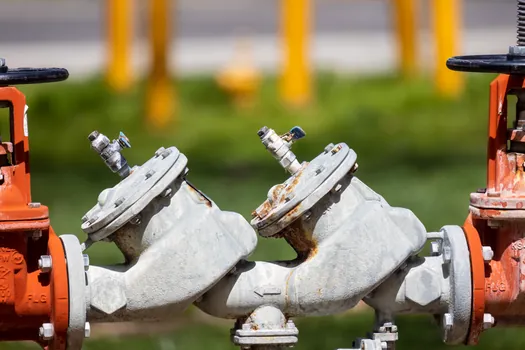
For new builds, a tiered specification works: a digital valve controller with on-line diagnostics on every control valve with a single-point failure cost above one shift of lost production, a basic digital positioner on non-critical modulating service, and pneumatic or analog I/P only on manual isolation or on-off service where diagnostics buy nothing. Higher-tier controllers on critical and severe-service valves typically pay back through lower maintenance cost and higher uptime inside one planned turnaround [S5].
Diagnostic method comparison: online trending scores on data continuity and zero process interruption but cannot isolate mechanical hysteresis, offline signature tests score on resolution and post-repair validation but require a service window, partial-stroke tests score on SIS proof-test coverage but only exercise a fraction of full travel, and AI overlays score on fleet-wide correlation but depend on data-history depth [S4][S5][S9]. A robust program uses at least two of these in combination rather than betting the maintenance strategy on any single method.
When NOT to Rely on Positioner Diagnostics
Positioner-side diagnostics cannot see what the positioner cannot sense, which means erosive trim wear that has not yet changed actuator load, soft-seat creep that has not yet shifted the travel curve, and cavitation noise above the positioner's transducer bandwidth all sit outside the diagnostic envelope [S3]. Plants that treat the positioner dashboard as a complete valve-condition picture usually discover the gap on a bad day.
The other hard limit is organisational: a tier-1 controller on a valve nobody reviews still fails reactively, because the prediction is only as good as the workflow that consumes it [S5]. Before approving the spend, the maintenance and reliability team need a documented owner for the diagnostic stream, an alarm-routing path into CMMS, and an escalation rule that distinguishes a soft warning from a hard shutdown trigger.
Standards, Sourcing, and Trackable Signals
Historical baseline methods such as ISA-75.13 and ISA-75.25 remain the reference vocabulary for valve signature and step-response testing, while HART, WirelessHART, and FOUNDATION Fieldbus are the publishing protocols most plants will actually see on a 2026 retrofit [S4][S5]. For hazardous-area deployments, IEC 60079 and the ATEX 2014/34/EU framework govern the positioner enclosure and I.S. barrier, independent of the diagnostic feature set. The relative value of a smart positioner selection should be judged against the criticality of the host control valve, not against the diagnostic feature list alone.
Trackable signals over the next quarter: expansion of multi-vendor analytics layers that pull positioner data through HART multiplexers, integration of partial-stroke test results into SIS proof-test records, and updates to the Emerson, Neles, and Azbil firmware release notes covering new diagnostic variables on the next controller generation [S5][S8][S9]. A second signal worth watching is whether balancing valve and on-off actuator suppliers start shipping native diagnostic telemetry, since the same AI-overlay vendors are already courting that adjacent market.