Six independent market trackers put 2026 sodium-ion battery market value in a wide band: Mordor Intelligence at USD 0.54 billion, Coherent Market Insights at USD 25.20 billion, Fact.MR at USD 2.19 billion, and Grand View Research at USD 0.66 billion, with 2031-2033 CAGR projections ranging from 11.6% to 21.4% [S1][S2][S3][S5].
The dispersion is methodology-driven: trackers that count only finished cell shipments land closer to the half-billion-dollar mark, while those that include pack assembly, BESS integration, and project pipeline value produce the higher figures, meaning cross-vendor market share should be read against the same source's baseline [S2][S3][S5].
Cell Shipment Share: Asia-Pacific Dominates, China Holds the Lead
Mordor Intelligence puts Asia-Pacific at 45.6% of 2025 sodium-ion market value, growing at a 19.5% CAGR to 2031, with China-based manufacturers supplying the bulk of commercial cell volumes [S2]. Within China, CATL's Naxtra chemistry, reported at 175 Wh/kg, is the highest-energy commercial sodium-ion cell publicly disclosed, and CATL-utility joint-venture plants add roughly 3.0% to the projected CAGR through vertical supply integration [S3][S2].
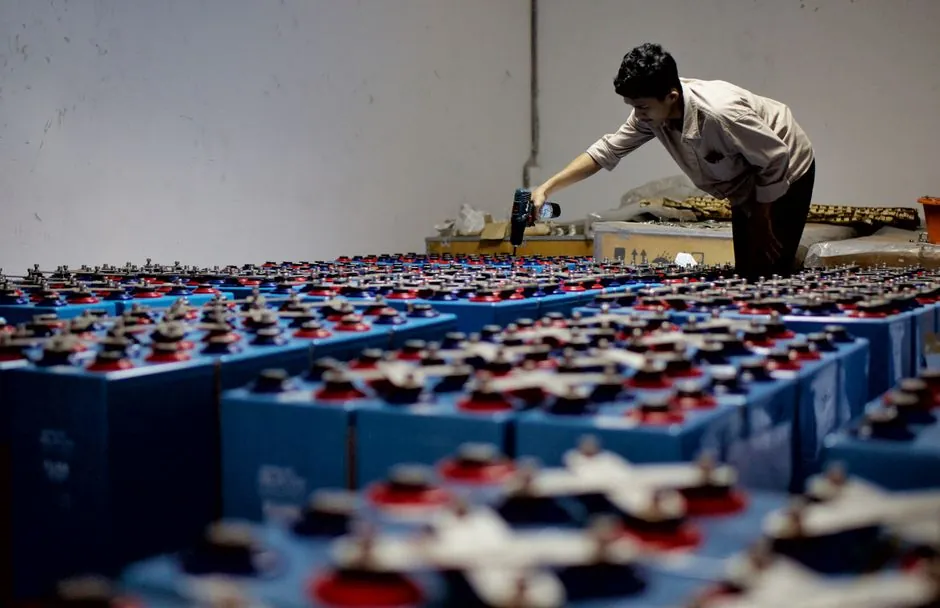
HiNa Battery commissioned a 100 MWh system in Nanning, Guangxi, that delivered 92% round-trip efficiency across 5,000 cycles at a levelized cost of storage below USD 0.10/kWh, a benchmark that positions HiNa as a leading second-source supplier for grid-scale builds [S2]. Provincial grid operators in Guangxi and Jiangsu awarded more than 100 MWh of sodium-ion contracts during 2025, after Beijing designated the chemistry "strategic" for energy storage, and these awards went almost entirely to Chinese cell makers [S2].
Form Factor, Chemistry, and Cell-Type Share
Cylindrical cells captured 48.5% of 2025 sodium-ion market value, while pouch formats advance at a 22.0% CAGR to 2031, reflecting automotive pack demand for prismatic and pouch formats versus telecom and small-mobility use of cylindrical 18650/21700-style cans [S2].
Fact.MR data shows sodium-ion cells holding 48% of the product segment in 2026, with cell-chemistry technology at 63% of the technology split, indicating that merchant cell sales, not captive pack assembly, still drive the bulk of supplier revenue [S5]. Coherent Market Insights, by contrast, assigns 66.2% of 2026 share to sodium-sulfur batteries specifically, a segment mismatch that highlights how tracker definitions of "sodium-ion" range from aqueous sodium cells to high-temperature Na-S systems [S3].
Three sodium-ion sub-chemistries now compete for commercial share: layered metal oxides, Prussian blue analogs, and polyanionic compounds such as sodium iron pyrophosphate (NFPP); NFPP is positioned for grid storage due to its 0% state-of-charge tolerance and polyanionic thermal stability that resists oxygen release under abuse conditions [S4][S8].
Application Share: Stationary Storage Leads, Transport Catches Up
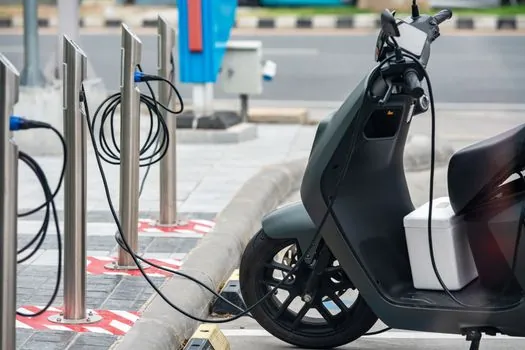
Stationary energy storage held 71.8% of 2025 sodium-ion market share and Coherent Market Insights expects 72.7% in 2026, with utilities alone at 55.2% of 2025 end-user share, while transportation is forecast at 19.8% CAGR and automotive at 23.3% CAGR through 2031 [S2][S3]. Fact.MR's parallel split puts energy storage at 55% of 2026 application share, with telecom and data center backup emerging as a fast-growing fourth channel for wide-temperature, low-cost sodium systems [S5].
Consumer electronics captures 29.8% of 2026 share in Coherent's end-user split, a figure that includes lower-power portable devices and small-format packs, while industrial applications, covering load leveling, demand response, and off-grid power, round out the demand mix at low double-digit share [S3][S5].
Cost Position and Supply-Chain Constraints vs Lithium-Ion
Sodium carbonate is stable at roughly USD 300 per tonne against lithium carbonate's historical USD 13,000-80,000+ per tonne range, and the theoretical sodium-ion pack cost band sits at USD 40-77/kWh versus a 2020 lithium-ion average of about USD 137/kWh [S3][S4].
Sodium-ion cells access 95-98% of nameplate capacity because aluminum current collectors on both electrodes enable 0 V (100% depth-of-discharge) storage and transport, while lithium-ion cells are typically constrained to 70-80% usable capacity, a structural advantage for stationary storage duty cycles [S4]. Energy density remains the trade-off, at roughly 75-200 Wh/kg versus 120-260 Wh/kg for lithium chemistries, which is why sodium-ion is targeted at low-range city cars, two-wheelers, and grid storage rather than long-range EVs [S3].
Regional and Government-Backed Manufacturer Activity

Fact.MR identifies India (25%) and China (23%) as the key 2026-2036 growth markets by share gain, reflecting both India's lithium-import substitution program under Atmanirbhar Bharat and China's continuing anchor demand [S3][S5].
Policy moves materially shape supplier share: the US DOE's USD 50 million LENS consortium funds domestic sodium-ion R&D, while the EU Critical Raw Materials Act and Europe's battery passport mandate push European sodium-ion cell ventures such as the Stora Enso-Altris partnership and Nacelle's pilot production [S3]. On the demand side, the JNCASR fast-charge breakthrough, hitting 80% state-of-charge in 6 minutes, is being targeted at Indian two-wheeler packs, a 2.5% CAGR uplift specific to that geography [S2][S3].
Selection Map: Who Each Manufacturer Profile Suits
For grid-scale BESS buyers seeking lowest LCOS today, Chinese cell makers (CATL Naxtra, HiNa Battery) lead on cell cost and multi-GWh supply, with HiNa's Nanning reference plant at USD 0.10/kWh LCOS as the public benchmark [S2]. For Indian two-wheeler and three-wheeler OEMs needing fast-charge cells, JNCASR-licensed technology plus China-sourced cells remain the practical path until Indian gigafactories come online [S2][S3].
For North-American utility buyers needing non-Chinese supply, US LENS consortium-backed developers and Alsym Energy-style polyanionic (NFPP) cell makers are the realistic near-term sources, with the caveat that commercial volumes are not yet at CATL's scale [S3][S4]. For European automotive OEMs targeting low-range city cars, Stora Enso-Altris and other European pilots offer supply-chain eligibility under the EU battery passport, though energy density remains the binding specification for vehicle range. Stationary energy storage is the leading application segment of the global sodium-ion battery market in 2026, capturing 72.7% of market share, indicating that supplier share should be tracked primarily against utility tenders rather than EV allocation [S3].
Trackable next signals include: the 2027 Chinese provincial tender awards, which will recalibrate HiNa and CATL's combined Chinese grid-storage share; the first commercial output from the US LENS consortium, expected to set a non-Chinese cost benchmark; and the 2026-2027 European battery passport audit results, which will gate European cell-maker access to OEM contracts. The parallel demand map for adjacent energy-storage components, including battery cell demand 2026-2030, is already shifting toward sodium-ion chemistries for the 4-hour stationary tier.
Spec-level background on the components involved: pressure transmitter, flow meter, and industrial valve.