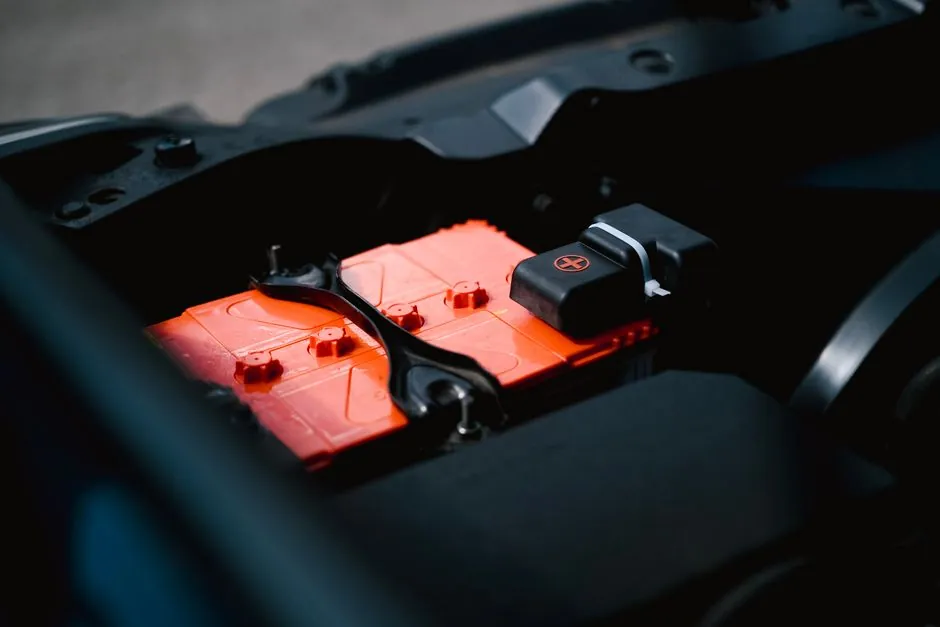
For stationary BESS, sodium-ion chemistry reduces lithium exposure by an estimated up to 30% in cell cost, while delivering 100–160 Wh/kg energy density and 2,000–5,000 cycle life, putting it inside the envelope most utility tenders require [S1][S5].
Sodium carbonate trades at roughly $332/ton against lithium carbonate near $20,000/ton, a 60:1 raw-material cost gap that, combined with sodium's global distribution versus lithium's geographic concentration, is reshaping how utility planners hedge resource risk [S2].
What Sodium-Ion Actually Delivers on the Datasheet
Cell-level energy density for commercial sodium-ion packs sits in a 100–160 Wh/kg window, while mainstream lithium-ion runs 120–250 Wh/kg; round-trip efficiency for sodium-ion in stationary ESS is reported at 85–90%, comparable to lithium iron phosphate in fixed applications [S1][S5]. Cycle life bands of 2,000–5,000 cycles for sodium-ion versus 3,000–10,000 cycles for LiFePO4 are the key spec trade-off grid operators must price in for capex modelling [S1].
Engineering reference: a DC power supply used to commission a sodium-ion BESS string does not need to change topology from a lithium-ion site, but its constant-voltage soak profile should be re-validated because sodium-ion cells have different upper cutoff tolerances (commonly 4.0 V for Na-ion versus 4.2 V for NMC, chemistry-dependent) that affect balancing yields.
Supply-Risk Math: Why the Lithium Hedge Is Real
Projections cited in the U.S. Department of Energy's ESTAP webinar indicate that by 2029, demand for lithium-ion batteries will outpace the global supply of lithium, which is the macro driver pushing utilities toward sodium-ion diversification [S2]. Lithium resources are concentrated in a small number of producing regions, while sodium is recoverable from seawater and common minerals across virtually every continent, which directly translates to lower geopolitical exposure for BESS procurement [S5].
Sandia National Laboratories' materials scientist Ramesh Koripella notes that sodium-ion cells can be shipped and transported in a zero-charge state, a logistics advantage that reduces both transport-classification costs and the regulatory burden of moving large BESS modules, an underrated cost line when power supply racks ship by road for site commissioning [S2]. In parallel, U.S. DOE Chief Scientist Dr. Imre Gyuk has publicly stated that sodium-ion batteries lag lithium-ion on performance but compete on price and can be sourced domestically, which is the framing utilities are now writing into long-term offtake contracts [S2].
Where Sodium-Ion Fits, and Where It Does Not

Sodium-ion is FOR grid-scale BESS, residential ESS, indoor C&I storage, microgrids, peak-shaving with hundreds of partial cycles per day, and low-speed electric transport where energy density is not the gating spec; it is NOT FOR long-range EVs, drones, aerospace, consumer electronics, or any application where 120–250 Wh/kg energy density is a hard constraint [S1][S2]. The technology sweet spot is the same use case Dr. Gyuk's ESTAP briefing identified: stationary storage that frees up scarce lithium for the EV market [S2].
Within sodium-ion, Sandia's Alex Bates emphasises that not all sodium chemistries are equal: low-temperature sodium-ion cells comparable to lithium-ion are in commercial production, while high-temperature molten sodium batteries remain largely in the R&D phase, which means a buyer should always confirm the specific chemistry (NFPP, Prussian-blue analogues, layered oxides, or solid-state) before signing an EPC contract [S2][S7].
2026 Technology Moves: NFPP and All-Solid-State Sodium
Volta Foundation's 2026 assessment identifies NFPP sodium-ion as a leading emerging chemistry for grid-scale storage, citing its safety profile, raw-material cost, and compatibility with existing BESS power-conversion stacks [S7]. The NFPP cathode chemistry avoids cobalt and nickel, which removes two of the most supply-constrained metals from the BESS bill of materials and aligns with the EU 2026 battery regulations pushing for traceable, greener supply chains [S5][S7].
On 2026-05-27, the National University of Singapore reported an all-solid-state sodium battery design that targets both lower cost and reduced lithium dependence, the first peer-reviewed solid-state sodium result positioned explicitly at grid storage rather than mobility, a deliberate scope choice that signals where researchers see the market opening [S6]. For storage handling protocols on incoming cells, note that both NFPP and solid-state sodium cells are still typically shipped at low state-of-charge in 2026, so receiving inspection should match the 0% SoC acceptance procedure Sandia has documented for sodium-ion transport [S2].
Comparison: Sodium-Ion vs LFP vs NMC for Grid Storage
On four decision criteria commonly used in BESS tenders, the three chemistries line up as follows. (1) Raw-material cost per ton of active material: sodium carbonate at roughly $332/ton, lithium carbonate at $20,000/ton, with NMC additionally tied to cobalt and nickel pricing. (2) Energy density: sodium-ion 100–160 Wh/kg, LFP 90–160 Wh/kg, NMC 150–250 Wh/kg. (3) Thermal-runaway risk: sodium-ion lowest per Sandia abuse testing, LFP moderate, NMC highest. (4) Cycle life at 80% DoD: sodium-ion 2,000–5,000, LFP 3,000–10,000, NMC 1,000–3,000 [S1][S2][S5].
For utility procurement, the practical reading is that sodium-ion is a cost-and-supply hedge that trades cycle life and energy density for raw-material security; LFP remains the baseline chemistry for high-cycle grid applications, and NMC is generally not specified for new stationary BESS where fire-safety codes are tightening. See also: storage cage civil-design notes for NFPP racks, which require the same spacing margins as LFP because thermal-runaway gas composition differs even when ignition probability is lower [S2].
Safety, Transport, and the Zero-SoC Advantage
Sandia National Laboratories' Battery Abuse Testing Lab runs nail-penetration, overcharge, over-discharge, and laser-initiation tests on commercial cells; per their published data tables, sodium-ion cells consistently show lower fire-propagation rates and reduced thermal-runaway severity versus NMC lithium-ion under identical abuse protocols [S2]. The ability to ship sodium-ion cells at zero state-of-charge removes them from the highest-hazard transport classifications in many jurisdictions, a logistics benefit that should be quantified early in EPC budgeting because it changes the per-module freight line materially [S2].
For BESS sites using a switching power supply topology for cell balancing, sodium-ion's flatter open-circuit voltage curve versus temperature requires a wider balancing tolerance band; a unit sized for NMC will typically need its balancing setpoint re-trimmed or replaced when re-deployed on a sodium-ion string. That retrofit cost is small per rack but non-trivial across a 100 MW / 200 MWh site, and EPCs are starting to bake it into sodium-ion tenders as a separate line item.
Limits, Open Questions, and Trackable Signals
The honest constraint: sodium-ion is not a full substitute for lithium-ion in the global battery economy, it is a complementary chemistry that absorbs stationary storage demand and frees lithium for the EV market where its energy-density premium is decisive [S4]. Hard-carbon anode supply is scaling slower than cathode capacity, which is the current bottleneck cited in the academic literature, and long-duration NFPP field data past 5,000 cycles remains limited as of 2026 [S3][S7].
Trackable signals for the next 6 to 12 months: (1) first commercial deployments of the NUS all-solid-state sodium cell at grid-pilot scale, follow-up reporting expected through 2026-12 [S6]; (2) a second Volta Foundation / industry update on NFPP cycle-life data beyond 5,000 cycles, which is the threshold where sodium-ion begins to challenge LFP on total cost of ownership for daily-cycling BESS [S7]; (3) any 2026 EU battery-regulation guidance on chemistry-specific recycled-content targets, which will re-rank sodium-ion versus LFP on regulatory compliance cost [S5]. A practical spec-side note for BESS engineers: cross-reference the Refurbished Transformers vs 4-Year Lead Times supply-chain discussion when sizing sodium-ion BESS tie-ins, since transformer lead times are now a co-constraint on grid-storage project schedules. For the broader industrial context of raw-material substitution risk, the Recycled Aluminum for Aerospace and Automotive Sheet coverage applies similar chemistry-versus-supply analysis to the metals side.