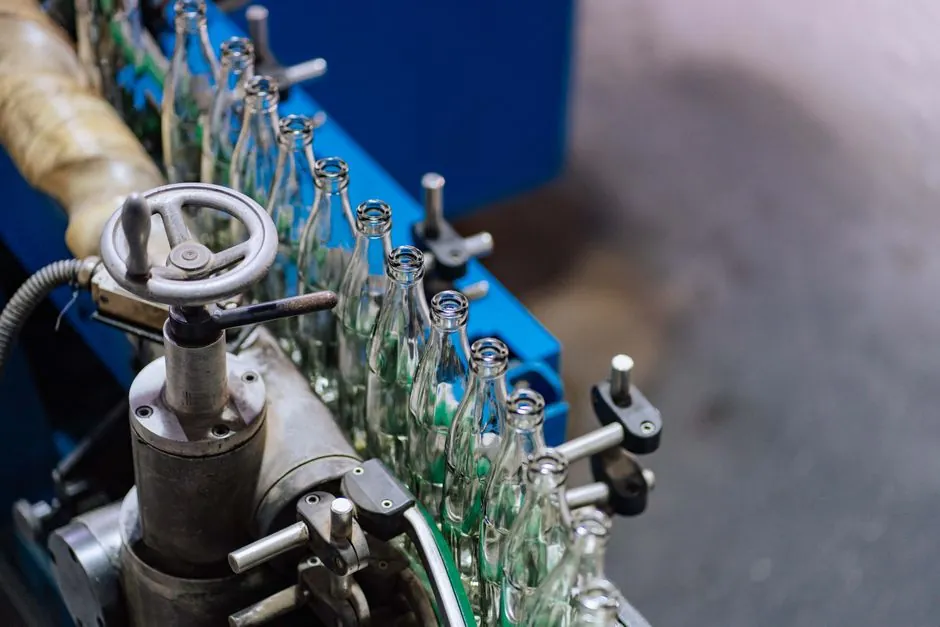
A complete solar glass line is two machines in series: a hot-end forming section that sets thickness, width, and optical base, and a cold-end processing section that cuts, grinds, washes, tempers, and stacks the sheet to module-ready size. Key specifications for solar glass rolling machines include glass thickness (1.2–4 mm, with stable mass production at around 1.4 mm and capability down to 1.1 mm), glass width (2.8–5.4 m), and production capacity up to 600 t/d [S5].
Hot-end equipment is dominated by Chinese builders (AGRM, Sinopec-SYP, Almaden-supplied trains) and the cold-end integrates European-built cutting/tempering (HEGLA, Glaston, Benteler) with Chinese robotic loading, washing, and stacking cells. Process control has shifted to PLC + MES stacks for thin-film lines, where substrate geometry mirrors semiconductor fabs more than architectural glass plants [S1][S6].
Hot-End Forming: Rolling Machine and Melting Train
A solar glass rolling machine is the primary forming unit in a rolled-glass production line, sitting between the melting furnace and the annealing lehr, and working with a lift-out roller to shape the glass ribbon while it is still hot and flexible [S5]. The unit's stable production band sits at roughly 1.4 mm thickness, with a process envelope from 1.1 mm thin substrates up to 4 mm thick cover glass, and ribbon width typically 2.8–5.4 m on catalog machines [S5].
Operating references show single-furnace daily throughputs of 120 t/d (Egypt Float Glass, 2500 mm ribbon, 2 units, 2021), 320 t/d (Almaden, SYP, Turkey sites, 4 units, 2018–2022), and 650 t/d (India Adani, 4 lines under one furnace, 3150 mm ribbon, 2022). Top/bottom roller diameters are 240–450 mm on commercial units, and working pressure is rated at 0.6 MPa (15 t) with a power draw of 32.4 kW at the forming station [S5]. Two pressure rods, each rated 20 t, sit above the ribbon on drive and non-drive sides to keep the sheet flat through the forming gap.
Yield is a key specification to interrogate when comparing rolling machines: published lines claim stable mass production at around 1.4 mm with line yield above 85% [S5]. Anti-reflective or anti-glare coatings are applied downstream of the lehr, not at the rolling stand; the coating station is part of the surface-treatment block, not the hot end [S1].
Cold-End Processing: Cutting, Grinding, Drilling, Washing
European cold-end reference lines, like the 2012 Hegla/Benteler/Glaston plant used as a 2026 benchmark, run a glass thickness range of 3–6 mm on the cutting system (HEGLA Optimax Galactic 7033 R with BBS 7033 loading and STB II 33 breakout) and 2–6 mm on the grinding and drilling line (Benteler). Ready-product sizes span 500×500 mm up to 1300×2500 mm, with raw stock up to 7000×3300 mm [S2].
Edge grinding and corner work are quantified, not vibes: maximum dimension tolerance before grinding is ±0.2 mm, grinding speed is 3–16 m/min (12 m/min with corner grinding), loss per side is 0.3 mm, corner profile C is 2 mm ±1 mm at 45°, and hole position accuracy is ±0.3 mm over 1500 mm. Drilling spindle feed ranges from 15 mm/min up to 7000 mm/min at 900–3300 min⁻¹, and the washer transport runs 3–13 m/min [S2]. A reader auditing a Chinese-built equivalent should ask for the same numbers; the spec sheet that omits them usually hides a slower machine.
Washing is now ultrasonic on most new Chinese lines, paired with horizontal conveyors and PLC control. IDO Technology's IDO-GFSP-Q4-D01 auto-loader handles 2.0–4.0 mm glass at 600×1200 mm minimum to 1400×2500 mm maximum, draws 22 kW at 380 V/50 Hz, and runs on 0.5–0.7 MPa air at ≤55 °C ambient. The rotary table carries 7 t total across both sides, and the unit ships in plywood cases with anti-rust oil and vacuum-pumping for sea freight, with a 12-month warranty and a stated 200 sets/year supply rate [S4].
Tempering, Coating, and Surface Treatment
Tempering for solar cover glass follows EN 12150:2000 on European reference lines, with the Glaston CHF 2000 Pro 15×27 (PT2.85) handling 2.85–6 mm clear float or low-iron glass and minimum sizes down to 100×500 mm. Maximum sizes scale with thickness: 1300×2400 mm at 2.85–2.99 mm, 1300×2500 mm at 3.00–3.79 mm, and 1500×2500 mm at 3.80 mm and above [S2].
Surface treatment is the value-add station. Anti-reflective (AR) coating lifts module efficiency by reducing front-surface reflectance, while anti-glare (AG) etching scatters reflected light for BIPV and rooftop aesthetics. Both are applied after cutting and edge work but before lamination; AG and AR are typically not stacked on the same surface because they target different optical outcomes [S1].
For thin-film lines, surface prep is closer to semiconductor standards: glass transport and storage systems are coordinated through MES software, substrate sizes are fixed at 1583×660 mm or comparable Gen-8.5 footprints, and any particulate or scratch on the substrate kills cell yield. This is why thin-film cold-end capex is closer to display-fab capex per square meter than to c-Si cover-glass capex [S6].
Robotic Loading, Stacking, and Internal Logistics
Modern solar glass lines use six-axis robots to flip and load sheets from a rotary rack to the edger feed conveyor, then shuttle, breakout, and stack through the line. AGRM's cold-end bill of materials includes a glass cutting machine, sheet transport shuttle, breakout machine, roller conveyor, loading/unloading robot, and stacking machine as standard stations [S1].
Argus Solar's framing and transfer equipment runs on AC 380 V three-phase, 0.6–0.8 MPa air, ≤65 dB noise, with 15 kW draw on the all-in-one framing station and a design beat of ≤18 s per cycle. The automatic glass transfer machine (L6350×W3480×H2300 mm, 3000 kg) is sized for full-size c-Si cover sheets and is the typical interface between the cutting line and the tempering furnace [S3].
Material handling is a hidden bottleneck: rotary tables that cannot keep the edger fed will throttle the entire line, regardless of how fast the rolling machine runs. Spec the rotary table capacity, the robot payload, and the conveyor width together; mismatches between stations are the most common cause of the 15% yield gap between nameplate and actual output on Chinese lines [S4].
Equipment Comparison: Hot-End vs Cold-End vs Thin-Film
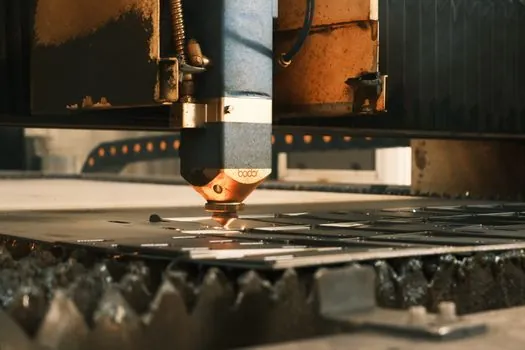
Spec gates diverge sharply by station. Hot-end rolling is selected on glass thickness range (1.1–4 mm), ribbon width (up to 5400 mm), roller diameter (240–450 mm), and per-furnace t/d (120–650 t/d in operating fleets). Cold-end cutting/grinding is selected on thickness range (2–6 mm), hole position accuracy (±0.3 mm/1500 mm), and grinding speed (3–16 m/min). Tempering is selected on max sheet size at each thickness band, EN 12150:2000 compliance, and low-iron compatibility. Thin-film lines add MES integration, fixed substrate size (1583×660 mm class), and cleanroom-class transport as gates [S2][S5][S6].
For c-Si cover glass at scale, a 320 t/d furnace with 4 rolling units and 3150 mm ribbon (Almaden, Turkey, SYP reference class) is the mainstream 2026 benchmark; India Adani's 650 t/d single-furnace, 4-line configuration is the high end of the published operating fleet [S5]. Cold-end builders in 2026 split into European premium (Hegla/Glaston/Benteler for accuracy and tempering) and Chinese volume (IDO/AGRM/Argus for loaders, transfer, stacking), with most new greenfield lines sourcing cutting and grinding from Europe and everything downstream of the washer from China.
Standards, Sourcing, and 2026 Lead-Time Reality
EN 12150:2000 governs the tempering process on European reference lines and is the cited compliance standard for safety-tempered cover glass. ISO certification is the floor on Chinese-built loaders, washers, and stackers, with PLC control and 12-month warranty as baseline commercial terms [S2][S4]. For sourcing, peak-season lead time on Chinese cold-end equipment is 3–6 months and off-season is 1–3 months, with LC or T/T as standard payment terms; supply rate on a single SKU is 200 sets/year, which is the constraint that defines how fast a new line can be duplicated [S4].
The line-level cost stack is dominated by the melting furnace, the rolling machine, and the tempering furnace, in that order; cutting, grinding, washing, and stacking together are typically a single-digit percentage of total line capex. For engineers building a 2026 capex model, the practical move is to lock the hot-end train with one vendor, source cutting and tempering from European builders for the accuracy-critical stations, and source loaders, transfer, washing, and stacking from Chinese builders for cost and lead time. For context on the downstream economics, see the solar cell cost breakdown and the Industry 4.0 module-line spec map.
The 2026 trackable signal to watch is thin-film substrate throughput per square meter per day at 1.1 mm gauge, which sets the practical floor for next-generation c-Si cover glass as module formats keep growing. Lines that publish line yield above 85% at 1.4 mm with 5400 mm ribbon width are the ones that will set the 2027 capex benchmark; everything else is a 2024–2025 design revisited [S5].
For the relevant spec sheets and selection criteria, see additive manufacturing material, linear guide, and crossed roller guide.