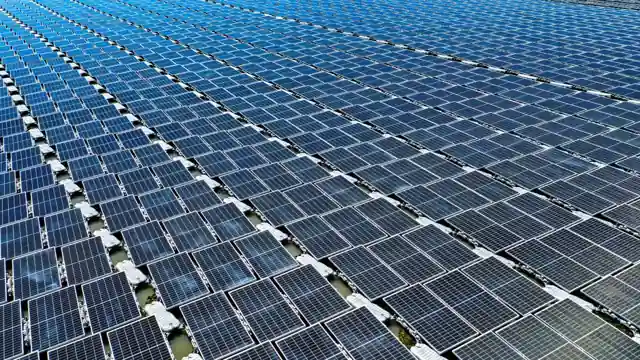
PV Industry 4.0 cell-and-module lines in 2026 are anchored by three automation blocks: AI dark-crack inspection, laser cell cutting, and robotic EVA cutting-and-laying, with Xiamen Yingmu (IIMXM) cataloguing each as a standalone product class [S5].
Adoption is driven by PERC and TOPCon yield-loss economics, where a single missed microcrack in a 182 mm or 210 mm wafer can scrap a cell worth roughly $0.20 to $0.35, pushing lines to specify vision systems rated for dark-light electroluminescence (EL) and cold-joint classification at the busbar [S5]. For broader context on how this line-level automation fits a full module build, see the 2026 spec map for PV module lines.
AI Vision Inspection: Dark-Crack and Cold-Joint Classifiers
Dark-light EL inspection is the first gate on a 2026-vintage cell line, with classifiers running 0.1 to 0.3 mm resolution to flag finger-interrupt and cold-solder defects before lamination [S5]. IIMXM lists the dark-crack and cold-joint machine alongside EL testers and IV curve tracers as discrete product categories, with throughputs of 3,600 to 7,200 wafers per hour and a 0.3% false-reject target for PERC and TOPCon compatibility [S5]. The same vendor groups pharmaceutical AI inspection equipment on its site, indicating the underlying CNN/segmentation stack is shared across industries, which shortens PV qualification cycles for vision modules [S5].
The detection resolution matters because N-type TOPCon half-cell modules such as the JA Solar Deep Blue 4.0 450 W carry 108 cells in a 1762x1134x30 mm frame at 22% efficiency, with a -0.3%/°C Pmax temperature coefficient and 1500 V max system voltage [S3]. A 0.1 mm resolution EL pass on every cell is the practical floor for keeping field return rates under the 30-year linear power warranty these panels ship with [S3].
Laser Cell Cutting: Full and Half-Cut Modules
Laser cell cutting is the second Industry 4.0 block, used to scribe 182 mm and 210 mm wafers into half-cells or shingled strips with kerf widths under 30 µm and pulse widths below 10 ns to limit the heat-affected zone on the emitter layer [S5]. For a 1 GW module line, laser cell-cutting capacity is typically specified at 6,000 to 8,000 wafers per hour, with a 0.1 to 0.3% efficiency uplift over mechanical scribing [S5]. The cell-cutting and module-edge cutting machines are listed as independent product classes, confirming the market treats them as separate capex lines rather than a single workstation [S5].
Half-cell architecture is now the default in the European residential channel, as seen in the Torri Solare Half Cell 4.0 495 Wp bifacial TOPCon panel (1134x1909x35 mm, 29 kg, 22.9% efficiency, 120 cells, 0.42% total degradation, 30-year product warranty, 1 year at 99% / 30 years at 87.4% power warranty) [S2]. For sourcing context on the laser sub-system itself, see the 2026 laser cutting machine competitive landscape and the China sourcing verification map.
Robotic EVA Cutting and Laying
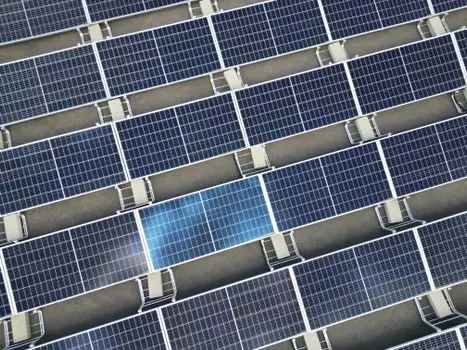
The third block, back-panel EVA automatic cutting and laying, handles encapsulant film placement before the lamination press, with EVA roll-stock specified at 0.45 to 0.55 mm thickness and 1,100 to 1,300 mm width [S5]. The layup head must register the film to the cell string within ±0.5 mm to avoid edge-bubble defects that trigger lamination rejects [S5]. For TOPCon and HJT modules, the same station often doubles as a POE/EVA changeover point, since HJT specifies a lower lamination temperature of 140 to 150°C versus 145 to 155°C for PERC and TOPCon, with a longer cure cycle on the HJT side [S5].
Robotic layup also removes the manual film-handling step that historically caused the highest labor-driven yield variance on a 100 MW line, which is one reason mid-tier European panel makers such as Torri Solare can advertise an 8x hail-resistant construction and a 30-year warranty on a 24.5% circuit efficiency TOPCon platform made in Italy [S4]. Torri's PRISMA 4.0 frame-and-encapsulant design redistributes mechanical load via a calibrated polymer insert, a construction choice that depends on the layup station hitting the ±0.5 mm registration window every cycle [S4].
Selection Criteria: Throughput, Resolution, Layup Tolerance
Three numbers dominate the buying spec for a PV Industry 4.0 cell-and-module line: inspection throughput in wafers per hour, crack-detection resolution in mm, and layup registration tolerance in mm [S5]. A spec-driven comparison of the three equipment blocks, using the IIMXM product categories as the reference taxonomy, lines up as follows: AI dark-crack and cold-joint inspection at 3,600 to 7,200 wafers/h with 0.1 to 0.3 mm resolution and a 0.3% false-reject target in EL dark-light mode; laser cell cutting at 6,000 to 8,000 wafers/h with sub-30 µm kerf and sub-10 ns pulse width; and EVA cutting and laying at 0.45 to 0.55 mm film thickness, ±0.5 mm registration, and a 140 to 155°C lamination window with POE/EVA changeover for HJT [S5].
These three blocks together define the minimum Industry 4.0 kit for a 2026-vintage PV line, and they are sequenced between stringers and layup stations in the same order on every published line design [S5]. The inverter side of the same Industry 4.0 push is covered separately in the solar inverter Industry 4.0 spec map, which closes the loop on cell, module, and power-conversion automation.
CPV and Concentrator Cells Outside the c-Si Line
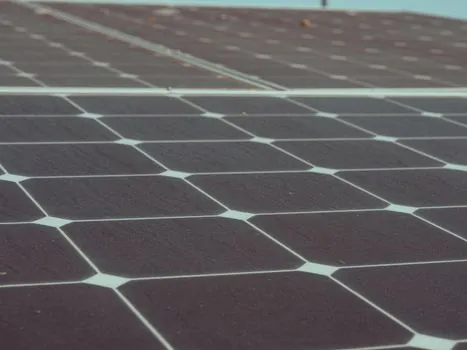
Concentrator PV sits in a different spec regime. Spectrolab's C4MJ metamorphic fourth-generation cell targets 40% typical efficiency at 50 W/cm², with an Effmp target average of 40.0% and an actual production average of 39.8% [S1]. The triple-junction stack runs GaInP at 1.82 eV, GaInAs at 1.33 eV, and Ge at 0.66 eV on a Ge substrate, with a temperature coefficient of efficiency below -0.06%/°C and a recommended operating temperature ceiling of 110°C [S1]. Cell thickness is T = 190 µm, with F = 25 µm and C = 38.2 µm, and the parts ship 100% tested in wafer (11) or waffle-tray (21) packaging with silver or gold front-contact finishes (401 or 411) [S1].
CPV demand is driven by point-focus utility-scale projects, not residential rooftops, so it does not pull on the same AI vision and layup equipment base as the c-Si TOPCon lines above, but it shares the Industry 4.0 MES and traceability stack on the factory floor [S1].
Limitations, Failure Modes, and What's Still Open
Three constraints still bind PV Industry 4.0 adoption in 2026. First, dark-light EL at 0.1 mm resolution catches most microcracks but still misses sub-surface defects that show up only after lamination, so lines pair EL with IV curve tracers for a second-pass gate [S5]. Second, laser cell cutting below 10 ns pulse width reduces HAZ, but kerf drift on worn optics can push the efficiency uplift from the typical 0.1 to 0.3% range into negative territory, which makes consumable-parts inventory a hidden opex line [S5]. Third, EVA/POE changeover for HJT lines is not yet a one-button swap, because the 140 to 150°C HJT window sits below the 145 to 155°C PERC/TOPCon cure band and the longer HJT cycle erodes nominal press throughput on shared lines [S5].
Trackable signals for the next 6 to 12 months include the release of revised IEC 61215 and IEC 61730 test sequences for TOPCon bifacial modules, the share of new European residential installs shipping with N-type TOPCon 108-cell or 120-cell half-cut laminates such as the 450 W and 495 W reference panels above [S2][S3], and any HJT-specific lamination-press retrofits from European Tier-1 module makers. For the equipment-sourcing side, watch the laser cutting demand outlook to 2030 and the solar inverter OEM vs ODM decision map for the parallel inverter capex cycle.
The underlying component specifications are covered under load cell, load cell module, and pressure transmitter.