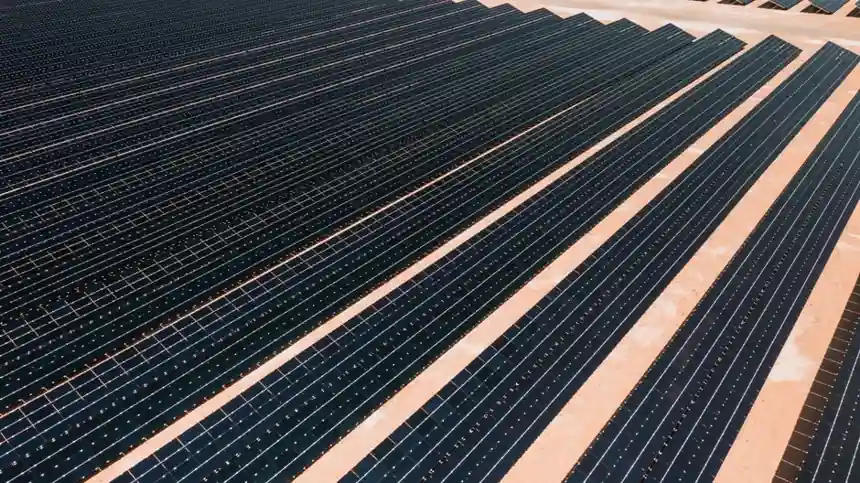
Solar panel OEM contracts in 2026 price monocrystalline modules at US$0.07–0.11/W on Made-in-China supplier listings, with 18,000 W MOQs common on 565–580 W half-cell product lines, while ODM on the same watt class ships from stocked tooling in 2–4 weeks against factory-held TUV IEC 61215 / IEC 61730 certificates [S4][S1].
DAH Solar in Hefei (Anhui) runs 5 production lines and explicitly lists both OEM and ODM R&D capacity, the clearest single signal that Chinese crystalline-silicon suppliers now treat the two models as parallel services, not alternatives [S4]. The buyer's decision is no longer which mode to enter, but which mode to enter first.
Definition Split: What the Factory Actually Does in Each Model
OEM contract manufacturing is build-to-print: the buyer supplies cell efficiency, dimensions, anodized aluminium frame section, junction-box rating, and the factory assembles against that print. Resun Solar's ISO 9001 + ISO 14001 sites in Suzhou ship full module ranges under that model, with TUV IEC 61215, IEC 61730, VDE, CEC, EMC, LVD, and CE certification on the standard product line [S4].
ODM is design-to-sample: the factory proposes a reference design, including cell layout, half-cell architecture and anodized aluminium alloy frame, and the buyer brand-labels it, sometimes with minor cosmetic changes. Hebei JY Future New Energy lists 570 W / 580 W / 565 W half-cell modules and 500–650 W anodized aluminium alloy modules as ODM-ready SKUs, with per-watt pricing that competes directly with OEM runs on the same watt class [S4]. Both modes coexist in the Chinese module hubs of Zhejiang, Jiangsu, Anhui, and Guangdong, where the R&D-capacity filter on sourcing portals routinely lists both "OEM" and "ODM" against the same legal entity [S1].
Decision Criteria: When Each Model Pays Back
Use OEM when the buyer already holds certified cell sourcing, needs a private mould on the junction box or frame, or must inherit a specific TUV / UL / CEC certificate for downstream subsidy claims. The trade-off is MOQ pressure, since Hebei JY Future's OEM 18,000 W minimum on its 565–580 W half-cell line equals roughly 31–32 modules, a barrier for distributors but trivial for EPCs running multi-MW tenders [S4].
Use ODM when speed beats IP, when entering a new watt class (for example stepping from 410 W to 580 W half-cell), or when the buyer's engineering team cannot maintain a full BoM. The ODM model lets the factory's R&D absorb the risk of a new cell generation, while the buyer focuses on channel, warranty registration, and inverter pairing. On the encapsulation-stack side, the Solar Cell Manufacturing Cost Breakdown: Silicon, Wafer, and Process Stack analysis confirms that consumable choice (EVA / POE / EPE encapsulant, TPT / TPE / glass backsheet) is one of the few layers OEM buyers can still force, while ODM buyers typically inherit the factory's locked stack [S1][S4].
Spec-Level Comparison: OEM vs ODM on 4 Buyer Criteria
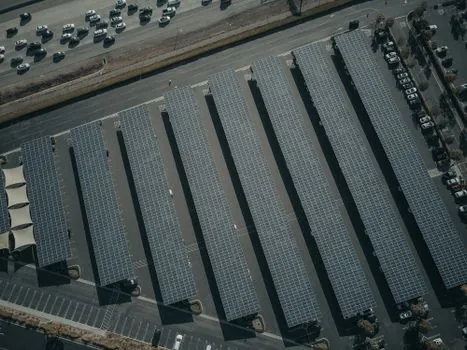
Four criteria separate the two models on the 565–580 W half-cell class that dominates 2026 supply. (1) Unit cost: OEM lands at the floor of the US$0.07–0.11/W window only when the buyer commits palletized volumes; ODM sits mid-window with no volume gate beyond standard container loads. (2) Lead time: OEM needs 4–8 weeks for tooling sign-off and first-article approval; ODM ships from stocked tooling in 2–4 weeks on catalogue SKUs. (3) Certification ownership: OEM buyers can inherit a TUV IEC 61215 / IEC 61730 report only if no BoM change occurs; any cell-source swap forces re-test, while ODM buyers take the factory's existing certificate as-is. (4) IP / tooling: ODM tooling belongs to the factory and can be re-used for other buyers; OEM tooling is typically paid for by the buyer and remains exclusive [S4][S1].
On capacity context, the OEM and ODM BoMs both flow through the same upstream cell-process foundation; the Solar Cell Industry 4.0: 2026 Module-Line Spec Map and Equipment Adoption survey and the Solar Cell Production Line Design: 2026 Spec Map from Cell Format to Gigawatt Capacity reference both confirm that stringer, layup, and laminator recipes are the OEM buyer's NRE line items, not the ODM buyer's. Regional Chinese FOB pricing for the same watt class spans US$0.17–0.26/W by province, with Hebei and Guangdong the cheapest and Jiangsu / Anhui the most process-disciplined [S3].
Use Cases: Utility EPC, Distributor, and Private-Label Channels
Utility-scale EPCs tendering 100 MW+ blocks almost always run OEM: they specify cell supplier (mono-PERC or n-type TOPCon wafer source), encapsulant grade, junction-box diode rating, and frame profile, and they require the IEC 61215 / IEC 61730 certificate to be issued in the EPC's name [S1]. Hybrid sourcing using U.S.-made cells plus China-side assembly is documented for non-IRA projects to balance cost and quality, while fully U.S.-assembled product is preferred for IRA-incentivised projects [S2].
Distributors and project developers chasing residential or small-commercial rooftops increasingly run ODM: a reference 410 W half-cut mono-PERC module with a factory-held TUV / UL certificate can be re-labelled and shipped inside a quarter, which is why private-label portable-panel programmes target the off-grid RV, marine, and outdoor-power channels where watt-class churn is fast and certification depth is shallow [S1][S5]. Gaotu Innovation's OEM/ODM private-label service, for example, advertises adjustable wattage, size, logo, and wiring on portable / flexible panels, with the same legal entity executing both modes [S5].
Constraints, Failure Modes, and Sourcing Signals

OEM failure mode is BoM drift: any cell-source, backsheet, or junction-box swap between contract signature and re-order invalidates the inherited IEC 61215 / IEC 61730 report and forces a 4–8 month re-test queue, which kills project schedules more often than price does [S4][S1]. ODM failure mode is chassis collision: the same reference design may ship to a competitor under a different label, so channel exclusivity is impossible without a private mould on at least the frame or junction box [S1].
Sourcing-side signals to watch: provincial FOB bands have moved into a US$0.17–0.26/W corridor in 2026, with Guangdong at the cheap-and-fast end (3–4 week lead time, US$0.18–0.22/W FOB) and Jiangsu at the quality-led end (4–6 week lead time, US$0.22–0.26/W FOB, Tier-1 PERC / TOPCon / HJT density) [S3]. Zhejiang and Anhui sit in the middle on both price and lead time, with Ningbo and Shanghai port proximity giving Zhejiang the export-logistics edge for U.S.-bound containers [S2][S3]. For buyers scaling past single-line MOQs, the Solar Module Production Line Capacity Tiers: 2026 Spec Map from 60MW Pilot to 1.2GW reference maps which factory capacity tier can absorb 18,000 W ODM trials versus multi-MW OEM runs without re-tooling.
Track two signals over the next two quarters: (a) any consolidation in Hefei / Changzhou that converts a pure-OEM Tier-1 line into a dual OEM/ODM line, since DAH Solar's 5-line dual-mode footprint is currently the most visible datapoint; (b) FOB spread compression between Hebei (US$0.17–0.21/W) and Jiangsu (US$0.22–0.26/W), since a sub-US$0.04/W gap is the threshold at which OEM NRE amortisation no longer beats ODM catalogue pricing on the 565–580 W class [S4][S3].
For the relevant spec sheets and selection criteria, see additive manufacturing material, load cell, and load cell module.