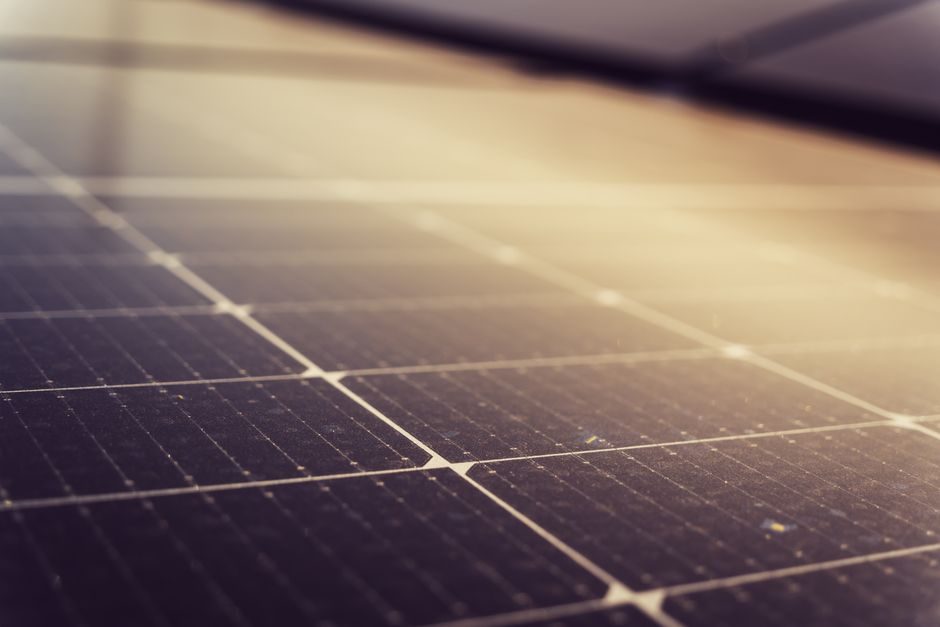
As of 2026-07-15, the China-facing solar cell catalog skews mono PERC half-cell in the 435–560 W band, with polycrystalline cells still listed at 16.0–17.4% efficiency and small-form (1–10 W) ETFE/PET mini-panels filling the IoT and streetlight niche [S1][S3][S7].
Headline entry prices sit at US$0.09–0.13/W for half-cell mono PERC modules (carton 2384×1303×35 mm, 25-year output warranty), while Shandong-based ISO 14001 factories are pushing monofacial mono cells and small-power custom-shape PV cells for OEM buyers [S1][S5][S8].
Cell technology split across the 2026 supplier base
Solar cells on the Made-in-China and Okorder channels break cleanly into three families: monocrystalline (mono PERC half-cell, TOPCon-style), polycrystalline (multi-crystalline, ~16.0–17.4% conversion efficiency), and thin-film options rarely surfaced in the 2026 listings [S4][S6][S7]. PN-junction silicon remains the dominant cell physics; textured monocrystalline surfaces are specified to reduce diffuse reflection and lift module output, with the cell thickness held under 200 µm per mainstream datasheets [S6][S7].
Watt band segmentation is sharp: utility-grade mono half-cell modules cluster at 440 W (Jingsun series, 2384×1303×35 mm carton, 132-cell layout) and 435 W (Shanghai Soaring Industrial wholesale line), while premium 540–560 W monocrystalline modules from Shanghai Evergrn Technology Group target ground-mount plants [S1][S8]. Mini-PV at 1–10 W with custom 4–18 V outputs sits in a separate catalog lane from China Solar Ltd and Hopesun Solar, mostly for streetlight, surveillance and garden-lighting OEMs [S3].
Supplier geography and platform distribution
Supplier density in 2026 still concentrates in three Chinese manufacturing corridors: Shanghai (Evergrn, Soaring, Jumptop, Xunqi Battery), Shenzhen (China Solar Ltd, Hopesun, mini-solar-panel OEM cluster), and Shandong (Qingdao-located ISO 14001 cell factories shipping monofacial mono and small-power custom cells) [S1][S3][S5]. Okorder remains the parallel cross-border sourcing channel, listing Tianjin, Qingdao and Shanghai-shipped lots with TT/LC terms and 50,000-piece MOQs on the small-panel SKU [S2].
Shanghai Xunqi Battery has expanded its cell catalog upstream of the solar integrator with LiFePO4 prismatic and 18650/21700/32700 cylindrical pack cells (25.6–80 V nominal, 2000–6000 mAh), reflecting a 2025–2026 pattern where PV module vendors attach BESS cell SKUs to ride storage-pairing demand [S1]. The Shenzhen cluster, by contrast, stays closer to pure module assembly and ships the bulk of 5–300 W small-format PET/ETFE glass panels at 18 V nominal [S3].
Watt band, efficiency and price anchors you can quote
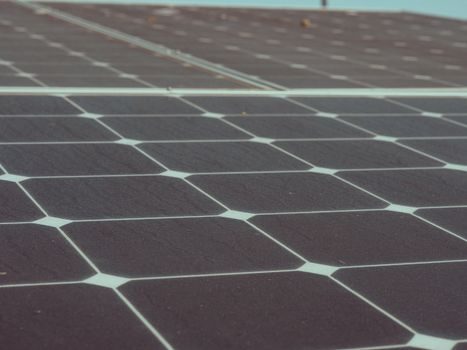
Concrete bands the 2026 catalog supports: mono PERC half-cell modules at 440 W, 132-cell layout, US$0.09–0.13/W FOB; monocrystalline rigid modules at 435 W (Shanghai Soaring) and 540–560 W (Shanghai Evergrn); polycrystalline cells at 16.0–17.4% module efficiency in three efficiency grades (16.0–17.2, CM16.80, 17.2–17.4) from Agbis2 and Multiband series [S1][S4][S6][S7][S8]. Panda 48-cell kits ship with CE, TÜV and UL certification and a 20-year output guarantee, with payment on TT or LC and a stated 1,000 W minimum order, 500 W/month supply capability [S9].
Warranty language is consistent across suppliers: 5 years on materials and workmanship, 12 years at 90% power output, 25 years linear output on the mono PERC half-cell line — the same structure a Tier-1 module OEM publishes on its USMCA and EU shipping datasheets [S2][S8][S9]. For small PV (1–10 W), the Shenzhen mini-panel group quotes custom 4 V, 5 V, 6 V, 9 V, 12 V and 18 V outputs with PET, ETFE or tempered-glass superstrates, MOQ 5,000–50,000 pieces depending on the SKU [S2][S3].
Selection criteria: matching the right cell family to the build
For utility-scale and C&I ground-mount, the mono PERC half-cell 440 W / 132-cell / 2384×1303×35 mm form factor is the de-facto spec on China-origin channels, with 540–560 W monocrystalline modules offered as the premium upward step [S1][S8]. For distributed rooftop and residential string inverters, the 435 W monocrystalline line covers the cost-optimized slot, and the Panda 48-cell kit with CE/TÜV/UL certification is the safer spec where North American or EU AHJ inspection is involved [S1][S9].
For off-grid and IoT (streetlight, surveillance, garden lighting, agricultural pump), the 1–10 W ETFE/PET/tempered-glass small PV format from Shenzhen mini-solar-panel OEMs is the correct pick, with custom voltage 4–18 V and wattage 0.5–5 W available in round, long-strip and irregular shapes [S3]. Polycrystalline cells at 16.0–17.4% remain relevant only where capex per watt dominates efficiency-per-area — a shrinking share of new 2026 builds, but still listed because the older multi-crystalline lines keep running [S4][S6][S7].
How the three main cell types compare on 2026 sourcing criteria
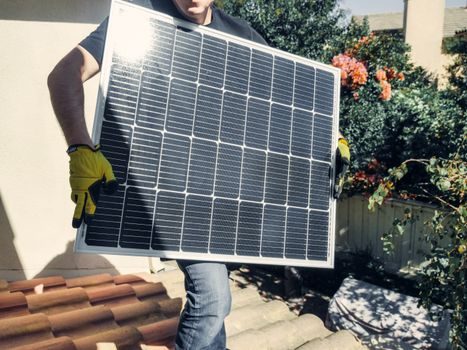
Mono PERC half-cell (440 W, 132-cell) leads on efficiency-per-area, 25-year linear output warranty, and US$0.09–0.13/W entry pricing; supply is broad across Shanghai, Shenzhen and Shandong OEMs and the form factor is interchangeable with Tier-1 global channels [S1][S8]. Monocrystalline rigid at 435–560 W wins on raw watt ceiling and proven bankability for utility projects; supply is concentrated at Shanghai Evergrn and Shanghai Soaring with stated 25-year module output warranties [S1][S2].
Polycrystalline cells at 16.0–17.4% efficiency trade raw conversion efficiency for lower cell cost and a simpler supply chain; they are listed in three quality bands (16.0–17.2, CM16.80, 17.2–17.4) and are typically specified for cost-driven C&I, agricultural pumping and developing-market rooftop where efficiency per square meter is secondary [S4][S6][S7]. Thin-film appears in supplier text but is not actively promoted on the 2026 China-facing catalogs surveyed; if specified, expect longer lead times and smaller vendor pool [S4][S6].
Certifications, standards and warranty structure to verify
The 2026 listings repeat a tight warranty envelope: 5 years materials and workmanship, 12 years at 90% rated power, 25 years linear output — applied to mono PERC half-cell modules from Jingsun, Shanghai Soaring, Shanghai Evergrn and the Panda 48-cell kit supplier [S2][S8][S9]. The Panda 48-cell kit carries CE, TÜV and UL certification, the minimum stack a Western buyer should require for rooftop AHJ sign-off [S9].
Shandong-based cell suppliers on Made-in-China advertise ISO 14001 environmental management as the headline certification on the directory page; for PV-specific quality, buyers still need to confirm IEC 61215 (design qualification) and IEC 61730 (safety) on the per-model datasheet rather than relying on the supplier-level ISO mark alone [S5]. Lead-time and shipping terms on Okorder and Made-in-China are uniform — TT or LC, FOB China main port, carton export packaging, with stated monthly supply capabilities in the 500 W to 15000 pc/month band depending on the SKU [S2][S5][S8][S9].
Limitations and sourcing risks in the 2026 channel
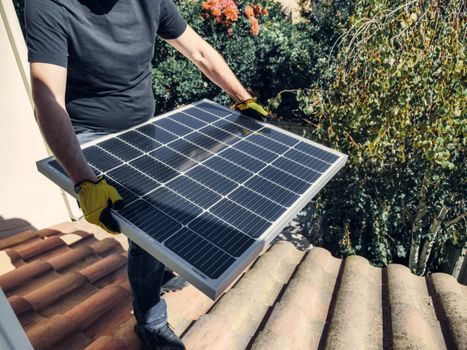
The 2026 supplier directory skews heavily toward mono PERC and rigid mono crystalline; TOPCon and HJT cells are referenced in adjacent supply-chain coverage but do not yet surface in the 2026 Made-in-China and Okorder cell listings reviewed here, which constrains premium-efficiency sourcing through these channels [S4][S6]. For a deeper read on the upstream and downstream wafer-to-BOS spec map, the Solar Cell Upstream and Downstream 2026 article traces the cell-to-inverter interface.
MOQ friction is real on the small-PV lane: 5,000-piece minimums on custom-shape 0.5–5 W mini-panels and 50,000-piece minimums on the cheap small solar panel SKU make sample-and-iterate sourcing expensive for small integrators [S2][S3]. Where the build needs a matching inverter string, the Solar Inverter Suppliers and Manufacturers 2026 Sourcing Map provides the downstream counterpart, and the TOPCon M210 reprice analysis flags where the next cell-tech shift will pressure the current PERC-heavy listings.
Trackable signals for the next sourcing window: a second-half 2026 wave of Shandong and Inner Mongolia cell suppliers advertising TOPCon and HJT on the same Made-in-China directory; broader CE/IEC 61215/IEC 61730 disclosure on the per-SKU datasheet rather than only at the supplier-factory level; and a tightening of the 5/12/25-year warranty envelope on polycrystalline SKUs that have not historically carried a 25-year linear output clause [S5][S9]. Industrial buyers who need valve and instrument cross-references for a hybrid PV-plus-process plant should also bookmark the Globe Valve Selection spec guide for the BOS-side piping spec, since the same 2026 supply-chain pressure shows up across both PV and process-equipment channels.
For component-level specifications, see load cell, load cell module, and pressure transmitter.