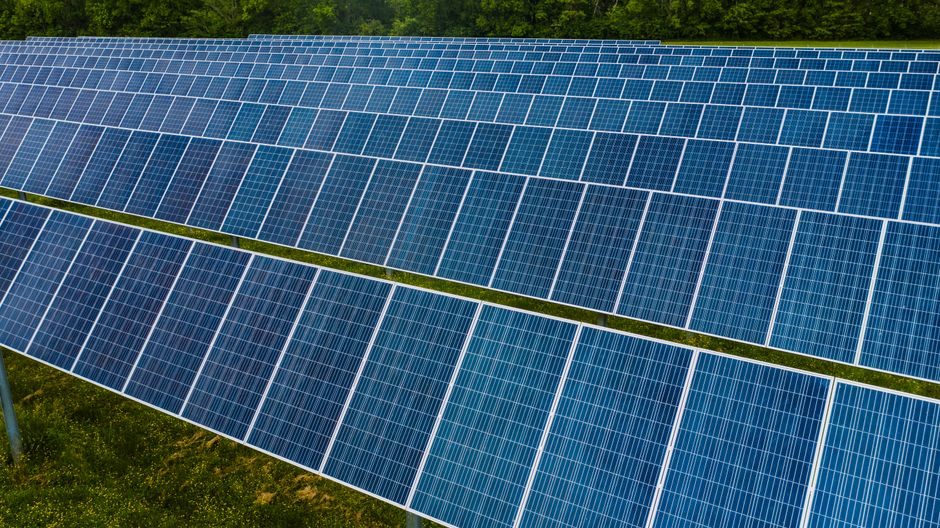
The solar-glass value chain runs from silica sand, soda ash and dolomite feedstocks, through float lines and patterned roll coaters, into tempered cover glass, EVA/PVB interlayer film, PV module lamination and downstream BIPV curtain-wall or rooftop integration, with Xinyi Glass operating across 9.15 million m² of plant footprint and a 140-country distribution network as a benchmark for vertical scale [S5].
Upstream exposure for any solar-glass line includes pattern-roller supply, low-iron silica purity, and the anti-reflective (AR) coating chemistry; downstream exposure includes EVA encapsulant film that must clear ISO 12543-1~6 and GB 9962 laminated-glass interlayer requirements before a module can ship [S4]. For instrumentation and process-control engineers, the practical reading is that solar-glass plants now consume a measurable share of industrial pressure transmitters, flow meters and sight glass inspection ports identical to those on float lines for architectural optical glass.
Upstream Layer 1: Raw Glass Feedstock and Float-Line Equipment
Solar-grade cover glass starts as low-iron patterned glass fiber-parent silica melt: Fe2O3 must sit below roughly 200 ppm to keep solar-weighted transmittance above 91.5%, and patterned surface roughness is engineered at the float bath to drive light-trapping inside the EVA/glass sandwich. [S1]
Float-line control loops for a 1,000 t/day solar-glass furnace typically instrument tin-bath atmosphere O2 at 0.5–2 ppm, annealing lehr temperatures to ±2 °C across 600–700 °C, and pull-rate of the ribbon at 600–1,200 m/h — each loop anchored to a pressure transmitter on the lehr under ATEX 2014/34/EU zone 1 and a Coriolis or vortex flow meter on the gas-side mass balance. The upstream tier is therefore not a commodity play: silica grade, dolomite reactivity and roller-pattern precision jointly determine the cell-to-module optical gain.
Upstream Layer 2: Pattern Rollers, AR Coatings, Tempering Furnaces
Pattern-roller surface micro-structure (typical pyramidal pitch 50–150 µm, depth 0.5–3 µm) is the second engineering input; after cooling, the ribbon enters an AR coating bath where SiO2/TiO2 sol-gel layers add 1.5–2.5 percentage points of transmittance, then a tempering furnace operating at 620–680 °C to lock in the 3.2 mm or 2.0 mm cover-glass mechanical strength (≥90 MPa surface compression per EN 12150-1). [S2]
For 3D-curved module formats — increasingly required by automotive and BIPV façades — 3D curved glass curtain wall sub-assemblies now drive a parallel demand stream, with hot-slump or cold-bend lines requiring curvature radii of 400–1,200 mm without losing anti-reflective performance [S3]. Procurement engineers evaluating a tempered-glass line should compare: roller-pattern supplier count, AR bath chemistry lifetime (typically 7–14 days between dumps), and tempering-line yield at <2.0 mm thickness, which is the leading-edge cost driver in 2026.
Midstream: EVA/PVB Interlayer and Module Lamination
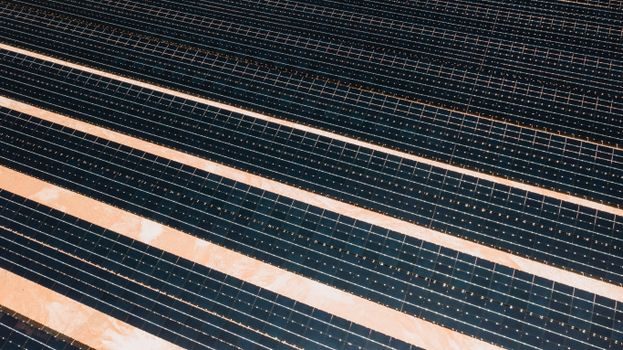
Solar EVA interlayer film (crosslinkable ethylene-vinyl acetate) used for solar photovoltaic cell packaging must meet ISO 12543-1~6 and GB 9962 for laminated safety-glass interlayer behaviour, with the film providing excellent aging resistance, no shedding, no discoloration and no cracking [S4]. The encapsulant plant feeds the laminator, where vacuum hold is pulled to <50 mbar absolute and the press cycles at 145–155 °C for 12–18 minutes.
Process-control hardware around a PV laminator is strikingly similar to a flat-glass laminator: sanitary sight glass for visual confirmation of bubble-free lay-up, differential pressure transmitter on the vacuum manifold, and PID-controlled hot-oil regulation on the platen. See also the 2026 solar cell supply-shortage risk map for how EVA/backsheet feed constraints feed back into cover-glass demand swings.
Downstream Layer 1: PV Module Assembly and Cell-Technology Mix
The downstream pull on solar cover glass is set by module watt-band mix: in 2026, TOPCon and HJT dominate new capacity, and a TOPCon bifacial double-glass module consumes 2 × 2.0 mm tempered cover (vs. 3.2 mm front + backsheet in older PERC) — halving the per-watt glass mass but raising the per-module surface area, with knock-on demand for 1.6 mm ultra-thin cover for lightweight rooftop formats. [S3]
For sourcing context, the 2026 solar cell supplier map and the TOPCon market note both show the same upstream pressure point: a watt-band shift to n-type directly translates to a glass-thickness shift on the order of 0.8–1.2 mm per module, and float lines that cannot deliver sub-2.0 mm temper at yield lose the bid. A typical 2026 supply decision: choose 2.0 mm tempered for utility-scale TOPCon, 1.6 mm for distributed rooftop, 3.2 mm only where IEC 61215 mechanical-load ratings demand it.
Downstream Layer 2: BIPV Façade, Curtain-Wall and Rooftop Integration

This raises the engineering bar: curvature-induced birefringence must be balanced against AR-coating uniformity, and the BIPV supplier therefore buys from a much narrower shortlist of glass makers than a standard module assembler does.
The 2026 sourcing decision matrix for a BIPV façade project is roughly: glass supplier (must run ≤R400 cold-bend lines) × encapsulant (must be dual-certified EN 14449 + ISO 12543) × cell string supplier (must fit non-planar backplane) × framing system (must clear wind-load per local code). When any one leg fails, the unit is rejected — so the upstream and downstream lists need to be locked together, not separately, during procurement.
Comparison: Main Solar-Glass Spec Families for 2026 Sourcing
[S4]
Reading the table from a process-engineering perspective: the <2.0 mm tier is where yield and lead-time penalty live, the 3D curved tier is where qualification cost and lead-time compound, and the 3.2 mm tier remains the cost floor. Xinyi's disclosed 9.15 million m² of plant footprint across the group is a useful capacity benchmark, but the real 2026 differentiator is which supplier runs an ISO 12543- and GB 9962-qualified interlayer line in-house, because that step gates the laminated safety-glass certificate downstream [S4][S5].
Instrumentation Cross-Cut: What Solar-Glass Plants Buy That Other Glass Plants Do
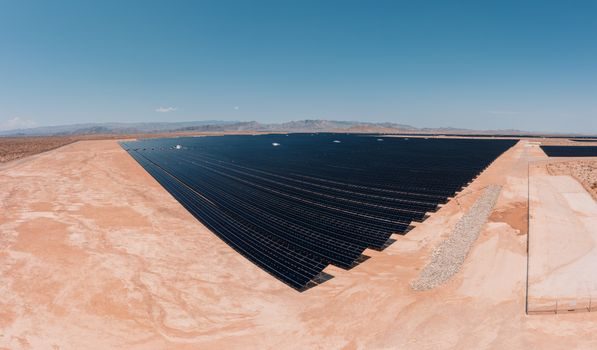
That cross-cut matters for specifiers: a vendor that can supply a fully ATEX/IECEx-rated instrumentation package (Steriflow, Jordan Valve, Longer Pump drives are visible in current solar process documentation [S1]) is operationally easier to qualify than one that requires a separate hazardous-area approval cycle. The 2026 watchpoint is whether suppliers can ship the same hardware with calibration certificates traceable to ISO/IEC 17025 — that is now table stakes for module makers selling into EU utility tenders.
Selection Criteria: Who Solar-Glass Is For (and Who It Is Not For)
Solar cover glass is the right buy for: (a) module OEMs building ≥1 GW/yr of TOPCon or HJT lines and willing to qualify a 2.0 mm line; (b) BIPV façade integrators needing ISO 12543 + EN 12150-1 dual certification and ≤R400 cold-bend capability; (c) rooftop integrators prioritising weight per m² over absolute wattage. It is the wrong buy for: thin-film-only fabs that already specify a front-sheet polymer, for off-grid consumer products where 3.2 mm float is overspec, and for any project where the local code does not yet recognise EN 12150-1 tempered certification. [S5]
The practical procurement gate: confirm pattern-pitch datasheet, Fe2O3 <200 ppm certificate, AR-coat transmittance gain (1.5–2.5 pp), tempering yield at the requested thickness, and EVA/GB 9962 interlayer traceability, before negotiating price. A complementary view on the upstream metals pressure on module cost sits in the steel plate types reference, since framing system choice (galvanised vs aluminium) gates the same downstream wind-load envelope.
Trackable signals for the next sourcing cycle: (1) the first commercial shipment of 1.6 mm tempered cover at ≥92% yield from a tier-1 supplier — that is the moment the lightweight rooftop segment opens; (2) any GB 9962 or ISO 12543 revision that tightens the UV-ageing test, which historically adds 4–8 weeks of qualification time; (3) the first 3D curved BIPV curtain-wall project to clear EN 12150-1 + ISO 12543 dual-certification, which is the inflection point for non-planar BIPV at scale.