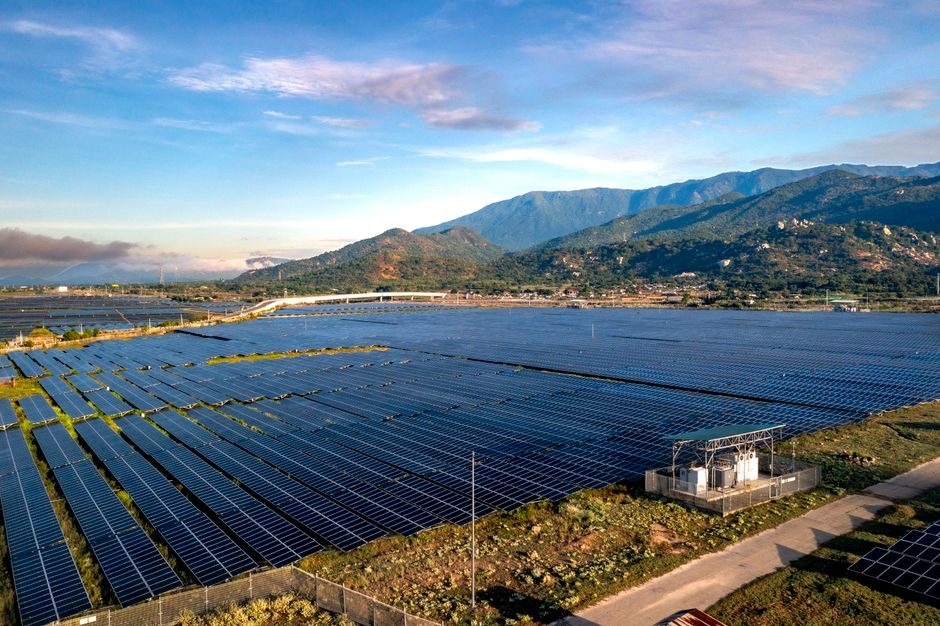
Smart solar inverters are no longer an optional upgrade — they are the spec baseline for 2026 utility, commercial and residential projects, integrating grid-support voltage/frequency regulation, cloud monitoring and ride-through anti-islanding per IEEE 1547-2018 interconnection rules [S2].
The addressable hardware has expanded: ENF Solar's 2026 inverter directory lists 5,683 inverter series and 18,114 individual inverters, giving procurement and EPC teams a directly comparable data set when they filter by topology, phase and output [S4]. IMARC's March 2024 baseline values the global solar microinverter segment at US$ 311.9 Million for 2023 with a 13.3% CAGR projection to 2032 — a benchmark still cited in 2026 sourcing briefs [S3].
IEEE 1547-2018 and UL 1741-SB as the 2026 Spec Gate
IEEE 1547-2018 is the binding interconnection standard for distributed energy resources in the US, and its 2026 implementation is reinforced by UL 1741-SB (the "smart inverter" supplement), which adds grid-support functions: volt/VAR control, frequency-watt, ride-through and anti-islanding [S2]. Smart inverters that pass UL 1741-SB testing can be specified for California's NEM 3.0 and New York's dynamic-tariff programmes without per-site re-engineering, cutting the interconnect cycle from months to weeks.
For India, the 2025 baseline still applies: the PM-KUSUM agricultural solar-pump programme and the Grid-Connected Rooftop Solar Scheme now encourage or mandate smart inverters that can do voltage/frequency regulation in weak rural feeders — relevant to Uttar Pradesh and Rajasthan agricultural zones where voltage spikes damage irrigation loads [S2]. Specifiers should require explicit IEEE 1547-2018 and UL 1741-SB compliance evidence on the datasheet, not generic "grid-support" marketing text.
String, Central, Microinverter and Hybrid: Topology Comparison
Four inverter topologies dominate 2026 procurement, and they do not all solve the same problem. Central and three-phase string inverters still win on cost-per-watt for utility-scale plants above ~1 MW, while module-level power electronics (MLPE) — microinverters and DC power optimisers — win where shading, mixed orientation or panel-level monitoring is required [S3]. Microinverters eliminate the high-voltage DC string, which simplifies rooftop fire-safety compliance and installer workflow.
IMARC segments the microinverter market by phase (single/three), connectivity (standalone/on-grid), component (hardware/software) and communication channel (wired/wireless) — a useful filter when matching inverter to plant architecture [S3]. The same 2024 IMARC study still names Enphase Energy, ABB, Chilicon Power, Altenergy Power System, SunPower, Darfon Electronics, Siemens AG, Delta Energy Systems, Alencon Systems, ReneSola, Omnik New Energy, EnluxSolar, Sungrow Deutschland and Sensata Technologies as the active competitor set [S3]. A rough cost/safety/scale comparison in 2026 sourcing terms:
- Central inverter: lowest $/W above 1 MW, but single-point failure risk, requires string combiner and DC disconnects. - Three-phase string inverter: balanced $/W for 100 kW–1 MW C&I, modular redundancy, easier O&M. - Microinverter: highest $/W, but panel-level MPPT, no high-voltage DC, module-level monitoring, best for shaded or split-orientation residential roofs. - Hybrid inverter (PV + battery): premium for storage-ready sites, required where NEM 3.0 / dynamic tariffs reward export shifting [S2][S3].
Smart Inverter Functions That Move the 2026 Spec Line
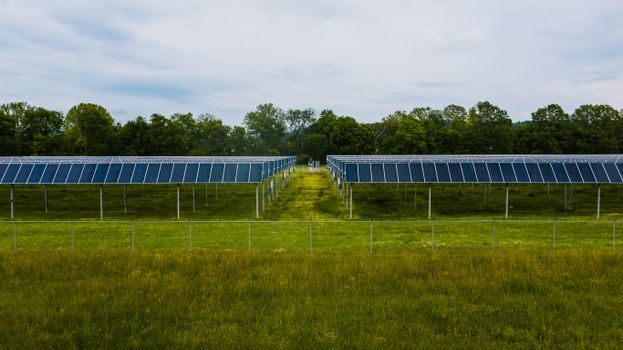
Volt/VAR and frequency-watt response — both defined in IEEE 1547-2018 and validated by UL 1741-SB — let the inverter absorb reactive power and curtail real power autonomously when grid frequency drifts, which is what utilities now expect from any device above 1 kW [S2]. Ride-through (low/high voltage ride-through, LVRT/HVRT) is the second hard gate: the inverter must stay online through brief voltage sags, not just disconnect, which is why California Rule 21 and Hawaii Rule 14H explicitly require it.
Cloud-based monitoring is the third decision line. Modern 2026-spec inverters expose per-panel or per-string yield data through REST/MQTT APIs, letting the SCADA layer — often a PLC downstream — poll for fault flags and dispatch battery assets. For sites that also drive industrial loads through pressure transmitters and flow meters, the same Modbus/TCP or OPC UA backbone can carry inverter telemetry, which reduces SCADA hardware count on a hybrid plant.
Microinverter Economics: 2023 Baseline Carried Into 2026 Sourcing
An IMARC Group report published in March 2024 values the 2023 global solar microinverter market at US$ 311.9 million and projects US$ 988.9 million by 2032 at a 13.3% CAGR [S3]. The growth argument is not cost-per-watt; it is module-level energy harvest gain under partial shading and dust, plus the safety win of eliminating high-voltage DC rooftop runs.
Two structural shifts support that trajectory into 2026: stricter rooftop fire codes in the US/EU that penalise high-voltage DC string wiring, and falling MLPE bill-of-materials as GaN switches replace legacy MOSFET stages. The 2026 sourcing risk to watch is single-vendor concentration — Enphase still holds a large share of the MLPE market, so EPCs running multi-megawatt residential portfolios are qualifying second-source microinverter suppliers to avoid schedule slip [S3].
Standards, Sourcing and What a 2026 Datasheet Must Show
A spec-grade 2026 inverter datasheet should list, in this order: rated AC output (kW), max DC input voltage, MPPT voltage window, number of MPPT inputs, peak efficiency (typically 97.5%–98.8% for string, 96%–97% for microinverters), CEC weighted efficiency, IEEE 1547-2018 category (Category I/II/III), UL 1741-SB compliance, anti-islanding method (active frequency drift, impedance measurement), communication (Modbus RTU/TCP, SunSpec, REST API) and enclosure rating (NEMA 4X / IP65 typical for outdoor). [S1]
For grid-tied C&I work, NEMA 4X enclosures and a -25 °C to +60 °C operating window are now table stakes, and many 2026 utility RFQs add IEC 62109-1/-2 safety and IEC 61683 efficiency measurement as drop-in requirements. Procurement teams that pull datasheets from the ENF Solar directory can side-by-side compare up to 18,114 inverters against these parameters, which compresses the shortlist cycle from weeks to days [S4]. For sites coupling solar to industrial process control — pumps, chillers, electrolyser auxiliaries — the same inverter SCADA feed can drive a PID controller loop and actuate an industrial valve, which is the real integration play for 2026 hybrid plants.
What to Track in the Next Six Months
Two signals are worth monitoring through the rest of 2026: (1) any revision of IEEE 1547.1 testing procedures that would re-rate existing UL 1741-SB inverters, and (2) UL 1741-SB certification updates that may force firmware refreshes on already-deployed fleets. EPCs should also track 2026 H2 utility interconnection queue data in CAISO, ERCOT and MISO — queue wait time is the binding constraint on smart-inverter project IRR more than the inverter unit cost. A defensible next read is the ENF Solar directory's quarterly count of new series entries against the 5,683 baseline, since a sustained jump above 6,000 series would indicate accelerated product refresh from Asian OEMs. [S2]
For related coverage, see Polyethylene Resin Smart Manufacturing: Sensor Stack and Automation Specs for 2026.