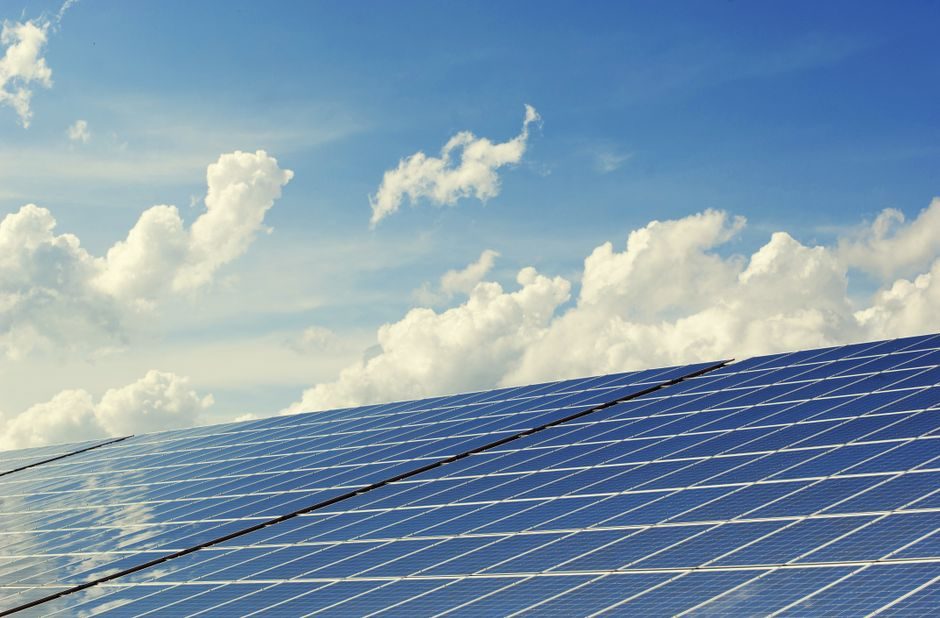
Global photovoltaic module nameplate capacity in 2026 is anchored in China: Mate Solar (Hefei, Anhui) lists ISO 9001 / ISO 14001 / QC 080000 certifications and ships solar panels, inverters, lithium battery storage and energy-storage containers from a single Anhui High-Tech-Zone site [S1], while Guangdong Yaosheng Solar Energy Technology — founded 2009, 30,000 m² footprint, USD 200 million total investment — runs custom BIPV and flexible-panel lines out of Meizhou [S3].
India is the clearest #2 challenger: Vikram Solar publishes a 715–725 W high-efficiency bifacial / glass-glass / frameless utility-grade range, markets itself as India's "1st Tier 1 by BloombergNEF" and as a "7 Times PVEL Top Performer," with 27- and 30-year performance warranties on the U.S. storefront [S4]. The macro frame comes from the IEA's clean-energy manufacturing outlook (published 2024-11-01): global combined market size for PV, wind, EV, battery, electrolyser and heat-pump manufacturing is projected to rise from USD 700 billion in 2023 to over USD 2 trillion by 2035, with global solar-panel production capacity on track to exceed 1.5 TW by 2035 [S2].
China capacity: Anhui, Guangdong and the 500 MW–multi-GW plant band
Chinese tier-1 cell+module plants have crossed the 500 MW annual-output line as a baseline rather than a ceiling: Solarparts (Shenzhen) advertises "annual production capacity up to 500 MW" on its company profile and pairs that with "patented material design" and balcony / rigid-panel product lines for distributed generation [S7]. Industrial-scale Chinese suppliers run substantially larger footprints — Guangdong Yaosheng's 30,000 m² Meizhou complex on a USD 200 million capex base supports OEM/ODM BIPV and flexible-panel production for overseas project EPCs [S3].
The structural reason for the China lead is vertical integration at the same industrial park: Mate Solar bundles solar panel, solar inverter, solar controller, lithium battery, home storage, industrial & commercial storage, and 20/40-ft energy-storage container manufacturing under one roof, which lets the same site quote a complete BOS package and shorten ex-works lead time for containerised storage [S1]. For spec-in engineers this matters because inverter-to-panel DC/AC string sizing, containerised-PCS interfaces, and BMS protocols can be locked in-house instead of cross-vendored — a different sourcing problem from the electric motor global production capacity map, where China hub share is more about stamping and copper supply than full-stack integration.
India: Tier-1 bankability claim, 715–725 W utility panels, 27-30 year warranty
Vikram Solar (Kolkata-headquartered, U.S. storefront operated July 2026) sells panels in the 715 W to 725 W output band, with bifacial, frameless, glass-glass, anti-glare, high-system-voltage and Module-Level Power Electronics (MLPE) variants aimed at utility-scale, C&I and residential rooftops [S4]. The company cites BloombergNEF Tier 1 bankability and "7 Times PVEL Top Performer" status — a third-party reliability signal buyers can re-verify against PVEL's PV Module Product Qualification Program public reports [S4].
Warranty stacking is now a two-number spec: Vikram's utility panels carry 27-year and 30-year performance warranties, with a 30-year option on the high-efficiency range [S4]. That lines up with the China-tier curve where 25–30-year linear performance warranties have become the de-facto commercial baseline. India also uses its own ALMM (Approved List of Models and Manufacturers) as a domestic content gate, which is a non-tariff capacity-shaping lever that does not bind the U.S. or EU buyer the same way.
IEA 2035 ceiling and what 1.5 TW really implies for 2026
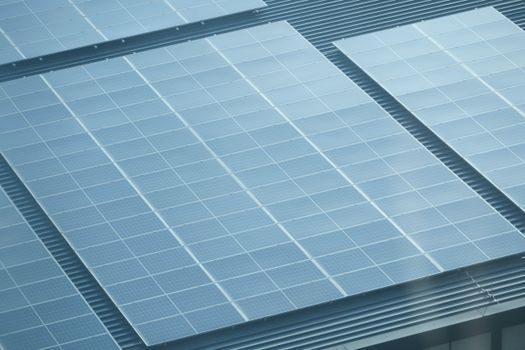
The IEA's November 2024 manufacturing outlook puts global solar-panel production capacity on a trajectory to clear 1.5 TW annual nameplate by 2035, alongside a clean-energy manufacturing market rising from USD 700 billion (2023) to over USD 2 trillion by 2035 across PV, wind, EV, battery, electrolyser and heat-pump segments [S2]. Translated to 2026 numbers: a 1.5 TW 2035 ceiling implies that current nameplate is already several hundred GW and that the next 9 years are about utilisation-rate recovery, not fresh fabs.
That 1.5 TW figure is a nameplate ceiling, not a shipment number. In 2023–2024 the industry sat at roughly 50–60% capacity utilisation on the way to 1 TW of cumulative shipments, with polysilicon, wafer, cell and module margins compressed in turn. The same over-capacity story is visible in adjacent heavy industries — see the air compressor global capacity map and the CNC machine price trend — where Chinese hub output forces tier-2 and tier-3 makers to compete on lead-time and warranty length rather than headline price. For solar, the practical lever is which tier-1 holds its 30-year performance warranty through a downturn.
Country breakdown: China, India, Southeast Asia, U.S., EU
Country-level allocation of 2026 PV module nameplate is concentrated in five hubs: mainland China (Anhui, Jiangsu, Zhejiang, Guangdong, Hebei, Sichuan/Central for polysilicon), India (Gujarat, Tamil Nadu, Karnataka), Vietnam and Malaysia (cell+module finishing, much of it Chinese-OEM owned), the U.S. (reshoring lines in Georgia, Ohio, Texas), and the EU (Meyer Burger, REC, smaller lines). Vikram Solar's Made-in-USA storefront shows how Indian tier-1 brands now position for the U.S. IRA domestic-content premium even though the cells still originate outside the U.S. [S4].
Smaller export channels run through trading companies on Made-in-China and Alibaba, where the same Chinese factory appears under multiple storefronts; the structural spread is visible on Made-in-China's "Solar Panel Distributors with Global Supply Capacity" aggregator and the Made-in-China BIPV panel factory directory, both of which concentrate in Guangdong and Anhui and both of which expose OEM/ODM as the standard engagement model rather than branded SKU sales [S3][S6]. The broader lithium global production capacity map sits one tier upstream and shapes the same China-Australia-Chile triangle that the panel makers are now vertically integrating into.
Selection criteria buyers can score 2026 module suppliers against
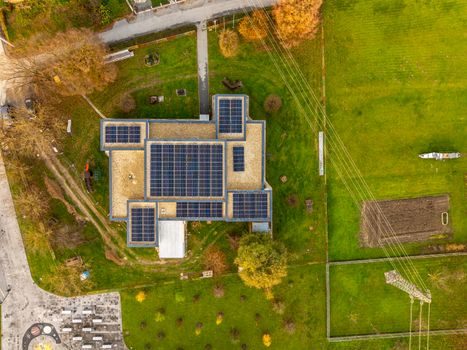
Four data points now decide a tier-1 module buy: nameplate Watt band (715 W to 725 W is the current utility ceiling per Vikram's published catalog), warranty term (27 to 30 years is the new commercial baseline), third-party reliability signal (BloombergNEF Tier 1, PVEL Top Performer, 7-time PVEL repeat counts as published), and BOM architecture (bifacial, glass-glass, frameless, anti-glare, MLPE-ready, high system voltage) [S4]. Mate Solar's documentation hits only some of these because it sells into the residential and small-C&I range where the buyer weight tilts to inverter-battery-storage bundling and IEC/UL certification coverage rather than a 725 W module [S1].
Cost-curve signals matter too: lower-tier Chinese factories (the 500 MW "Solarparts" band) compete on price and lead-time, mid-tier Chinese OEM/ODM (the 30,000 m² Guangdong Yaosheng class) compete on custom format and BIPV, and tier-1 brand (Vikram, Jinko, Trina, JA, LONGi) compete on bankability and warranty enforceability [S3][S4][S7]. Sourcing teams should weight warranty enforceability and PVEL/Kuwait/IQT reliability history more than the headline USD/W figure in a 1.5 TW-2035 over-capacity market, because the next 24 months are about who survives the next down-cycle, not who quotes the lowest ASP. The same logic shows up in the bearing price trend write-up, where quoted bands and raw-material drag are inseparable from a survival-of-tier-1 frame.
Limits, failure modes and what 2026 sourcing cannot fix
Three failure modes are built into the current capacity map. First, the IEA's 1.5 TW 2035 ceiling is a nameplate number — actual shipment is gated by installation demand, interconnection queues, and inverter+transformer bottlenecks, not by fab capacity [S2]. Second, geographic concentration in Anhui and Guangdong means a single typhoon, regional power rationing, or a polysilicon feedstock disruption can move global ASPs inside a quarter; the lithium capacity map is the upstream mirror of the same risk. Third, the "Made in USA" claim on a Vikram storefront is a brand-positioning move as much as a fab claim — buyers should still check the country-of-origin cell certificate before claiming U.S. domestic-content premium under IRA or EU Net-Zero Industry Act rules [S4].
For aluminium-frame and rail-side sourcing, a separate but related story is in the [aluminum veneer panel]([/encyclopedia/aluminum-veneer-panel.html]) and [lightweight partition panel]([/encyclopedia/lightweight-partition-panel.html]) supply chains, where China hub share is also dominant and the same factory-over-capacity logic applies. None of these risks are fixable by a single buyer; they are systemic to a 1.5 TW-2035 trajectory that the IEA published in late 2024 and that 2026 procurement teams are now pricing into warranty terms rather than into unit cost.
Two trackable signals to watch through the rest of 2026: the next PVEL PV Module Reliability Scorecard (annual, usually Q4), which decides which suppliers keep their "Top Performer" badges into 2027, and the next IEA clean-energy manufacturing mid-year update, which will revise the 1.5 TW 2035 ceiling if 2025–2026 installation demand runs ahead of the 2024 baseline.
For component-level specifications, see alc panel, hmi panel, and aluminum veneer panel.