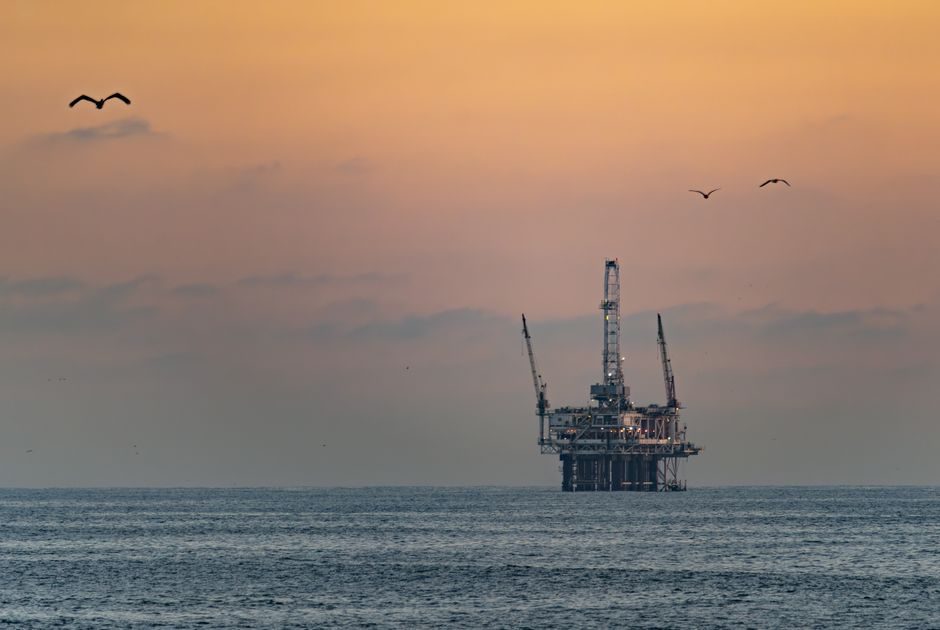
Allied Market Research published a Feb 2026 trend report on large-scale LNG terminals, splitting the asset base by technology (Liquefaction, Regasification) and by end user (Residential, Commercial, Industrial) under report code A01881 [S3]. The 2026 framing matters because the same report treats liquefaction capacity as the supply-side constraint, and regasification capacity as the demand-side bottleneck for importers [S3].
Deloitte's 2026 Oil and Gas Industry Outlook, published 2025-10-29, puts LNG expansion and digital transformation together as the two growth levers US operators should pull while costs rise and policy shifts [S2]. ICIS, in its 2024 Global Supply and Demand Outlook, had already framed 2023 as the first rebalance year after the 2022 cut in Russian pipeline gas to Europe [S1].
How the 2026 LNG Terminal Market Is Segmented
The Allied Market Research taxonomy splits the build pipeline into two technology blocks — Liquefaction (export) and Regasification (import) — and three demand blocks: Residential, Commercial and Industrial [S3]. Industrial LNG offtake typically ties to ammonia, methanol and heavy-duty transport fuel bunkering, while residential and commercial demand is concentrated in power generation and city-gas distribution networks [S3].
Buyers specifying receiving terminals should map the request to one of these six cells before pulling a quote; a regasification skid for an industrial park in Asia has a different cryogenic pressure transmitter density and a different BOG compressor duty than a residential utility receiving terminal in Europe [S3].
Price Bands, Contract Structures and Indexation Levers
Long-term LNG contract pricing has split into three reference buckets since the 2022 European gas shock: JKM (Japan-Korea Marker) for the spot Northeast Asia market, TTF (Title Transfer Facility) for the Dutch hub, and Henry Hub-linked US Gulf Coast contracts that include a fixed liquefaction fee plus a slope to Brent or JKM [S2]. Deloitte's 2026 outlook flags that operators are renegotiating slope coefficients and flex-volume windows because the 2022-2024 spread between TTF and Henry Hub compressed feedgas economics for marginal US projects [S2].
ICIS framed 2024 as a rebalance year, with cargoes rerouting away from northwest Europe toward Asia-Pacific buyers paying JKM premiums [S1]. For a 2026 buyer, the actionable lever is contract duration vs. spot exposure: a 15-20 year SPA with a Henry Hub floor and capped slope trades margin certainty for upside, while a 5-year term with quarterly indexation keeps optionality but raises JKM/TTF pass-through risk [S2].
Supply Side: Liquefaction Build Tracks and Feedgas
US Gulf Coast projects (Plaquemines, Corpus Christi Stage 3, Rio Grande Phase 1) and Qatar's North Field East / South expansion anchor the 2026-2028 liquefaction build wave tracked by Deloitte [S2]. Allied's 2026 report covers the receiving-side regasification build that mirrors this liquefaction capacity, with new FSRU (floating storage regasification unit) deployments in Germany, the Philippines and Brazil counted under the Regasification technology bucket [S3].
The industrial-equipment read-through: a single 5 mtpa LNG train typically drives hundreds of flow-metering skids, thousands of instrument valves, and a dense network of pressure sensor nodes along the cryogenic chain. Buyers sourcing industrial valve packages for LNG service should pin body and trim material to ASME B16.34 cryogenic classes and require LCC-tested bonnet gaskets, not generic low-temperature ratings.
Demand Side: End-User Pull by Segment
Industrial LNG demand in 2026 is dominated by ammonia / methanol production, gas-to-power in Pakistan, Bangladesh and Vietnam, and bunker-fuel pilots in Singapore, Rotterdam and the US Gulf [S2]. Allied's segmentation puts these end users under the Industrial column, distinct from Commercial (district heating, large-scale cooling) and Residential (city-gas networks) [S3].
Deloitte specifically calls out that rising costs in 2026 — steel, labor, EPC contractor premiums — will compress IRR on greenfield LNG unless operators can sign 20-year offtake with creditworthy buyers before FID [S2]. For petrochemical and ammonia players, the implication is that securing an LNG SPA before FID may be cheaper than retrofitting a plant to dual-fuel hydrogen later.
Risk Map: Geopolitics, Methane Regulation, Carbon Cost
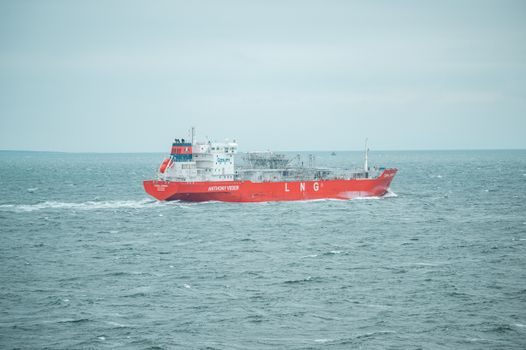
Deloitte's 2026 outlook lists shifting policies — methane emission rules, EU CBAM carbon border adjustments, US LNG export-permit reviews — as the top three non-price risk variables for an LNG investment thesis [S2]. Buyers should price a 50-150 USD/t CO2-equivalent carbon cost band into long-term SPA economics when the cargo lands in CBAM-jurisdiction terminals, because the levy is no longer hypothetical.
ICIS's 2024 rebalance thesis implies that any geopolitical shock to a major pipeline exporter reroutes LNG cargoes within 60-90 days, which is the realistic re-direction window a spot buyer can count on [S1]. A useful procurement discipline: keep at least one alternative regasification terminal approved in the supply chain, with a standby flow meter calibration slot, so cargo diversion does not force off-spec delivery.
Comparison: Spot, Term and Hybrid LNG Sourcing
Three sourcing models dominate 2026 buyer behaviour. Spot / JKM-linked cargoes trade at the highest unit price in tight markets but offer full optionality; long-term Henry Hub-linked SPAs deliver the lowest per-MMBtu cost but lock volume for 15-20 years; hybrid term contracts with 5-7 year tenor and 70/30 index/fixed splits sit in the middle on both cost and flexibility [S2]. The criteria: a buyer with stable, baseload offtake and investment-grade credit should weight toward Henry Hub-linked; a buyer with seasonal swing demand (power gen, industrial furnace) should weight toward JKM or TTF-indexed; a mid-cap industrial buyer with moderate credit should weight toward hybrid because the slope re-pricing risk is bounded.
For related industrial procurement context beyond LNG, see the petrochemical build tracks and ethylene tilt by country 2026 brief, which overlaps on FID timing and EPC cost pressure, and the industrial valve production capacity map 2026, which tracks the cryogenic-valve supply base that backs any LNG terminal build.
What To Track Through Q4 2026
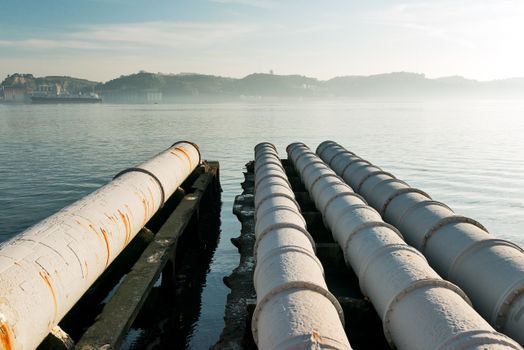
Three verifiable signal nodes: (1) FID announcements on US Gulf Coast train 4 / 5 expansions and Qatar's NFE Stage 2 final investment decision; (2) EU CBAM scope expansion to include LNG cargoes under CN-code 2711 in the 2026 review; (3) JKM vs. TTF spread normalisation — if the spread compresses below 1.50 USD/MMBtu for a sustained quarter, Henry Hub-linked buyers lose margin and contract renegotiation pressure intensifies [S2]. Allied's 2026 terminal report is the primary baseline to revisit for regasification-side capacity additions landing in 2027-2028 [S3].