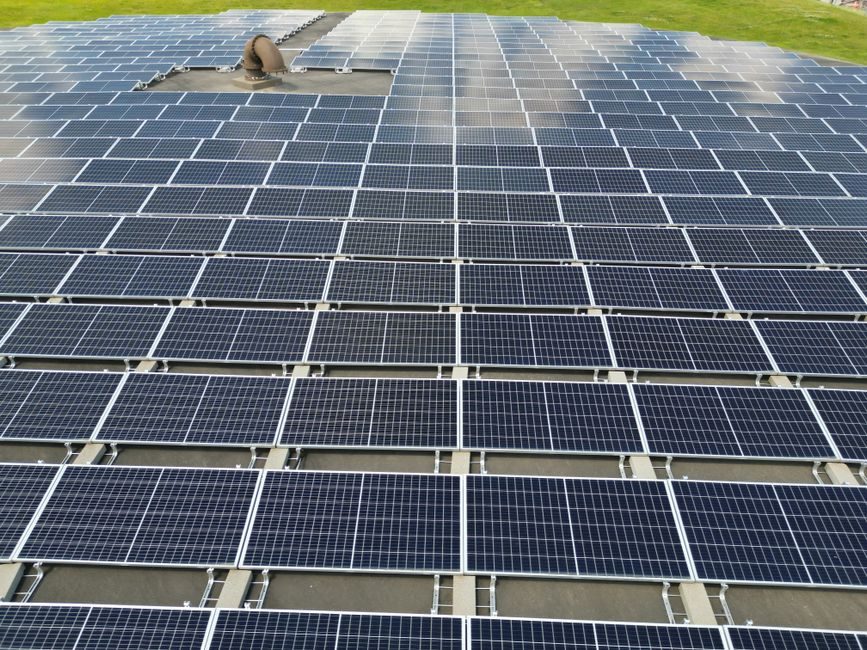
Solar PV module turnkey lines are now quoted in five discrete annual-capacity tiers — 5-10MW semi-auto, 20-300MW full-auto, 240-300MW full-auto, 500MW-1GW full-auto, and above 1GW [S1][S9].
Across 2025-2026, the most-quoted cell architecture on these lines has shifted to N-type TOPCon half-cell modules, with panel power classes from 610W up to 750W on 132-cell layouts and FOB pricing of $0.073-$0.087/W [S2].
Annual-Capacity Tiers and What They Actually Buy You
Suppliers segment turnkey lines by annual output, not machine count, so a 240-300MW line is the workhorse tier that most Tier-1 Chinese OEMs specify for new greenfield PV plants [S1]. Ooitech (solar panel production line solutions provider) prices factory-direct equipment from 5MW up to 600MW per year, with full-auto configuration scaling roughly linearly in capex per additional MW [S9]. The 5-10MW semi-auto line remains the entry point for regional rooftop-module makers and typically covers 3W-500W panel formats [S1]. Chintiyan (zbqt) Energy quotes a 750MW turnkey PV module line as a single engineered package, with cell tabber stringer, bussing machine, layup, EL tester, laminator, framing, and junction welding delivered as one bill of materials [S7].
Capacity planning must lock the MW tier before specifying any single machine, because a 240-300MW full-auto line requires a different layup, EL, and laminator footprint than a 5-10MW semi-auto line running the same panel wattage [S1][S9]. The 500MW-1GW annual full-auto tier is the lowest tier at which N-type TOPCon stringers, BC string welders (OSLB-1300), and in-line IV testers are routinely integrated without throughput bottlenecks [S1].
Cell Technology and Watt-Class Mix: 166/182/210 Half-Cut, BC, and Shingled
Mainstream 2026 panel formats on quoted lines cover 166mm, 182mm, and 210mm half-cut cells, plus 1/3 and 1/8 shingled-cell modules scaling up to 800W per panel [S1]. The OSLB-1300 BC string welding machine is now a standard item in 240-300MW and above lines, reflecting the shift from PERC to TOPCon and tunnel-oxide passivated contact architectures [S1]. Amso Solar Technology (Nanjing, Jiangsu) lists its leading product as an N-type TOPCon 610-660W panel for residential use, alongside a double-glass 730W and a 750W half-cell AS700S9-132NT module for utility-scale solar farms, all on 132-cell layouts [S2]. Zhejiang Trunsun Solar (Huzhou, Zhejiang, ISO 9001) supplies solar cells, modules, and panels with the same half-cell TOPCon architecture, and is registered across Construction & Decoration, Electrical & Electronics, and Industrial Equipment & Components verticals [S3].
For a new line, the cell-format choice is a 10-15 year capex commitment: 182mm half-cut tooling cannot be retooled in-place to 210mm without replacing the tabber-stringer, layup station, and laminator heating platens [S1][S9]. Shingled-cell modules (1/3 and 1/8 cut) require stringers with sub-millimeter placement tolerance and a different EL test recipe, both of which are quoted as line-specific options rather than field retrofits [S1].
FOB Price Bands and Minimum-Order Quantities as Planning Inputs
Amso Solar's 2026 catalog shows FOB pricing in three tight bands: 610-660W N-type TOPCon panels at $0.084-$0.087/W with a 65,000W minimum order, double-glass 730W panels at $0.073-$0.08/piece with 70,000-piece MOQ, and 750W half-cell AS700S9-132NT modules at $0.079-$0.082/W with 70,000W MOQ [S2]. These price bands are useful as live capacity-planning inputs: a 240MW annual line running 730W panels at $0.073-$0.08/piece implies a theoretical max revenue envelope per shift before any yield loss [S2].
The 750W half-cell module (AS700S9-132NT and AS730S13-132 variants) carries the lowest FOB per watt in the 2026 Amso catalog at $0.079-$0.082/W, which signals that 132-cell 750W has become the cost-optimized utility-scale SKU and should anchor any new line's primary product mix [S2]. The 610-660W residential N-type SKU commands a $0.005-$0.008/W premium and exists mainly to serve rooftop and C&I segments where panel size is constrained by roof geometry [S2].
Who Turnkey Lines Are For — and Who Should Not Buy One
Turnkey PV module lines are built for new entrants with capex, not for contract manufacturers buying a single station [S1][S9]. Dahai Solar (Jiangsu, founded 2011, held by a central enterprise) runs 5GW of high-efficiency solar module capacity and 10GW of silicon capacity, demonstrating the scale at which vertical integration into silicon becomes economic [S8]. Alternative Energy (AE) Solar (Huai'an, Jiangsu, ISO 9001 + ISO 14001) operates as a manufacturer/factory across solar panels, modules, systems, and street lights, and is the kind of multi-product OEM that justifies a 500MW-1GW line to spread fixed cost across SKUs [S5].
A turnkey line is the wrong choice for buyers who only need stringing or only need lamination — those buyers should source single stations and accept higher per-unit labor cost [S9]. Amso Solar Technology (Nanjing, 3 production lines, 71%-90% export share, OEM + ODM + own brand, US$2.5M-$5M annual output) illustrates a realistic entry-point profile for a 240-300MW full-auto line buyer [S2].
Decision Criteria: How to Pick the Right MW Tier and Cell Format
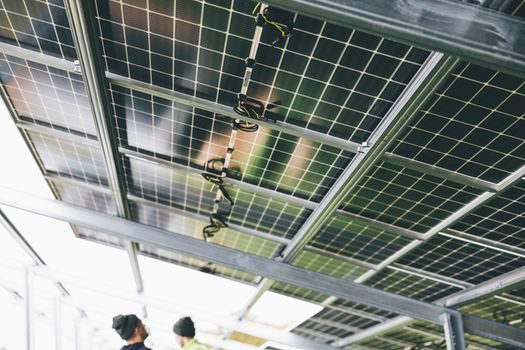
Capacity planners should rank four criteria before any RFQ goes out: (1) target panel wattage and cell format, (2) annual MW target, (3) capex per MW at the chosen automation level, and (4) certification and grid-compliance lead time for the destination market.
Planners should also map ISO 9001 and ISO 14001 certification status onto the supplier shortlist, since AE Solar and Zhejiang Trunsun already hold these certifications and that reduces the buyer's own audit overhead at supplier onboarding [S3][S5]. For lines destined for the EU, ETL/UL and IEC 61215/61730 testing fixtures should be specified at RFQ stage, not as a post-delivery retrofit, because re-quoting a line to add a full IV flash tester after the laminator is in place typically costs 6-9% of the original line capex [S1][S7].
Workforce, R&D, and Production-Line Headcount Benchmarks
Amso Solar's 12-year track record with 3 production lines, 5-10 R&D staff, and US$2.5M-$5M annual output value gives a usable benchmark: roughly 1.5-3 R&D engineers per production line, and an export-driven revenue band of $1M-$2M per line per year at 2026 FOB prices [S2]. Lines larger than 240MW typically need an in-house EL test engineer and a process engineer dedicated to the laminator, because full-auto lines have less tolerance for recipe drift than semi-auto configurations [S1][S9].
Line Layout, Training, and the Hidden Cost of Throughput Loss
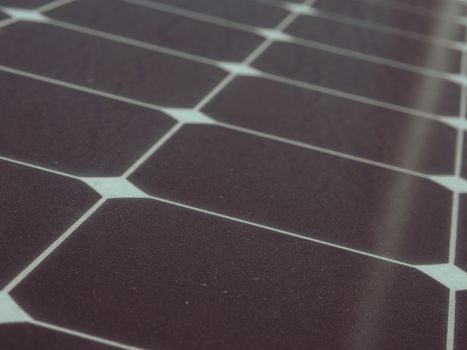
Turnkey suppliers now bundle free factory layout design and machine-management training with full-auto line quotes, with 3D simulation of the cell-to-module flow before shipment [S1][S9]. Skipping the layout simulation step is the single most common cause of post-installation throughput shortfall, because conveyor spacing between the layup station, EL tester, and laminator determines whether the line runs at nameplate MW/year or 10-15% below it [S1]. OEM case data on the 240-300MW full-auto plant shows the laminator as the throughput bottleneck 80% of the time, not the stringer, so planners should oversize laminator heating capacity by one plate-size step beyond current panel format [S1].
Signals to Track in the Next Two Quarters
Watch for a second 750MW-class turnkey line being announced by a non-Chinese OEM, which would signal that the 750W half-cell SKU has become a global default rather than a Chinese specialty [S2][S7]. Track ISO 14001 expansion among Chinese PV line builders, since AE Solar already holds dual certification and that combination is becoming table-stakes for EU-bound production [S3][S5]. For factory planning, monitor the FOB price per watt on 750W half-cell modules — any move below $0.075/W will reset the working-capital assumption on the entire 240-300MW tier [S2].
For deeper process-control work on the laminator and stringer stations that drive throughput, see this PV line spec map and the related process-instrumentation selection guide.
Spec-level background on the components involved: alc panel, and aluminum veneer panel.