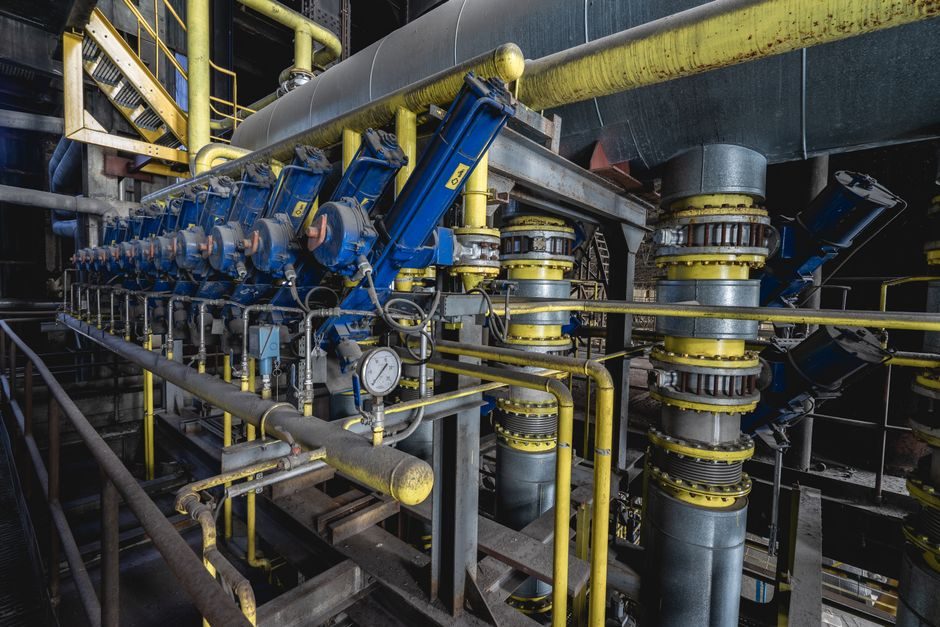
A solenoid valve is only as pressure-safe as its lowest-rated component, and the stack is taller than most datasheet headlines suggest: body, seat, seal, pilot channel, and coil-side pressure differential each carry a separate ceiling [S2].
The widely used five-class typology (direct-acting, semi-direct, pilot-operated, pinching, latching) carries distinct pressure envelopes, so the first selection gate is whether the line pressure alone can crack the valve open [S2].
Pressure Rating Stack: Body, Seat, Seal, and Pilot Differential
The body class (commonly PN16 / PN25 / PN40 for water service, and ANSI 150 / 300 / 600 in process plants) is the headline figure stamped on the nameplate, but it is not the operating ceiling. The seat-orifice elastomer — NBR, EPDM, FKM, or PTFE — sets the actual working temperature and media envelope, and PTFE seats cap the practical differential at roughly 6-10 bar on most catalog pilots because of the higher friction and lower resilience versus NBR or EPDM [S1][S2].
Pilot-operated (internally piloted) valves drop the coil force requirement by routing line pressure through a small pilot orifice that lifts the diaphragm, but they require a minimum operating differential — typically 0.5-3 bar depending on orifice size — and fail to open below that floor [S1]. External-pilot variants decouple actuation pressure from line pressure, which is the correct choice when the working fluid is under vacuum, very low pressure, or contains solids that would clog an internal pilot screen [S1].
On the upper end, stainless 316 bodies with PTFE seals and a high-pressure pilot spring routinely reach 40-100 bar catalog ratings, while brass-bodied NBR-seated general-purpose units cluster between 10 and 25 bar maximum working pressure [S1][S3].
Three Operating Modes, Three Pressure Envelopes
Direct-acting solenoid valves generate full seating force from the solenoid plunger and are the only family that opens at zero differential pressure, which is why they dominate instrument air, analyzer, and low-pressure dosing skids [S2]. Their trade-off is flow capacity: a direct-acting 1/4" valve is typically capped around a Cv of 0.05-0.3, far below the Cv 1-10 range a pilot-operated unit of the same port size delivers.
Semi-direct (or servo-assisted) valves blend the two: the plunger cracks the seal and line pressure completes the stroke. They open around 0.2-1 bar minimum and handle mid-range Cv values, which is the workhorse position for OEM machine builders integrating air solenoid valve circuits in 4-8 bar shop-air loops [S1][S2].
Fully pilot-operated valves need a sustained differential (usually ≥0.5 bar) and cannot be used on static or vacuum lines, but they pack the largest orifice-to-coil-size ratio — a typical 1" pilot-operated valve carries Cv 10-25 and a 16-40 bar body rating, which is the envelope where most industrial solenoid valve purchases land [S1][S2][S3].
Selection Criteria: Media, Duty Cycle, Proof-Test Margin, and Approval Map
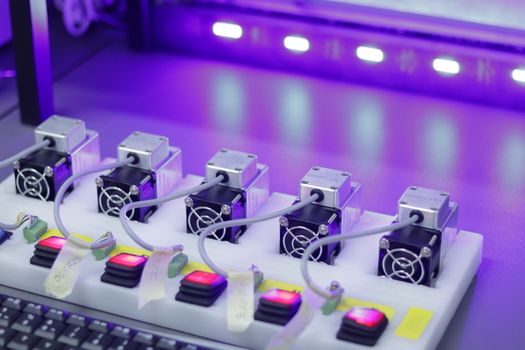
Five checks gate the catalog page: (1) media compatibility with body and seal, (2) minimum and maximum working pressure against the chosen operating mode, (3) temperature window of the seal and solenoid coil class, (4) cycle rate against coil insulation class (F vs H, 155 °C vs 180 °C), and (5) approvals footprint — ATEX/IECEx zone, UL listing, NSF/ANSI 61 for potable water, or NACE MR0175 for sour service [S2].
Proof-test margin matters more than the marketing bar rating. For compressor or pump-discharge service a 1.5× safety factor over maximum surge pressure is the industry floor; on water-hammer-prone dead-end lines a 2× margin with a slow-close pressure reducing valve upstream is the conservative choice.
On the electrical side, the coil voltage tolerance is tighter than the pressure tolerance: a 24 VDC coil will pull in from roughly 20-28 V but will burn above 30 V, and a 110/120 VAC coil at 50 Hz runs hot on 60 Hz supplies, which derates the duty cycle before the pressure rating even becomes relevant [S2].
Compatibility vs Pressure-Relief Stacks: Where the Boundaries Fail
Two system-level failure modes repeat across incident reports. The first is a direct-acting valve installed on a pulse line that exceeds the pilot differential; the coil burns, the seat never fully opens, and downstream equipment starves. The second is a pilot-operated valve installed on a line that sees vacuum during drain-down — the diaphragm holds, the valve fails to close, and the upstream safety relief valve is the only remaining barrier [S2].
Neither failure shows up in a datasheet pressure-vs-Cv sweep. The first requires checking the inrush pressure transient with a pressure calibrator or a recording gauge; the second requires reading the pump curve and the line elevation profile, not the valve catalog page.
Decision Matrix: Choosing by Operating Pressure and Media

Four cell types cover the bulk of industrial purchases. Below 3 bar with no minimum differential: direct-acting, brass or SS body, NBR or EPDM seal, 1/8" to 1/4" port. From 3-10 bar with ≥0.5 bar differential: pilot-operated, brass body, NBR seal, 1/4" to 1/2" port, the most common OEM build [S1][S3].
From 10-40 bar: pilot-operated, 316 SS body, FKM or PTFE seal, with a 1.5× proof-test margin and a documented surge envelope. Above 40 bar or on aggressive media: external-pilot, all-stainless, PTFE seal, full traceability and a nameplate stamped to the project MOC — this is where custom or made-to-order builders such as Solenoid Solutions position their work, advertising US-based machining, fast prototyping, and OE-direct pricing for OEM volumes [S3].
Supply and Sourcing Signals to Track Next
Track three signals. First, ATEX/IECEx dual-certified 316 SS pilot-operated valves, where the European chemical and hydrogen build-outs are pulling lead times; second, the migration of 24 VDC low-wattage coils onto IO-Link or fieldbus blocks, which is changing the electrical interface layer more than the pressure layer; third, sanitary 3-A and EHEDG-certified valve bodies for food and pharma, where the cleaning-cycle pressure envelope is now part of the mechanical spec. [S2]
Related analysis: Sand Blasting Machine: Spec-Driven Pros, Cons, and Selection Gates.