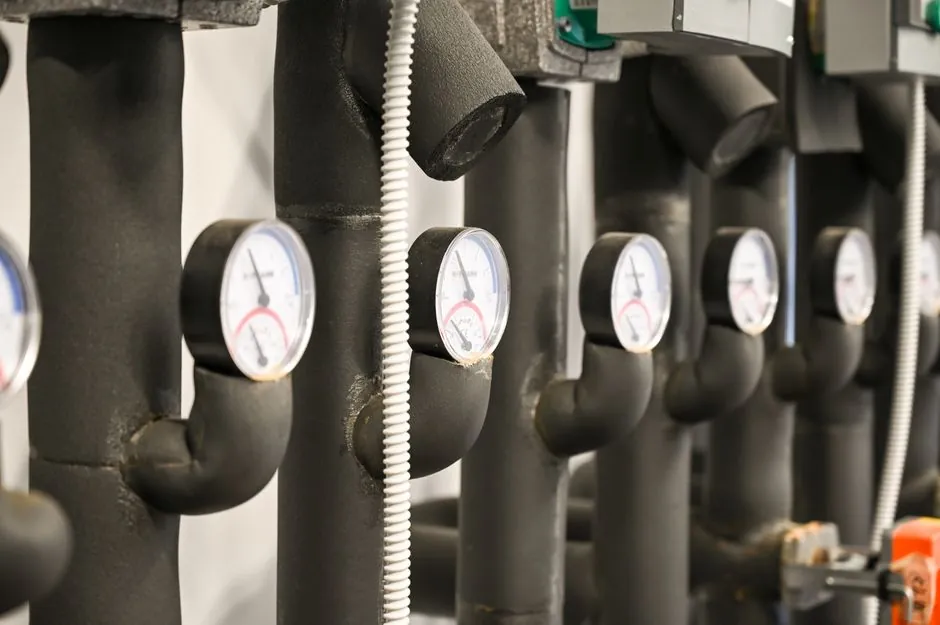
Solenoid valves switch fluid or gas in 10-500 ms [S2], integrate directly with PLCs, and fit envelopes that manual or motorised valves cannot, which is why they remain the default actuator for low- to mid-duty fluid control.
That speed and integration convenience come with hard trade-offs: AC coils draw large inrush current and generate waste heat, pilot-operated designs need a minimum differential pressure to shift, and seal material sets the upper media temperature and chemical compatibility limit [S1][S3][S4].
Core Advantages: Response, Footprint, and Remote Control
Fast response (typically 10-500 ms from energise to full open or close) is the headline benefit and the reason solenoid valves dominate dosing, cylinder piloting, and safety shutoff circuits [S2]. Millisecond actuation supports accurate chemical injection and repeatable pneumatic cylinder cycling, where slower actuated valves would drift between setpoints.
Remote electrical control means a single low-power command from a PLC or controller can manage a high-volume pipeline without an operator at the line, which directly improves safety on hot, pressurised, or toxic media [S2][S3]. The compact envelope, smaller than equivalent manual or motorised alternatives, also helps when skid-builders are squeezed for panel space [S1][S2].
Core Disadvantages: Coil Heat, Inrush, and Media Limits
AC-powered solenoid coils draw a massive inrush current, generate more heat than DC equivalents, and will burn out quickly if the plunger jams in a closed or partially shifted position [S3]. That makes duty cycle, voltage tolerance, and filtration upstream of the valve non-negotiable; a contaminated pilot orifice is the most common field failure mode and is routinely traced back to the absence of a 100-mesh strainer.
Seal material defines the chemical and temperature envelope: NBR suits oils and water up to roughly 80 deg C, EPDM handles steam and hot water, FKM (Viton-class) covers aggressive chemicals and higher temperatures, and PTFE pushes further again [S2][S7]. Steam, hot water, and thermal-cycling service shorten coil life unless the valve is explicitly rated for the peak temperature, with high-temperature solenoid valves specifically designed to resist thermal stress and maintain sealing under elevated conditions [S7].
Direct-Acting vs. Pilot-Operated: The Selection Decision
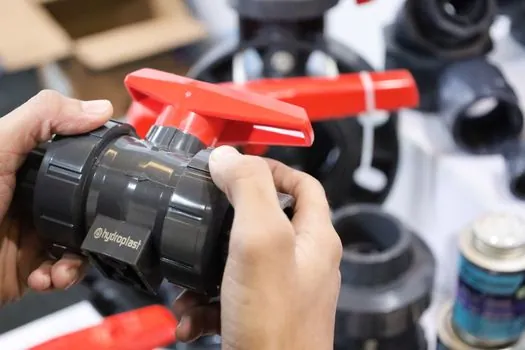
Direct-acting solenoid valves use the magnetic force of the coil to lift the plunger or seal directly off the seat, which means they open at zero differential pressure and are the right choice for gravity feed, tank discharge, low-head dosing, and intermittent shutoff [S4]. Their cost is size: the coil must generate enough force to overcome full line pressure, so direct-acting bodies are larger at higher pressure ratings and are usually limited to small orifice sizes.
Pilot-operated solenoid valves use system pressure to lift the main diaphragm or piston after a small pilot passage opens, which lets a compact coil shift large orifices and high flows efficiently [S4][S5]. The catch is a minimum differential pressure requirement, often 0.5 bar to several bar depending on size, so they fail on gravity feed and on systems with large pressure swings. A practical field rule: if the line can hold a stable differential, pilot-operated gives the best flow-to-coil-size ratio; if it cannot, specify direct-acting even at the cost of a larger valve.
NC vs. NO and the Fail-Safe Question
Normally Closed (NC) valves block flow when de-energised and are the most common industrial configuration because they provide a fail-safe shutoff on loss of power, which matters on flammable gas, steam, and hazardous chemical lines [S3]. Normally Open (NO) valves pass flow when de-energised and close when energised, fitting cooling water loops and ventilation circuits where you want flow to continue if power drops.
Universal or bi-stable latching valves retain state without continuous power, which cuts holding current and coil heat in remote or battery-powered installations, but adds complexity and cost [S2][S3]. For most industrial users the decision is dictated by the safety case: write down the desired power-off state of every valve on the P&ID before selecting, not after.
When a Solenoid Valve Is, and Is Not, the Right Tool
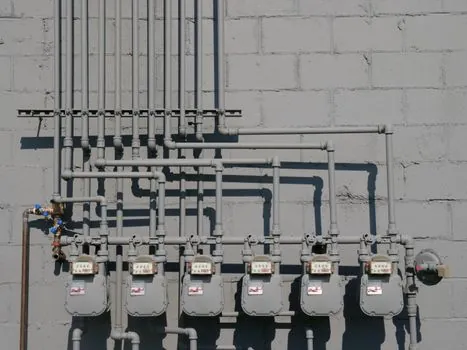
Solenoid valves are well matched to fast, accurate, frequent, and safe switching of clean media including oil, water, hot water, steam, and air, with on-off or proportional duty [S2][S6]. They are not the right tool for slurries, fibrous fluids, or high-viscosity media that foul small orifices; for very large flows where a motorised ball or butterfly valve is more cost-effective; or for modulating duty beyond simple proportional control, where a control valve installation is the correct specification.
Installation discipline also decides whether the advantage holds: correct thread form and seat, ingress protection matched to the environment, upstream filtration, and a leak test on commissioning are the four steps that decide whether the valve gives a full service life or a premature coil burn-out, as detailed in this solenoid valve installation guide.
Selection Checklist and Common Failure Modes
Run every solenoid valve selection through the same filters: media and temperature against seal material, line pressure and minimum differential against actuation type, voltage and duty cycle against coil class, fail-safe state against process safety, and port size plusCv against required flow [S1][S2][S7]. A solenoid coil rated for 100% duty cycle is mandatory for continuous hold-open service; an intermittent-rated coil on a continuously energised circuit is the second most common field failure after contamination.
For air and low-pressure gas service, an air solenoid valve is the conventional match, while general-purpose solenoid valve bodies cover water, oil, and compatible chemicals. Most field failures trace back to one of five root causes: voltage out of tolerance, jammed plunger from particulate, wrong seal material for the media, undersized strainer, or pilot orifice blocked by debris; eliminate those and the technology is one of the most reliable actuators on the plant floor.