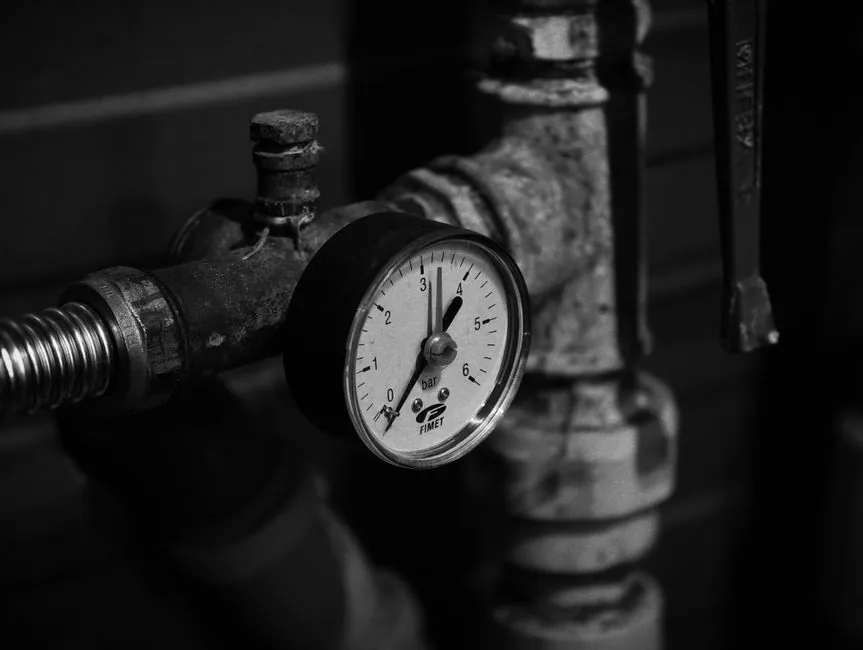
Control valves regulate flow rate, pressure, or fluid direction by changing internal trim position in response to a control signal, unlike manual isolation valves that simply start or stop flow [S3].
They sit inside a closed loop where a sensor, controller, and actuator continuously reposition the trim, which is why selection governs loop stability, energy draw, and maintenance frequency across steam, chemical, water, and compressed-air service [S3].
Where Control Valves Beat Simple On/Off Valves
Globe control valves give PID loops very precise and steady flow control, and they support rapid opening plus linear or equal-percentage inherent characteristics that match common process curves [S4]. The flow path inside a globe is a tortuous S-shape, so the plug-to-seat geometry produces a predictable gain curve that process engineers can size against the required Cv.
Spring-return pneumatic actuators provide a true fail-safe last position on loss of air, an important property for fired-heater and chemical reactor loops where a stuck-stem event is a safety issue, not just a process upset [S3]. Globe control valves also deliver strong output force, making them suitable for demanding high-pressure drop service where smaller, lighter designs stall [S3].
The same throttling geometry that aids control also creates a higher permanent pressure loss than a full-bore ball or gate valve in the same line size, so pump and compressor energy cost has to be weighed against control quality [S1]. For applications where tight shutoff is the priority and throttling is rare, a ball valve with soft seats typically gives API 598 Grade 1 sealing and a near-zero full-open pressure drop, but it should not be held in a partial-open position for long periods because seat erosion and disc damage follow quickly [S1].
Globe vs Ball vs Butterfly: A Decision-Based Comparison
Globe valves are linear-motion throttling valves whose plug-and-seat arrangement produces accurate, repeatable flow control and handles high pressure drops, at the cost of higher head loss and a taller face-to-face dimension [S4]. Ball valves are quarter-turn devices that deliver excellent sealing, low pressure drop in full-bore designs, and a compact envelope, but partial-opening throttling causes seat damage and water-hammer risk on rapid closure [S1].
Butterfly control valves are quarter-turn rotary valves that use a thin disc rotating between two seats, offering low cost, quick operation, and high flow capacity in a compact, lightweight body, which is why they dominate HVAC, water distribution, and large-diameter service [S2]. Their main weakness is reduced control accuracy at low flow rates and a soft seat (commonly rubber or PTFE) that limits temperature and chemical compatibility versus a metal-seated globe [S2].
Gate valves are linear-motion shutoff devices that should only be operated fully open or fully closed: partial opening causes vibration, seat wear, and erosion, and multiple handwheel turns make them too slow for modulating duty [S1][S5]. For pipeline isolation in oil and gas, petrochemical, and power-plant mains, gate valves give minimal pressure drop and bi-directional sealing at lower cost than same-size ball valves [S1][S5].
Where Each Type Fits and Where It Should Not Be Used
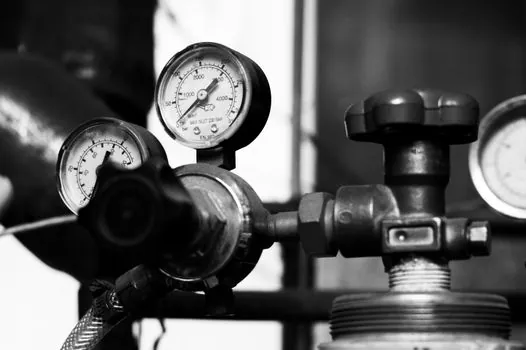
Steam control systems in power plants, boiler feedwater regulation, chemical dosing skids, and any high-precision flow loop are the natural home for globe valves, because the linear plug motion and the available equal-percentage trim match the operating range that PID controllers expect [S4]. Ball valves are specified for oil and gas pipelines, chemical isolation, water treatment, and LNG/cryogenic lines where tight shutoff and quick quarter-turn action matter more than modulation quality [S1].
Butterfly control valves are commonly used in HVAC systems, water treatment and distribution plants, chemical processing, and other large-flow industrial services where the disc-and-seat geometry can move high Cv values cheaply [S2]. Gate valves are the workhorse for heavy-duty isolation in crude oil lines, transmission pipelines, tank-farm manifolds, process headers, and main steam or feedwater lines where full-open, low-resistance flow is critical [S5].
A wrong match produces visible symptoms: poor PID tuning and oscillation, excessive pressure drop and pump energy waste, valve erosion, and shortened service life, all of which show up faster on modulating service than on isolation service [S4]. Holding a gate or ball valve partially open to "throttle" is one of the most common field mistakes, because the seat geometry is not designed for sustained partial-lift flow [S5].
Actuation, Positioners, and the Rest of the Control Loop
The actuator is what makes a valve a control valve: pneumatic, electric, or hydraulic units translate a 4-20 mA, 3-15 psi, or fieldbus signal into stem or shaft position, and the choice of actuator sets the available thrust, the stroking speed, and the fail-safe mode [S2][S3]. Pneumatic units remain dominant in process plants because of their intrinsic safety, spring-return fail-safe action, and fast dynamic response, while electric actuators are favoured where plant air is unavailable or where modulating duty is gentle [S3].
A positioner is a local feedback controller that reads the actual stem position and drives the actuator until the position matches the control signal, which removes packing friction, stem load, and process-force errors from the loop [S3]. On throttling service with high pressure drop or tight shutoff requirements, omitting a positioner typically shows up as hysteresis and a non-linear installed characteristic, so a positioner is treated as standard equipment rather than an option [S3].
Selection Criteria, Standards, and Field Reality

Material selection follows the process fluid: standard ball-valve seats in PTFE are rated to roughly 200 C, so high-temperature or solvent service needs metal or specialty seats, and globe trim in 316 stainless or alloy materials is the default for chemical dosing and steam [S1]. Bodies in cast iron, ductile iron, carbon steel, and stainless steel cover most HVAC, water, and chemical duties, while cryogenic and sour-service applications require dedicated material and testing programs rather than off-the-shelf trim [S2].
Acceptance testing references API 598 for valve leakage classification, with Grade 1 representing the tightest shutoff in metal- and soft-seated ball valves, and ASME B16.34 defining pressure-temperature ratings for the body [S1]. Field installation, air supply quality, and tubing routing matter as much as trim selection; a practical install checklist for control valves is laid out in a separate field guide on control valve installation, and the same logic of non-return versus block valves shows up in the check valve advantages and disadvantages reference for plant engineers.
Before specifying, confirm the required Cv, the allowable pressure drop, the shutoff class, the fail-safe action on air or power loss, and the operating temperature window; if any of those numbers are guesses, the trim, actuator, and positioner will be wrong even if the body type is right. For related engineering guidance across the wider industrial specification space, the control valve encyclopedia entry is the natural starting point for cross-referencing body styles, characteristic curves, and sizing equations.
For component-level specifications, see construction machinery and equipment, and lamps and light fittings.