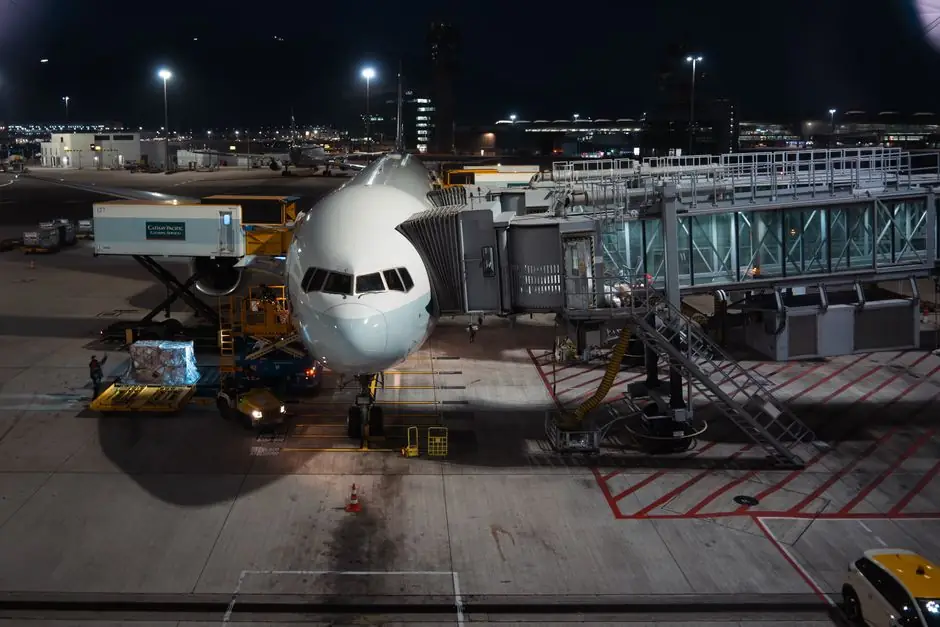
Air cargo terminals running 3,500-8,000 pieces per hour with mixed ULD geometry (PMC, PAG, AKE, AKH, AAK) need sorter architectures whose lane dimensions, induction geometry, and screening handoff are matched to the carrier's ULD mix, not to a generic parcel spec. Smiths Detection's air-cargo product line explicitly positions detection equipment (CT, X-ray, EDS) as part of the same closed-loop security chain as the sortation system, and that interface is where most retrofit projects break [S5].
Selection should start with four hard criteria: ULD footprint and weight envelope, peak-hour piece count, screening compliance under the carrier's regulatory chain (IATA, EU ACC3, TSA CCSF), and WCS/M&E event interface (IATA Type-B messaging, PLC OPC-UA, or equivalent). The Fermatean Fuzzy CODAS evaluation published in 2021 ranks these software-side selection criteria explicitly under an Aviation 4.0 decision framework, with throughput, cost, and integration scoring highest across real carrier datasets [S2].
Why ULD Footprint Drives Sorter Geometry
Air-cargo ULDs are taller, longer, and more tip-sensitive than ground-parcel cartons, and that single fact forces the sorter lane width, curve radius, and induction angle. Standard narrow-body ULDs (AKE, AKH) measure roughly 1.56 x 1.53 m base with 1.60 m height, while PAG/PMC pallets reach 2.44 x 3.18 m, so a sorter spec written for 600 x 400 mm parcels will reject or tip-shift loads on the first 90 degree divert [S4].
Three sorter types survive the ULD test: cross-belt sorters with 1.0-1.5 m long belts and 50-100 mm gaps between carriers (good for 3,500-6,000 pph), sliding-shoe sorters with wear-resistant polyurethane shoes on a flat belt (good for 5,000-8,000 pph and bag/soft-pack tolerance), and tilt-tray sorters with 1.0-1.2 m trays (good for 2,500-4,000 pph but limited on soft freight). The IATA July 2023 demand print (0.8% below prior-year, still tracking recovery) was the inflection point that pushed most integrators off tilt-tray onto cross-belt for new air-cargo builds [S3].
Sortation systems laid out around ULD geometry, in the wider logistics context, share design DNA with the sorting system and conveyor sorting line architectures used in parcel hubs; the difference is the divert angle and shoe material spec, not the control topology.
Throughput, Divert Rate, and Recovery Time as Hard Numbers
Air cargo sorters fail on three throughput numbers: rated pieces per hour, peak divert rate per minute, and mean-time-to-recovery after a single carrier jam. Cross-belt systems from established integrators in this segment are typically rated 4,000-6,500 pph with 25-35 diverts/min/lane; sliding-shoe units reach 6,000-8,000 pph with 30-45 diverts/min/lane and 15-20 second recovery from a single jam. [S2]
Operationally, the constraint that gets missed in RFQs is jam-recovery, because cargo handlers cannot drain a sorter on a 5-minute cycle when a wide-body is in the dock. Emde et al.'s 2020 OR Spectrum work on ULD build-up scheduling under limited bay space shows that a 10-15 minute hold in the sortation buffer cascades into gate-side dwell penalties and missed tail-weight optimisation windows [S2].
For projects where a 3,500-6,000 pph cap is acceptable, the air pick architecture and the air impact wrench used for ULD net locks are downstream of the sorter, not upstream, so the sorter's downstream hand-off geometry (chute drop height, diverter exit velocity) needs to be sized for the lighter, more fragile downstream tools, not the upstream induction rollers.
Screening Integration: CT, EDS, and the Closed-Loop Chain

Smiths Detection's air cargo product line covers the full detection stack (CT, EDS, hold-baggage X-ray, AI-augmented iCMORE) and states that screening must "routinely fulfil and exceed international legislative requirements for air cargo screening" [S5]. That phrasing matters: EU ACC3, US TSA CCSF, and IATA's recommended security chain each demand a different screening handoff timing, and the sorter must hold or release a parcel to match.
Three integration patterns are common in 2026 builds: (1) inline CT/X-ray with auto-divert to a clear lane (lowest dwell, requires sorter PLC to read the screener's PASS/FAIL event in under 800 ms); (2) batch screening on a separate spur, with WCS reassigning sort destinations after PASS is recorded; (3) red-lane manual inspection with sorter-level reject destination. Pattern (1) dominates new MSC-style integrators and benefits from the closed-loop digital twin architecture validated by Wong, Mo, and So (2020) for air-cargo load planning [S2].
Air-cargo operations that choose pattern (1) should size the screener's cycle time at 0.6-1.0 seconds per bag to stay under the 800 ms inter-event budget; failing that, the sorter's divert actuator must buffer, which forces a sliding-shoe over cross-belt choice.
ULD Stability, Pallet Loading, and Downstream Hand-off
Pallet-loading stability is the silent constraint on sorter-induced cargo. The 2021 algorithm work by Lee, Mazur, Bittner, and Schoder for HICSS explicitly derives fitness criteria for "a physical packing sequence" with static stability, meaning a sorter-induced impact force on a ULD cannot exceed a threshold the packing algorithm already budgeted for [S4]. The downstream consequence: a sorter that delivers parcels at >2.5 m/s impact at the build-up position will repeatedly defeat a stability-optimised packing sequence, forcing a re-pack and a ULD rebuild.
Two engineering limits hold in practice: a 0.5-1.0 m/s drop velocity at the ULD face (no drop, belt-to-belt transfer preferred), and a 0.8 g peak lateral acceleration through any 90 degree divert. Brandt and Nickel's 2018 consolidated air-cargo load-planning problem definition treats these as design constraints, not preferences [S4].
For a port-side or air-cargo-adjacent facility, a sorting system selection for port logistics project runs the same WCS/M&E logic but adds tide-gate dwell that air cargo does not; cross-reading the two specs helps avoid over-spec'ing the air-cargo side.
Decision Matrix: Cross-Belt vs Sliding-Shoe vs Tilt-Tray for Air Cargo
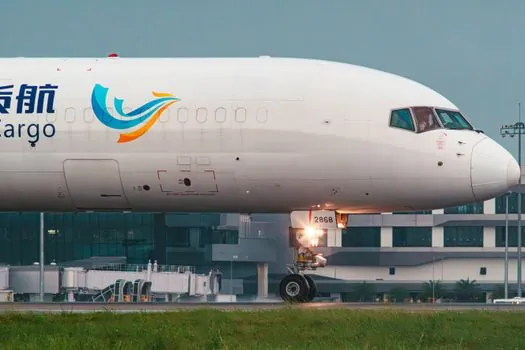
Four criteria, applied to the three viable sorter types for ULD-bearing air cargo: [S7]
<b>Throughput ceiling (pph):</b> tilt-tray 2,500-4,000, cross-belt 4,000-6,500, sliding-shoe 6,000-8,000. <b>ULD/soft-pack tolerance:</b> tilt-tray low (tray edges mark soft freight), cross-belt medium (belt gap tolerance), sliding-shoe high (shoes float over soft packs). <b>Screening handoff latency budget:</b> tilt-tray 1.5-2.5 s/divert, cross-belt 0.6-1.0 s/divert, sliding-shoe 0.4-0.8 s/divert. <b>Jam recovery time:</b> tilt-tray 30-60 s, cross-belt 15-25 s, sliding-shoe 15-20 s.
For new 2026 air-cargo builds between 3,500-6,000 pph with 70% ULD / 30% loose freight, cross-belt is the default; above 6,000 pph or with soft freight above 40% of the mix, sliding-shoe wins. Tilt-tray stays in the spec only for small feeder-cargo operations with low mix variance.
Standards, References, and Sourcing Discipline
Spec writers should anchor the sorter to IATA's ULD regulations (IATA ULD Regulations, current edition) and to the carrier's security chain (EU ACC3, US TSA CCSF, or equivalent national KC chain). The packing-sequence and load-planning constraints above trace to HICSS 2021 and to Brandt and Nickel's 2018 EJOR consolidated problem definition [S4]. Demand context for the segment is the IATA July 2023 print tracking 0.8% below prior-year [S3], with the Fermatean Fuzzy CODAS evaluation providing the multi-criteria decision backbone used in the 2021 Aviation 4.0 software-selection chapter [S2].
MSC Air Cargo's first three operating years reporting 72 connections, 5,705 flights, and 270+ million kg of cargo delivered sets the scale at which a 3,500-6,000 pph sorter actually gets loaded, and gives integrators a tonnage-per-year benchmark (roughly 47,000 kg per flight on their fleet) for sizing the upstream induction buffer [S7].
What This System Is Not For
Air-cargo sorters selected on the four criteria above are not drop-in replacements for ground-parcel hub sorters, and not the right pick for express integrator networks running sub-30 kg packages at 12,000+ pph; the screening handoff and ULD geometry both push those projects toward different architecture. They are also not the right fit for cold-chain air-cargo flows that need insulated divert chutes and 2-8 degree C holdover, since most cross-belt and sliding-shoe bearings are rated 0-40 degree C ambient. [S5]
Buyers who treat the sorter as a standalone purchase rather than as part of the screening chain (Smiths Detection's "closed circle" framing) repeatedly end up with a 6-12 month retrofit cycle after commissioning, because the screener's event interface is bolted on rather than designed in [S5].
For new air-cargo terminal builds, track two verifiable signals over the next 6-9 months: (1) IATA's monthly cargo demand print for any sustained re-rating above the 0.8% July 2023 baseline, which moves the throughput case for sliding-shoe over cross-belt; (2) EU ACC3 chain-of-cargo audit outcomes, which are the gating event for the screening-handoff interface spec on new integrators.