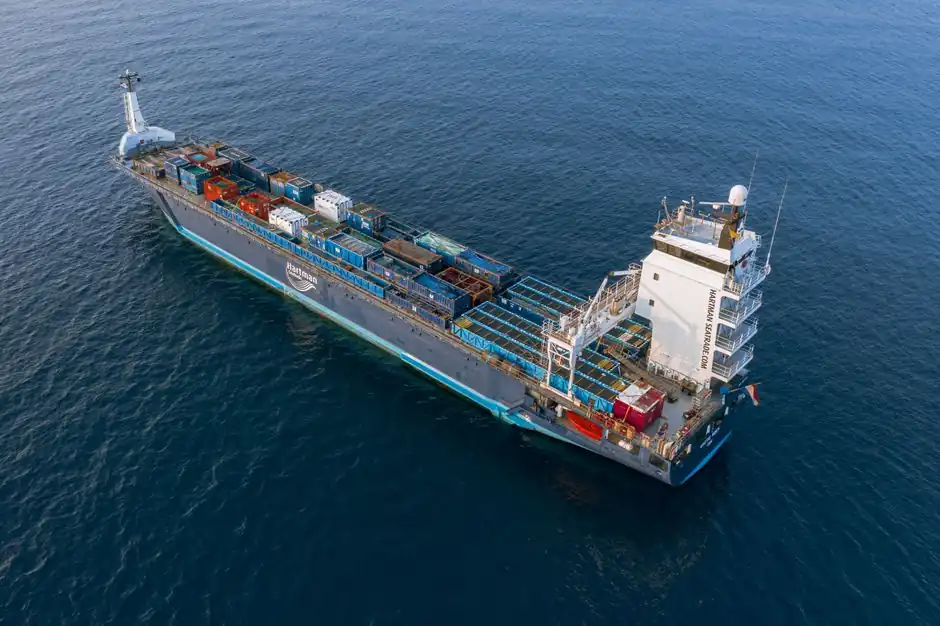
For outbound chemical shipping, divert-and-transfer roller belt sorters and sliding-shoe sorters are the two most commonly specified technologies because they handle sealed pouches, polybags, and 1-25 kg cartons without the gaps that catch flexible packaging [S1][S2].
Selection for this segment is not the same as general e-commerce sorting: containers may carry reactive liquids, oxidizers, or toxic solids, so the contact surface, electrostatic risk, and Zone-class area definition override throughput-only decisions. The most cost-effective path is to anchor every line item to parcel weight, throughput, and the chemical resistance of the belt or shoe material [S2].
Three sorter types chemical shippers compare
Divert-and-transfer roller belt sorters use a transfer belt to pass product through and a separate divert belt to push packages left or right; published throughput is 35-50 parcels per minute, and the modular frame bolts onto existing conveyors [S2]. The design has fewer catch points than pop-up transfer modules, which matters when shipping UN-rated fibreboard and 4G boxes that can snag on exposed hardware [S2].
Sliding-shoe sorters use sliding shoes or paddles to positively divert items off a moving bed; they accept a wide range of item shapes, sizes, and weights and are widely cited as gentle-handling for high-value parcels, which fits pharmaceutical intermediates and small-pack reagents that cannot tolerate drop impact [S1][S2]. Throughput on sliding-shoe units typically scales to 60-120 ppm depending on length and shoe density.
Cross-belt and tilt-tray sorters offer higher diversion accuracy and 360-degree orientability, but the steel catch hardware, open divert zones, and grease-lubricated joints make them a hard sell inside a chemical Zone 1 or Zone 2 area unless fully purged and certified to a recognised explosive-atmosphere standard. For most chemical plants, divert-roller or sliding-shoe covers 80% of the duty envelope at the lowest installed cost [S2].
Selection criteria specific to chemical shipping
First, parcel weight window. Divert-roller sorters handle roughly 0.05-30 kg per piece; sliding-shoe units cover a similar 0.1-50 kg band but with stricter minimum dimensions to keep the shoe engaged [S2]. Anything over 50 kg, such as pails of catalyst or 25 L drum-style packs, typically drops out of automated sortation and is routed to a pallet-flow or AS/RS lane instead, which is why the sorting system family splits at the unit-load boundary.
Second, contact-surface chemical resistance. Belts and shoes in chemical plants are usually specified as static-dissipative PU or nitrile-rubber with a surface resistivity in the 10^6-10^9 ohm range; stainless divert rollers (304 or 316) are preferred where acid mist or chloride exposure is routine. Pair this with an electrostatic-discharge audit, because a single non-conductive belt splice can lift the surface above 10^9 ohm and turn the sorter into an ignition source inside a classified area.
Third, footprint and divert angle. Sliding-shoe sorters can divert at 30, 45, or 90 degrees; 90-degree high-speed diverts need a longer induction conveyor and a larger spur radius, which is the single biggest layout penalty in brownfield chemical plants. A divert-roller sorter is more compact but is limited to left/right divert only, so plan your conveyor sorting line geometry before committing to one technology [S2].
Comparison: divert-roller vs sliding-shoe vs cross-belt for chemical shipping
Across the three options shippers actually evaluate, the decision breaks down on four axes. Throughput: divert-roller 35-50 ppm, sliding-shoe 60-120 ppm, cross-belt 120-300+ ppm [S2]. Divert flexibility: divert-roller bi-directional only, sliding-shoe bi-directional with multiple angles, cross-belt omni-directional including 90-degree exits. Chemical/ESD compatibility: divert-roller and sliding-shoe both accept static-dissipative PU and full stainless divert hardware; cross-belt adds more lubricated joints and pneumatic actuators, raising ignition-source count. Installed footprint: divert-roller is the most compact per ppm, cross-belt is the largest, sliding-shoe sits between [S1][S2].
For a typical 3PL shipping paint, adhesives, and water-treatment reagents at 1,500-2,500 orders per day, the sliding-shoe sorter is usually the lowest-risk choice. For a single-SKU drum-loading dock sending 400 outbound units a shift, a divert-roller sorter tied to a chemical material staging area delivers the right throughput without over-capitalising.
Integration with conveyor, scan, and WMS layers
Every automated sorter sits on three layers: a conveyor induction line, a barcode/RFID scan tunnel, and a WCS that hands off to the warehouse management system. The scan tunnel is the first place chemical shippers lose accuracy, because printed UN numbers, GHS pictograms, and rotated carton labels routinely break 1D barcode reads; 2D DataMatrix or RFID inlays inside the carton are now the de-facto spec for new builds [S1][S2].
Add-on dimensioning-and-weighing modules feed weight, length, width, and height into routing software, which lets the system pick the lowest-rate carrier and reject over-weight parcels before they reach the divert zone. For chemical shipping, this matters because carrier reclassification penalties (re-classing a 22.5 kg parcel that was declared at 20 kg) routinely exceed the cost of the dimensioner itself [S2].
Where parcel sortation meets finished-goods storage, the sorter typically discharges onto a takeaway conveyor that feeds either a shipping dock door, a palletiser, or an AS/RS shuttle lane. The ASRS system link is a useful spec checkpoint: if the upstream sorter is rated at 50 ppm and the downstream shuttle lane is rated at 30 totes per minute, the sorter will queue and the bottleneck will shift downstream, so size the sorter to the slower of the two neighbours.
Acceptance tests, failure modes, and chemical-specific risks

Acceptance for a chemical-plant sorter is normally a 1,000-piece trial run with a documented mis-sort rate under 0.2%, plus a separate ESD verification that the belt surface reads within the specified 10^6-10^9 ohm range under load.
Failure modes shippers see in service: belt splice lift on cold or oily cartons, shoe-wheel wear after 4-6 million cycles, photo-eye fouling from dust or reagent powder, and pneumatic-cylinder seal failure on sliding-shoe diverts. Plan a 6-month PM interval for divert actuators and a 12-month interval for belt re-tensioning, and stock one full set of replacement shoes per sorter so a 4-hour changeout is realistic [S2].
For reactive or oxidiser shipments, the sorter and its induction conveyors are typically classified equipment; confirm with the plant's electrical team that the motor, encoder, and divert actuator are rated to a recognised gas or dust group, and that the belt is the documented static-dissipative compound, not a generic black rubber. A short field guide to these anchoring terms lives in the chemical anchor reference page.
Limits of standard sorters in chemical shipping
Standard parcel sorters are not the right answer for pails, 200 L drums, or IBC totes, and forcing them onto heavy packs burns belts and skews divert accuracy. Route any pack above 50 kg, or any pack on a wooden pallet, to a dedicated pallet conveyor or stacker crane lane, and keep the parcel sorter focused on 0.1-30 kg single-piece flows [S2].
Liquid and gas shipments with UN packing group I hazard also need a leak-containment strategy under the sorter: a 50 mm lipped drip pan with a drain to a chemical-resistant sump is a common engineering spec, and is worth pricing into the foundation work before the OEM quotation is signed. The companion spec map for chemical chemical reagent plants covers the upstream pneumatic-conveying side of the same flow.
For a deeper look at conveyor layout, divert geometry, and the failure modes tied to a specific sorter, the Sorting System Installation: Concrete Specs, Failure Modes, and Acceptance Tests reference walks through the same acceptance criteria in detail. Where the upstream tote feed is the bottleneck rather than the sorter itself, the Shuttle System Types: AS/RS Classes, Throughput, and Selection Specs page is the natural next read.
Track these two signals over the next quarter: OEM disclosures of static-dissipative belt options as a standard line item rather than a custom quote, and any plant-side incident reports involving sorter-induced static discharge inside a classified area. Either one will move the next spec revision.