Sorting system installation is governed by measurable tolerances, not vendor promises: ground flatness must stay at or below 2–3 mm/m, track butt joint gap ≤0.5 mm, height difference ≤0.3 mm, and grounding resistance ≤4 Ω across both weight sorters and cross-belt logistics lines [S2][S5].
Cross-belt sorters rated at 10,000–20,000 pieces/hour with sorting accuracy ≥99.9% are the dominant choice for European parcel hubs, while color sorters with 99% precision and 10-billion-cycle solenoid valves serve grain and recycling lines [S1][S3]. The guide below is built for the engineer on site who needs numbers, not marketing.
Foundation, Flatness, and Leveling Tolerances
Concrete base flatness ≤2 mm/m² is the binding spec for belt-type weight sorters, with longitudinal leveling ≤0.5 mm/m and transverse leveling ≤0.3 mm/m verified by frame or bar level in a weighing-module-to-sorting-module calibration sequence [S2]. Cross-belt logistics lines accept flatness error ≤2 mm/m, while German parcel hubs have been delivered to ≤3 mm/m on a ≥5 t/m² load-bearing slab, with substandard sections corrected by epoxy floor or steel plate shimming [S1][S5].
M16 chemical anchors (HILTI HVA or equivalent) torqued to 120–150 N·m hold the frame, and 50×50×2500 mm galvanized steel angle ground rods driven with the top at least 0.6 m below grade, bonded with 40×4 mm galvanized flat steel at ≥3 m spacing, must measure ≤4 Ω end-to-end [S2]. A 72-hour re-leveling audit is mandatory after first commissioning because concrete creep and vibration settling routinely shift the frame by 0.1–0.3 mm in the first three days [S2].
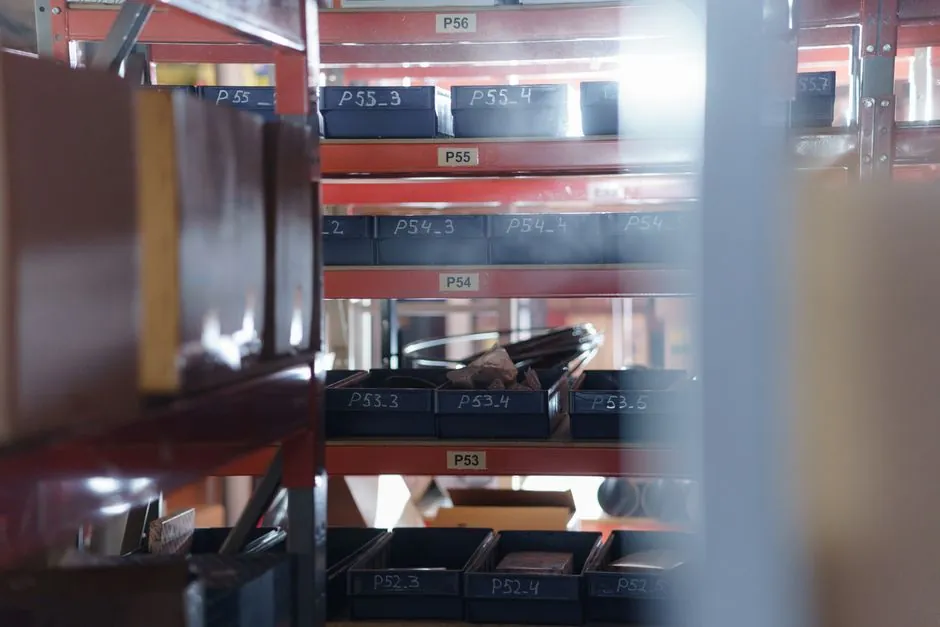
Maintenance access envelopes are equally non-negotiable: front and rear conveyor extension ≥1.5 m, side maintenance ≥0.8 m (1.2 m preferred on heavy lines), top inspection ≥1.2 m, and bilateral track clearance ≥800 mm so a technician can work without crossing the live conveyor [S2][S5]. For a deeper look at how storage cages interact with sorter aisles, see storage cage specs for automated warehouses.
Mechanical Alignment: Tracks, Trolleys, and Drive Trains
Track installation is where most sorting systems fail acceptance. For cross-belt sorters, straight-rail butt joint gap must stay ≤0.5 mm with height difference ≤0.3 mm, and turning-section radius (90° or 180° bends) deviation ≤1 mm, otherwise the wheelset rides the rail edge and the trolley emits the characteristic grinding noise that precedes a bearing failure [S5]. Adjacent trolley spacing error ≤0.5 mm is the synchronization threshold; exceeding it causes parcel collision and drop, the single most common mis-sort root cause in field service logs [S5].
Drive train calibration follows a strict sequence: chain tension sag ≤2% of span, synchronous-belt meshing clearance deviation ≤0.2 mm, and the cross-belt on each trolley must be vertical to the track within 1° with surface height difference ≤1 mm [S5]. Frame fixing uses expansion bolts at ≤1.5 m spacing with rubber shock pads to keep operational vibration below the 0.5 g (10–150 Hz) envelope that the weight-sorter environmental spec treats as the upper limit [S2][S5].
For linear-motion sub-assemblies feeding the sorter, the linear guide selection drives both the trolley smoothness and the long-term wear rate; a mis-specified linear guide will show as trolley jitter long before the sorter electronics flag any fault.
Electrical System, Grounding, and EMI Control
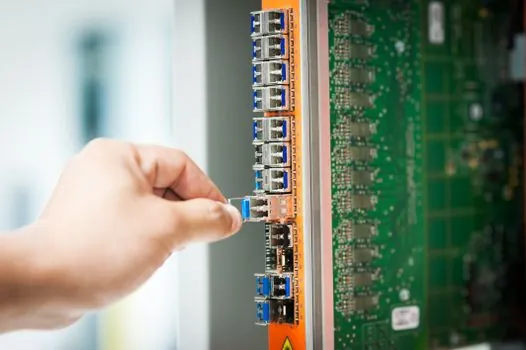
Control-circuit power on weight sorters must be 220 V ±2%, 50 Hz, and the entire grounding network is required to read ≤4 Ω on a ground-resistance tester after installation [S2]. High-voltage drive-motor cables and low-voltage sensor or encoder cables must be routed in separate conduit with at least 300 mm physical separation from moving parts, per the European logistics sorting line installation standard [S4].
Conveyor belt splicing and tension calibration is a frequent failure point: the BS EN ISO 5048:2013 referenced for European lines specifies that belt width, drum diameter, and tension be matched to the weight and volume profile of the sorted goods, and that the height difference between adjacent conveyor sections be controlled within a tight tolerance to prevent cargo jam [S4]. Weak-current bridge allocation must be reserved in advance to keep Profinet or EtherCAT traffic away from VFD-induced noise; this is the second most common field failure after mechanical misalignment [S1].
Industrial Ethernet choice matters: Profinet and EtherCAT are the two protocols cited for real-time WMS-to-sorter communication in German Industry 4.0 builds, and the choice of sorting system architecture often hinges on which PLC ecosystem the WMS already speaks [S1].
Safety Compliance, Noise, and the CE Route
European sorting lines must clear EN 12100 risk assessment before commissioning, with EN 619 covering the installation-debug-maintenance lifecycle and EN ISO 14120 specifying the guards that prevent contact with rotating and high-speed conveying parts [S4]. Practical deliverables are safety light curtains at every personnel crossing, e-stop buttons at ≤3 m spacing along the line, and protective fencing that physically prevents reach into the live track zone [S1][S4].
Noise ≤75 dB(A) under the 8-hour load test is the acceptance ceiling shared by both weight sorter and German parcel hub installations, and the load test itself must demonstrate motor temperature rise ≤60 K and power consumption within ±10% of the rated value [S1][S2]. A CE-marked sorter that fails any of these three numbers in the acceptance test should be rejected at the gate, not field-corrected.
For facilities integrating sortation with conveyor sorting line segments upstream and downstream, the same CE envelope applies; the cross-belt sorter cannot be CE-marked in isolation if the adjoining conveyor lacks EN ISO 14120 guards.
Static and Dynamic Calibration, Plus the 8-Hour Acceptance Run
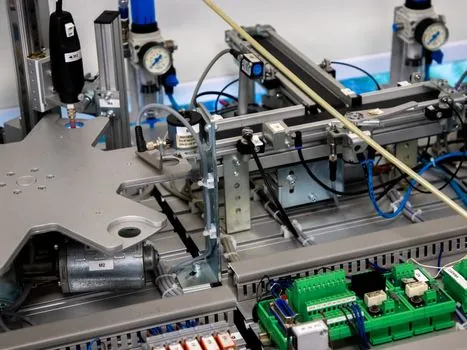
Static weighing calibration uses 500 g standard weights in a three-cycle zero followed by 20%, 50%, 100% of full-scale loads, with error tolerance ≤±0.1% of full scale [S2]. Before any of this runs, the pre-start checklist must confirm all bolts are torque-wrenched to spec, bearings are greased with NLGI 2# lithium, and air lines hold 0.6 MPa for 30 minutes with no pressure decay [S2].
Operating envelope limits are 0–40 °C (ideal 20 ± 5 °C), ≤85% RH non-condensing, and vibration ≤0.5 g across 10–150 Hz; excursion outside this envelope invalidates the calibration and is the most common reason a freshly installed sorter drifts out of spec within the first month [S2].
Color sorter acceptance takes a different shape because the failure mode is optical: a dusty sorting-chamber glass, a worn cleaning brush, or a clogged dust-removal port will drop precision from 99% to the low 90s within days, so weekly dust-port cleaning and quarterly brush replacement are part of the contractual acceptance conditions, not optional maintenance [S3]. Nozzle leaks traced to solenoid-valve spool fouling can be cleared on site with a high-frequency test on the upstream nozzle or a direct high-pressure gas blow on the solenoid, but only if the air filter has been changed on schedule [S3].
When to Repair vs When to Escalate
Trolley spacing error >0.5 mm, track joint gap >0.5 mm, or grounding resistance >4 Ω are not field-tunable: the line must be taken offline and re-aligned, because running under these conditions accelerates wear exponentially and will produce a mis-sort incident within one shift [S2][S5]. Chain sag >2% of span or synchronous-belt meshing deviation >0.2 mm likewise cannot be corrected under power [S5].
Color-sorter solenoid valves that fail the high-frequency test after air-filter service should be replaced rather than repeatedly gas-blown, because the 10-billion-cycle work-life rating only holds when the spool travel is clean [S3]. Sorter electronics that show Profinet or EtherCAT packet loss after the wiring separation rules have been verified indicate a failing PLC or encoder, not an installation defect, and should be escalated to the WCS vendor under warranty.
Trackable signals worth watching over the next quarter: EN ISO 5048:2013 revision activity on belt-tension test methods, expansion of CE-notified-body audits for cross-belt sorters above 20,000 pieces/hour, and any field-data on M16 chemical anchor behavior in cold-chain warehouses where floor temperatures regularly drop below 5 °C. For cold-side layout decisions that interact with sorter aisles, the cold-chain storage cage selection rules walk through the temperature and material constraints.