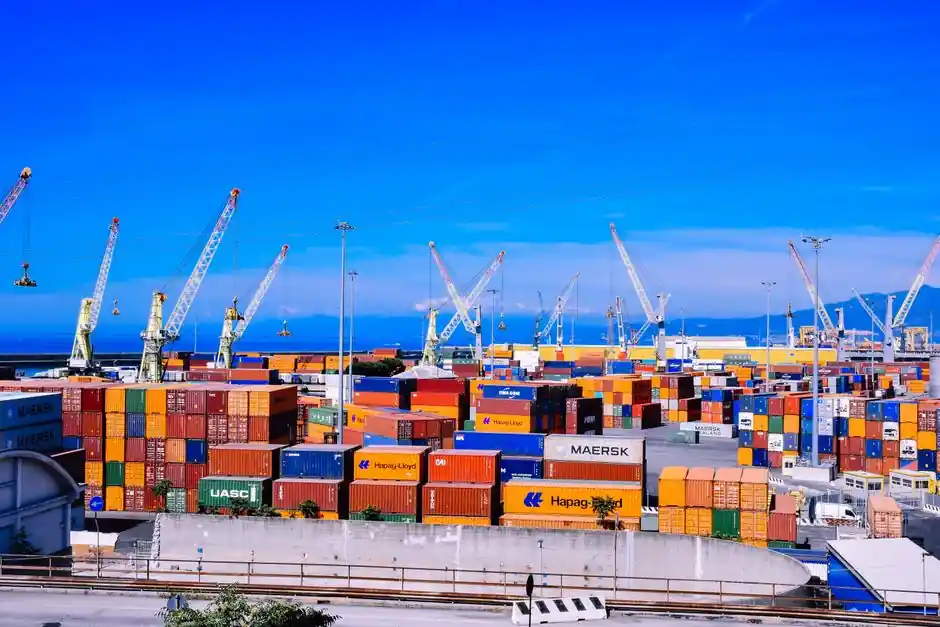
Selecting a mobile robot for a cold store or frozen warehouse is a spec-side decision, not a brand decision: the binding constraints are the operating temperature window of the controller and battery, the navigation sensor's tolerance to condensation and ice fog, and the floor-traction behaviour at sub-zero dew points [S2][S3].
For 2026 cold chain builds, AGV robot platforms in the unit-load and forklift classes are running at deck temperatures down to -25°C without operator warm-up breaks, and OEM controllers such as SEER Robotics' SRC-880 and SRC-3000FS are rated for -30 to 55°C ambient [S2][S3]. Dematic's HR-1300-94 SSRF AGV, deployed at Oxford Cold Storage, is representative of the stainless-structured, freezer-rated unit currently in service across North American cold storage sites [S1].
Operating Temperature and Battery Behaviour at Sub-Zero Duty
Freezer-rated AGV forklifts in published case material are qualified for continuous work at -25°C ambient, with no scheduled warm-up rest, and they run on lithium chemistries whose usable capacity drops but remains workable when packs are insulated and self-heated [S3]. SEER Robotics specifies its SRC-880 entry controller and SRC-3000FS safety controller for a -30 to 55°C ambient window, which is the band the integrator uses to decide whether a robot can be left inside the cold room overnight [S2].
The failure mode that actually stops a fleet is not the motor: it is the battery management system under-voltage cutoff, which trips early when cells are cold and limits both charge acceptance and discharge depth [S2]. Insulated battery boxes with heaters, plus opportunity charging at -10°C docks rather than full cycles at -25°C, are the two field-proven mitigations in cold chain AGV fleets [S2][S3].
Navigation Sensors in Ice Fog and at Temperature Transitions
Laser-guided AGVs in cold stores lose localisation accuracy when water vapour and ice fog form at the doorways between temperature zones, because the lidar returns scatter off suspended droplets and the safety scanner misreads condensation on its face as an obstacle [S2]. Magnetic-strip guidance avoids the optical problem entirely but locks the vehicle to a fixed path, which is why freezer aisles in older sites are still laid out around floor strips [S4].
Slippery floors at the cold-room threshold also skid the drive wheels, which translates into pose-estimation drift on both AGVs and AMRs; the working response is to slow the vehicle in the threshold zone and rely on absolute fiducials (magnetic markers, QR targets) for re-localisation rather than dead reckoning [S2]. For a deeper look at how fixed-path conveyors in cold rooms are sized to feed these vehicles, see this pneumatic conveying spec map for warehouse automation.
AGV vs AMR in a Cold Store: When Each Wins
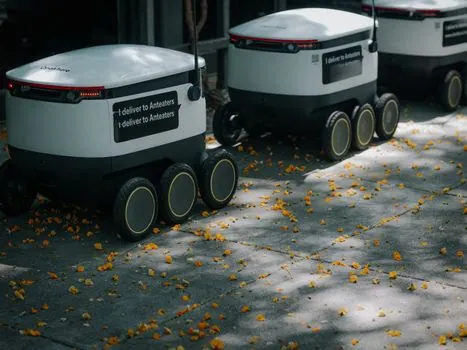
An AGV is the right call when the cold room layout is stable, the SKU mix is pallet-dominant, and you need stainless unit-load or forklift bodies rated for continuous sub-zero duty, with speeds of 50 to 150 m/min on guided paths [S4]. The fleet at Oxford Cold Storage runs on this profile, with five HR-1300-94 SSRF units moving palletised product on fixed loops inside a temperature-controlled facility [S1].
An AMR (Autonomous Mobile Robot) is the right call when aisles are reconfigured seasonally, the operation is bin- or tote-level picking rather than full pallets, and the WCS can re-route dynamically; AMRs need no floor strip, no magnetic tape, and no QR grid, which is why Fraunhofer IML treats them as the default for new greenfield distribution centres [S5][S6]. The trade-off is payload and cold rating: most AMRs in 2025/2026 product lines are not freezer-rated below -20°C, so for true -25°C freezer work an AGV with a heated battery cabinet is still the safer spec [S3][S6].
Selection Criteria Comparison: AGV, AMR, and Manual Forklift in Cold Stores
The decision sits on four axes: operating temperature floor, payload class, path flexibility, and integration cost. On the temperature axis, freezer-rated AGV forklifts and stainless unit-load AGVs reach -25°C continuous, while most AMRs are limited to chilled-warehouse duty above -20°C and manual forklifts depend on operator shifts and PPE limits [S2][S3][S4].
On the payload axis, an AGV forklift can match a manual counterbalance truck (typically 1.5 to 3.0 tonnes), an AMR tops out well below that in picking duty, and a manual forklift can lift more but is constrained by human endurance in a freezer [S3][S4]. On path flexibility, AGVs are locked to magnetic, laser, or QR-guided tracks; AMRs are map-based and free to re-route; manual forklifts are the most flexible but the most variable in throughput [S4][S5]. On integration cost, AGV deployment requires floor preparation (magnetic strips, reflectors, or QR grids) while AMRs deploy with no infrastructure change, which is the lever Fraunhofer IML and most 2026 system integrators use to justify AMR in greenfield sites [S4][S5][S6].
Integration with Pallet Conveyors and Cold-Room Handling
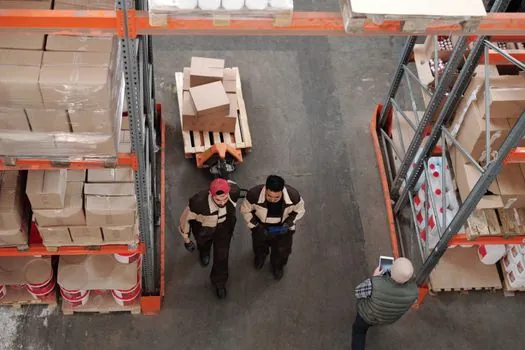
An AGV in a cold store almost never works alone: it hands off to roller conveyors, chain conveyors, or palletisers at the dock, and those transfer points must be sized for the same throughput the AGV is rated for at -25°C. Stainless or galvanised chain conveyors are common in wash-down cold rooms; for duty and selection criteria see this chain conveyor selection map for air-cargo and pallet lines. [S3]
Where AGVs feed case picking or end-of-line palletising, checkweighers and vibratory conveyors are typically the downstream bottleneck; their hygienic and cold-rated options are covered in this checkweigher types spec map and this vibrating conveyor selection guide for pharmaceutical-grade lines. For a warehouse context specifically, the logistics packaging reference page is the right anchor for SKU and pallet-format decisions that ripple into AGV deck sizing.
Failure Modes, Safety, and What a Spec Sheet Must Disclose
Three failure modes dominate cold chain AGV incident reports: (1) lidar false positives in ice fog that trigger nuisance stops, (2) battery BMS low-voltage cutoffs in deep-freeze zones that strand a unit mid-aisle, and (3) wheel slip at the temperature-zone threshold that breaks pose tracking and forces manual recovery [S2]. On the safety side, AGV forklifts in published case material report accident reductions of up to 90% relative to manual cold-store forklifts, because the speed cap, obstacle sensing, and fatigue-free operation remove the dominant human-error paths [S3].
A spec sheet for a cold chain AGV must therefore state, at minimum: minimum operating ambient temperature at continuous duty, battery chemistry and low-temperature cut-off, navigation guidance type, IP rating of the deck electronics, floor-traction coefficient at the rated minimum temperature, and the safety category of the onboard scanner (typically a Category 3 / PL d safety laser scanner per ISO 13849-1 for industrial AGV duty) [S2][S3][S4]. If any of these is missing, the unit is not freezer-rated regardless of marketing claims.
Trackable Signals for the Next Planning Cycle
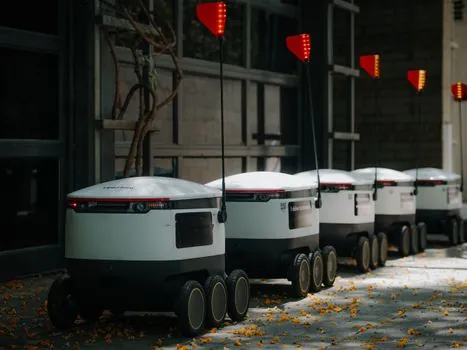
Three signals to monitor over the next two quarters: (a) cold-rated AMR product launches with published -25°C continuous-duty ratings, which would shift the AGV/AMR line for greenfield freezer builds; (b) updates to ISO 3691-4 and ANSI B56.5 safety requirements for driverless industrial trucks, which govern the scanner categories above; and (c) cold-room battery chemistry disclosures, particularly sodium-ion and LFP self-heating pack data, which will reset the operating-temperature floor for new fleets. [S4]
Detailed specification references: cold chamber machine.