
AGV robot selection for warehouse automation now hinges on three hard trade-offs: payload class (500–3,000 kg typical), navigation method (magnetic tape, QR, LiDAR-SLAM), and orchestration layer (WMS vs WES vs fleet manager) [S1][S4].
Order picking consumes roughly 55% of all warehouse operating expense, which is why the first automation dollar is almost always directed at horizontal transport rather than at picking arms [S2]. A 2026 selection cycle usually starts with a flow audit (SKU count, order lines, peak hourly picks), then maps that audit to either an AGV-dominant pallet line, an AMR-dominant picking loop, or a hybrid in which both classes share a WMS/WES orchestration layer [S1][S6].
Define the Workload Before Browsing Vendor Catalogs
AGV robot selection for warehouse automation fails most often when buyers skip the workload definition and jump straight to a vendor shortlist [S6]. Three numbers drive the rest of the spec: average load weight per move, peak moves per hour, and route variability across a shift [S1].
Full-pallet moves above 1,000 kg in a fixed A-to-B loop (receiving to storage, or storage to shipping dock) are the canonical AGV use case; the same loop in a 3PL or e-commerce site with frequent zone reconfiguration is the canonical AMR use case [S1][S4]. Order picking represents the dominant cost in most warehouses, so a fleet that does not move totes or cases to pick stations usually leaves the largest labour pool untouched [S2].
Navigation Stack: Fixed Guidance vs SLAM
Magnetic-tape, wire-guided, and laser-reflector AGVs are still the lowest-risk path for high-volume pallet moves because the navigation infrastructure is deterministic and audit-friendly, but path changes require floor work [S1][S4].
SLAM-based AMRs using LiDAR plus vision can be redeployed through software alone, which makes them the default for SKU counts above the tens of thousands and for greenfield sites without embedded guidance [S1]. Hybrid fleets that run both classes are increasingly the norm in 2026 retrofits, with a warehouse execution system handing off pallets at the dock face and totes at the pick station [S1][S6]. A useful rule of thumb: if more than ~30% of routes change weekly, SLAM economics beat magnetic tape within 18–24 months on most brownfield sites [S4].
Payload, Lift, and Footprint
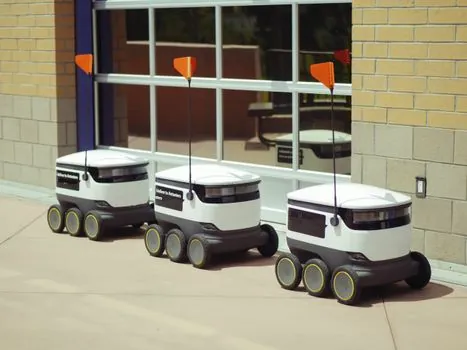
Pallet-class AGVs typically spec 1,000–3,000 kg payload with fork or deck handling and lift heights of 1.5–6 m for rack putaway; AMR tote and case platforms usually sit between 50–500 kg payload and run at floor level [S1][S8].
Unit-load AGV dimensions cluster around 1.2–1.8 m length, 0.8–1.0 m width, and 1.7–2.5 m lift height, while autonomous reach trucks extend the lift envelope to 6–9 m for high-bay racking [S1][S8]. For the AGV robot class, double-deep fork and counterbalanced variants exist for non-standard pallets, and the deck or fork choice is set by the racking type already in the building. For low-lift tote or case movement, the AMR robot platform is normally the better fit, particularly where pick-and-delivery workflows are in scope [S1].
Selection Criteria Comparison: AGV vs AMR vs Hybrid
Side-by-side on the four criteria a 2026 spec committee cares about: navigation flexibility is highest on AMR, fixed on AGV, and high on hybrid because route changes are managed in software for AMR legs and in floor work for AGV legs [S1][S4].
Payload per unit is highest on AGV (up to ~3,000 kg pallet class), mid on hybrid (both classes deployed), and lowest on AMR tote/case platforms [S1][S8]. Up-front capex per vehicle is lowest for magnetic-tape AGV (well under six figures USD for many base models), mid-range for SLAM AMR (often $40k–$150k depending on payload), and the collaborative robot-style safety stack is closer to AMR fleets because they share space with pedestrians [S4]. Time to redeploy is shortest on AMR (days, software only) and longest on AGV (weeks, floor modification), which is why mixed fleets in industrial robot lines and warehouses are now coordinated through a single WES rather than two separate fleet managers [S1].
Integration Layer: WMS, WES, and Fleet Manager

An AGV/AMR fleet is only as good as the orchestration layer above it, and the 2026 consensus is to drive everything from a warehouse execution system that sits between the WMS and the fleet manager [S1].
The WMS holds inventory state, the WES sequences tasks and resolves contention, and the fleet manager handles traffic, charging, and individual vehicle health [S1]. For brownfield sites already running a WMS, the integration decision is usually WES-or-fleet-manager, not both, and most modern AGV/AMR vendors expose a REST or OPC UA interface to one or the other [S6]. Charging strategy (opportunity vs scheduled) and battery chemistry (LiFePO4 dominates 2026 builds because of cycle life and thermal stability) belong in this same integration scope, not in the vehicle spec sheet [S7].
Use-Case Fit and Common Pitfalls
High-volume pallet lines, cold storage at –25 °C, and cleanroom pharmaceutical flows remain AGV-strong, while eCommerce, 3PL, and omnichannel fulfilment remain AMR-strong, with autonomous forklifts and reach trucks bridging the gap [S1][S4][S8].
The most common 2026 spec mistake is under-sizing the fleet manager or picking a navigation stack that cannot survive a layout change; the second is ignoring the picking-aisle width required by the largest planned vehicle plus 0.5 m pedestrian clearance on each side [S1][S6]. Cross-link to a related spec topic, Chain Conveyor Selection for Warehouse Automation: 2026 Spec Map, because most AGV-fed docks still need a takeaway conveyor in the same project envelope. A second natural pairing is Sorting System Installation: Concrete Specs, Failure Modes, and Acceptance Tests, since AGV-to-sortation handoffs are where most 2026 retrofit delays originate.
Limits, Failure Modes, and What AGVs Will Not Fix
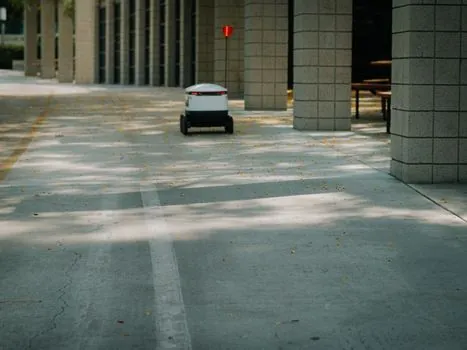
AGVs and AMRs do not replace picking labour on their own; they only deliver totes, cases, or pallets to a workstation where a person or a robot arm still has to act [S1][S2].
Failure modes cluster in three places: floor infrastructure (tape wear, reflector contamination, LiDAR occlusion by hanging loads), software (WMS-to-fleet latency, edge-case traffic deadlock at narrow aisles), and battery (opportunity-charge dwell time, cold-storage derating) [S1][S4][S7]. Long-term planning should budget for floor resurfacing every 3–5 years for tape-guided fleets and for LiDAR cleaning intervals in dusty or high-throughput sites, because the navigation stack is the system, not an accessory [S1][S6].
Next node for spec work: lock the WES-to-fleet interface contract before vehicle PO, and verify aisle width and floor flatness tolerance against the chosen vehicle's data sheet, not against marketing collateral. Trackable signal: whether the 2026 vendor proposals include LiFePO4 batteries as default and whether the WES exposes OPC UA or REST for both AGV and AMR classes on the same integration bus.