
Electronics-grade sortation has to thread two needles at once: protect static- and impact-sensitive parts, and keep full lot/serial traceability from receiving to shipping. The candidate technologies span parcel-scale divert-and-transfer roller sorters running 35-50 parcels per minute [S2], and dedicated electronic-component recovery lines tuned for the 3-5% annual e-waste growth that drives 45 million tons of global generation per year [S3].
For OEM SMT plants and contract assemblers, the relevant sortation step is usually <em>post-test</em> or <em>post-pack</em> rather than bare-component, so the sorter must handle ESD-safe trays, tubes, reels, and small cartons without singulation damage. For e-waste recyclers, the same physical sorter can sit at the end of a dismantling cell that detaches capacitors, resistors, and ICs from waste PCBs (printed circuit boards) [S3], where the feedstock is heterogeneous, ESD-irrelevant, and chemically dirty. Specifying one against the other is the most common error in this segment.
What "Electronics Handling" Actually Means for a Sorter
Three electronics-handling profiles dominate sorter purchasing, and each maps to a different physical machine. Profile A is finished-goods distribution of boxed or polybagged consumer electronics, where Honeywell-style sortation lines are specced for gentle handling, accurate tracking, and high-value routing to pharmacies, hospitals, or direct-to-consumer [S1]. Profile B is in-line component-level handling, where reels, trays, and tubes of resistors, capacitors, LEDs, and transistors must be counted, oriented, and sorted without lead bending or ESD events [S4]. Profile C is end-of-life WPCB recycling, where mixed electronic components detached from bare boards must be classified before downstream metal recovery [S3].
Three concrete numbers anchor the difference. Globally, around 45 million tons of e-waste are generated each year and growing at 3-5% [S3], so any sorter pitched at recyclers must be sized for abrasive, contaminated input, not clean consumer packaging. PCBs account for 3-6 wt% of total e-waste [S3], and a single waste PCB can contain as many as 60 different elements including Au, Cu, Ag, and rare earths at concentrations higher than natural ores [S3], which is why a recovery line needs elemental- or category-level sortation, not just "good vs reject" divert. The component-handling community on engineering forums still debates tray-and-tape manual rigs versus small pick-and-place feeders for low-volume kits [S4], confirming that below a few hundred parts per shift, mechanical sortation is rarely justified.
Selection Criteria: Five Numbers That Decide the Sorter
Five measurable criteria determine whether a given sorter fits, and each one has a hard threshold for electronics work. First, throughput. Divert-and-transfer roller belt sorters rate 35-50 parcels per minute [S2], which is the lower band suited to small e-commerce electronics SKUs; cross-belt and shoe sorters exceed this for larger carriers. Second, package geometry. Roller sorters handle small packages and polybags without the gaps that plague pop-up transfer modules [S2], a critical advantage for thin mailer-style electronics shipments. Third, gentleness. Gentle, accurate handling is the explicit design intent for sorters selling into pharma, hospital, and direct-to-consumer channels [S1]; the same spec sheet applies to sensitive finished electronics. Fourth, traceability. Automated sorters embed barcode scanning, dimensioning, and weighing at the induction point [S2], giving serial-level audit trails that manual sortation cannot match. Fifth, ESD safety, which is not a sorter attribute per se but a tray, tote, and ionizer specification layered onto the conveyor frame.
Engineers should reject any vendor proposal that does not state throughput in parcels per minute, minimum and maximum parcel dimensions, and ESD-rated contact surfaces. A modular divert-and-transfer design is easier to expand with additional sorting outlets than some competing architectures [S2], which matters for electronics lines that scale SKU counts seasonally.
Main Sorter Types Compared Against Electronics Criteria
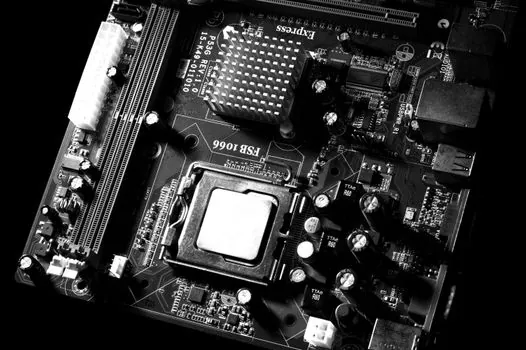
Four sorter families cover almost every electronics-handling bid, and they line up cleanly against the five criteria above. The divert-and-transfer roller belt sorter runs 35-50 parcels per minute, handles polybags and small cartons with no pop-up gaps, runs quietly, and has fewer catch points than competing designs, making it a default for finished-goods electronics e-commerce [S2]. The cross-belt sorter carries higher throughput and a wider parcel range but introduces more moving parts and pinch risk, so it is preferred for mid-size boxed electronics rather than loose components. The shoe sorter handles irregular, heavy, or soft parcels well, but its mechanical action is too aggressive for bare PCBs or component trays. The linear-roller or pop-up transfer sorter sits between belt and shoe in throughput and is the common choice for high-mix contract-manufacturing shipping where parcel size varies widely [S2].
For component-level work, the same comparison framework applies but the throughput metric shifts from parcels per minute to components per hour with an orientation-accuracy percentage. Tray-stack sorters and bowl-feed vibratory lines dominate this niche, not the parcel sorters, which is why many electronics engineers keep this step manual or semi-automated at low volumes [S4]. The sorting system types field reference walks through the full taxonomy in more depth for engineers who need the complete class map.
Who a Parcel Sorter Is For, and Who It Is Not For
An automated parcel sorter pays back in operations that already run a steady stream of labeled, dimensioned cartons and polybags through a conveyor. It is for e-commerce electronics shippers, 3PLs (third-party logistics providers) handling consumer devices, hospital and pharmacy fulfillment of medical electronics, and direct-to-consumer subscription-box lines where the sorter doubles as an audit trail [S1][S2]. It is not for a contract manufacturer sorting loose SMD (surface-mount device) resistors into bins, a recycler detaching capacitors from waste PCBs, or a small engineering lab kitting through-hole parts by hand; these flows need different machines or no automation at all [S3][S4].
The crossover case is the e-waste recycler running a hybrid line. A typical flow extracts PCBs from appliances, then detaches components on a heated or mechanical liberation stage, and only then routes mixed components to a vision-based classifier that separates capacitors, resistors, and ICs for downstream metal enrichment and tin recovery [S3]. Specifying a parcel sorter at the end of that line is a category error, because the sorter is tuned for clean, labeled, single-piece parcels, not the dirty, mixed, unlabeled stream a WPCB cell produces.
Use Cases and Reference Configurations
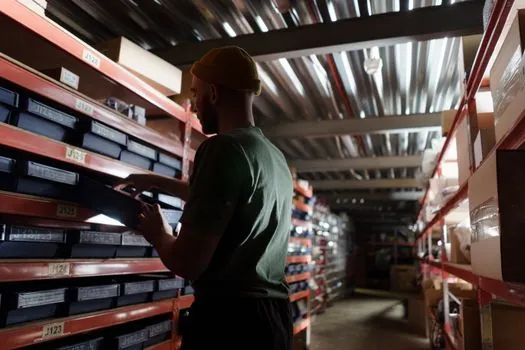
Three concrete configurations recur in 2026 electronics bids. First, the direct-to-consumer consumer-electronics DC (distribution center): a divert-and-transfer roller belt sorter with modular outlet expansion, induction barcode scanning, in-line dimensioning and weighing, and a WMS (warehouse management system) link for lot/serial capture [S1][S2]. Second, the hospital and pharmacy fulfillment of medical devices and accessories, where the same sortation architecture is specced explicitly for gentle handling, accurate tracking, and direct-to-patient routing [S1]. Third, the e-waste recycling cell: a dismantling stage that liberates electronic components from bare boards, followed by an automatic sorting stage that classifies mixed components for accurate downstream recovery [S3].
A 2022 peer-reviewed reference on WPCB component sorting explicitly notes that classification of mixed electronic components into specific categories remained a research gap at the time of publication, and that digital technologies hold enormous potential for improving performance but had not yet been industrialized at scale [S3]. For engineers sizing a 2026 cell, this means the recycling sorter market is still vendor-thin and reference-thin, and conservative capacity assumptions are warranted. For finished-goods parcel sortation, the reference base is mature and bid lists are deep. The storage cage selection for electronics handling reference covers the complementary ESD-safe container spec that pairs with either of these lines.
Limitations, Failure Modes, and What the Spec Sheet Will Not Tell You
Every sorter in this class has a defined failure mode, and engineers should walk the bid review with those failure modes in mind. Divert-and-transfer roller belt sorters lose efficiency when parcel size drops below the contact-belt footprint, when polybag friction varies widely, or when downstream chutes are undersized [S2]. Cross-belt and shoe sorters fail more often at the divert mechanism under ESD-uncontrolled conditions because electronic components can be killed by a single ungrounded event, well before any visible mechanical mishandling. WPCB sorters fail when the liberation step is incomplete: residual solder or conformal coating on detached components fouls vision systems and confuses classifier outputs [S3].
Three numbers from the research flag real constraints. Globally, 45 million tons of e-waste per year grow at 3-5% [S3], which outpaces typical sorter warranty cycles and means capacity planning has to extend beyond the standard 5-year refresh. PCBs at 3-6 wt% of e-waste with up to 60 different elements per board [S3] imply that any "single-stream" recycling sorter will under-recover value; multi-pass or category-specific sorting is the engineering reality. And the e-waste recycling sorter field is still flagged as having a research-to-industrialization gap [S3], so vendor performance claims should be verified against a pilot, not a brochure.
Standards, Sourcing, and the 2026 Procurement Check
Two reference documents anchor a defensible electronics sorter spec. The Fortune Business Insights figure cited by parcel-sorting vendors puts the global parcel sorting system market at $3 billion in 2022 with growth to $6.70 billion projected by 2029 [S2], a useful sanity check when a vendor's installed-base claim sounds inflated. The peer-reviewed WPCB sorting literature (Lu et al., 2022, 115 citations) is the canonical academic reference for component-level sorting and should be on the bid evaluation team's reading list when a recycler claims proven throughput [S3].
For engineers cross-checking sorter types against broader material-handling specs, the material handling entry is the natural starting point, while the conveyor sorting line page covers the upstream and downstream conveyor integration that any parcel sorter depends on. When a bid crosses into dense storage, the AS/RS system reference explains how a high-throughput sorter typically pairs with a mini-load or unit-load crane for buffer and replenishment. The two most useful adjacent articles for this topic are the pneumatic conveying system selection map for electronics handling and the storage cage ESD and mesh rules, both of which sit at the receiving and storage ends of the same electronics line.
Trackable signals to watch over the next two quarters: published 2026 throughput benchmarks for vision-based WPCB component sorters, and any new vendor entry into the modular divert-and-transfer segment with explicit ESD- and traceability-rated options. Both will move the bid calculus more than incremental mechanical revisions of existing roller-belt sorters.