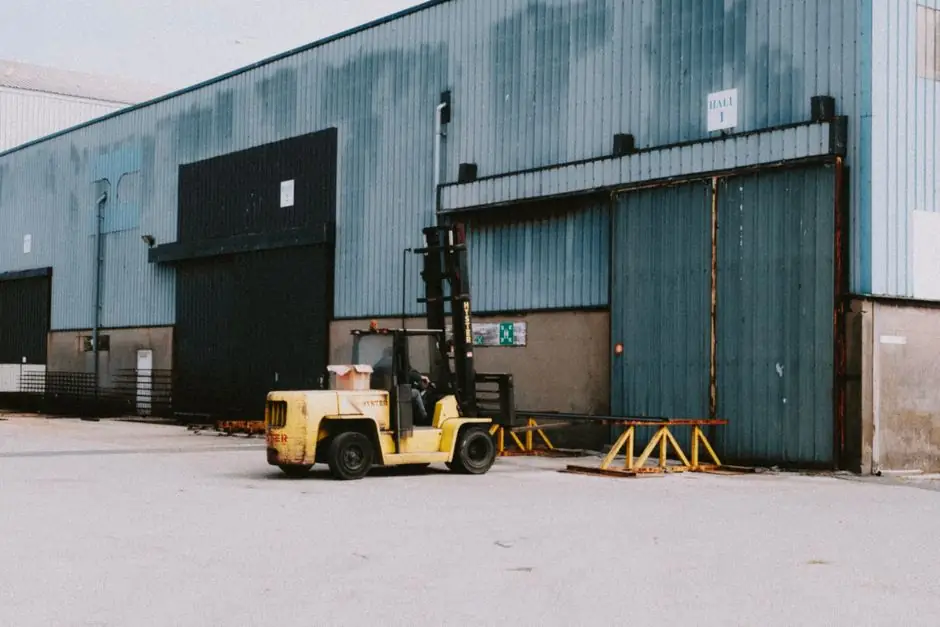
Welded steel storage cages rated to 2,000 kg and stackable four tiers high dominate automotive spare-parts handling, with galvanized traction cages and HDPE/PU-profile custom racks covering roughly 80% of OEM and Tier-1 use cases [S1][S4].
The decision pivots on three variables: part fragility (stamped body panels vs. small fasteners), return-loop density (single-trip export vs. closed-loop mill-to-assembly), and automation compatibility (forklift-only vs. AGV/JIT line-side) [S2][S4]. Selecting the wrong class typically inflates damage-related line-side rejection rates and inflates per-part freight cost on the empty return leg [S4].
Core Cage Types and Their Operating Limits
Three structural classes cover the majority of automotive parts logistics. Cold-rolled, welded steel storage cages with surface galvanizing are the baseline, with manufacturer-stated maximum load capacities reaching 2,000 kg per unit and a four-high vertical stacking envelope when fully loaded [S1]. Traction (towing) cages in this class add bottom-mounted casters, fork pockets, and a foldable side-wall layout that cuts recovery cost relative to wooden export crates, and they accept PVC or steel liners to retain small fasteners [S1]. Hollow-plate (coroplast-style) cages are specified where weight matters more than impact resistance, typically for tiered displays and lighter aftermarket-part flows [S1]. Custom automotive logistics racks, a fourth, engineered class, add precision-cut HDPE or PU protective profiles that isolate each component and eliminate metal-to-metal contact during stamping-plant-to-assembly-line transit [S4].
For broad warehouse, cross-dock, and finished-vehicle parts applications, the welded steel storage cage remains the reference design, with capacities that comfortably exceed the 1,000–1,500 kg typical for engine and transmission subassemblies on a single pallet footprint [S1].
Selection Criteria by Part Family and Handling Mode
Match the cage to the part, not the other way around. For stamped body panels, bumper beams, and Class-A surface components, HDPE/PU-lined custom racks are the contemporary spec because they prevent the surface scratches and structural deformation that drive line-side rejection at the OEM [S4]. For engine blocks, gearbox housings, and suspension modules, standard 1,000–2,000 kg welded steel cages with reinforced fork pockets and stacking corners are the cost-efficient default, and they integrate directly with conventional forklifts [S1][S4]. For small parts (fasteners, brackets, fluid fittings), steel cages fitted with internal PVC or sheet-metal liners stop leakage and keep part count auditable on a single SKU basis [S1]. For hazardous consumables such as brake fluids, oils, and battery electrolyte within the spare-parts warehouse, dedicated barrel-rack storage systems segregate the hazardous zone from general shelving per BITO's automotive spares layout guidance [S5].
Pairing the cage with the receiving line is just as important as the cage itself: a rack specified for a Just-In-Time line must include standard-compliant forklift pockets and a mesh-reinforced base for stable AGV pickup, since AGV fleets cannot compensate for a deflecting base under full load [S4].
Stackability, Foldability, and Return-Loop Economics
Two design features dominate closed-loop economics. First, four-high stacking on the loaded leg, achievable with reinforced stacking corners (stacking cups) on engineered racks and with the standard welded cage, multiplies trailer cube utilization on the outbound lane [S1][S4]. Second, collapsible side walls and flip-tier internal shelves on the return leg, a defining feature of the 2026-vintage custom rack, allow an emptied unit to compress to roughly a quarter of its loaded volume, cutting reverse-logistics cost per trip [S4].
This dual geometry is the reason standard wooden crates and single-use corrugated packaging are being displaced in zero-defect supply programs: their return-loop cost per part is structurally higher, and they cannot be staged by AGV without manual re-packing [S4].
Material and Surface-Treatment Trade-Offs
Hot-dip galvanizing is the standard external finish on welded steel traction cages, providing oxidation resistance and a service life consistent with multi-year closed-loop use [S1]. Powder coating is an alternative where color-coding of SKU families is needed for visual picking, but it is less tolerant of impact damage in the return loop. Cold-rolling plus post-weld hardening raises the yield strength of the wire/mesh frame, which is the basis for the 2,000 kg per-unit ceiling cited on manufacturer datasheets [S1]. Where parts are oil-coated or corrosive-by-nature (e.g. battery trays, certain brake components), HDPE/PU protective profiles on the custom rack class remove the metal-to-metal contact that drives galvanic and cosmetic defects [S4].
For non-metallic alternatives, paper-based composite systems such as Pallite's cell-board pallets and crates are 100% recyclable and offer a lower empty-leg weight, but they trade impact tolerance for sustainability, making them best suited to interior trim, electronic modules, and aftermarket e-commerce fulfillment rather than heavy drivetrain parts [S2].
Automation, Traceability, and Line-Side Integration
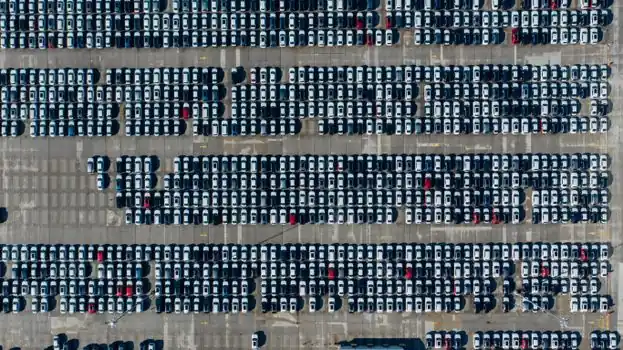
Modern automotive plants run Just-In-Time, so the cage must integrate with three systems simultaneously: AGV or conveyor handoff, RFID/barcode tracking, and the plant's Warehouse Management System for sequence-call delivery [S2][S4]. The mechanical interface is the standard-compliant forklift pocket plus a flat, mesh-reinforced base, which keeps the unit dimensionally stable during automated pickup at full load [S4]. The digital interface is typically a clip-on or embedded smart label on the rack corner casting; BITO's digital stack explicitly lists "real-time bin and container tracking" and "smart labels" as part of the same automotive-spares workflow that the physical cage supports [S5].
For service-dealer parts rooms rather than OEM lines, security-cage configurations with lockable mesh walls and high-density shelving address a different problem, controlling inventory shrinkage and protecting high-value SKUs, rather than optimizing line-side flow [S7]. A spec that mixes the two roles typically fails on both counts.
Comparison Table: Cage Class vs. Decision Criteria
Cross-referencing the four main cage types against the four criteria that drive automotive specifier choice: [S1]
1. Welded steel traction cage, 2,000 kg load, foldable, galvanized: best for engine/gearbox modules and general OEM internal flow; lowest unit cost; four-high stackable; AGV-compatible with standard fork pockets [S1].
2. HDPE/PU-profile custom rack, reinforced stacking corners, flip-tier shelves: best for stamped body panels and Class-A surface parts; highest zero-defect delivery rate; four-high stackable; engineered for AGV/JIT handoff [S4].
3. Hollow-plate (coroplast) storage cage: best for light aftermarket parts and display flows; lower load rating; limited stack height; not specified for drivetrain [S1].
4. Paper-based composite (Pallite-type) crate/pallet: best for interior trim, electronic modules, sustainability-driven e-commerce aftermarket; 100% recyclable; lowest empty-leg weight; limited impact tolerance [S2].
Common Failure Modes and Limits to Spec Against
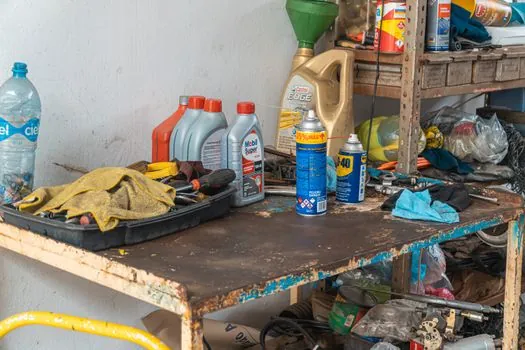
Three failure modes recur in the field. Overloading beyond 2,000 kg on a standard welded cage causes base-frame deflection, which then misaligns fork pockets and trips AGV lift sensors [S1][S4]. Specifying a non-collapsible rack on a long-haul return loop inflates freight cost per part, since the empty unit occupies the same cube as a loaded one [S4]. Specifying a painted carbon-steel cage for oil-wet or battery-adjacent parts invites corrosion and surface staining, which is the explicit reason HDPE/PU liners exist in the custom-rack class [S4].
A related limit is mixing incompatible SKUs in a single cage: small fasteners migrate through mesh apertures unless a PVC or sheet-metal liner is fitted, and mixed-part loads of differing weights shift the center of gravity enough to break the four-high stack under braking [S1].
Standards, Sourcing, and Specification Anchors
No single ISO or EN standard governs automotive storage cages end-to-end; instead, the specifier layers four reference families. Container and freight-handling compatibility is checked against ISO container corner-casting and forklift-pocket dimensions, which is why the welded cage is described as "adopting international standards" and stackable with containerized freight [S1]. For hazardous consumables in the parts warehouse, segregation follows the BITO automotive-spares layout guidance that explicitly calls for dedicated barrel-rack systems for oils, brake fluids, and similar substances [S5]. For racks used near automation, plant-side standards on AGV pickup geometry, base flatness, and pocket position apply; these are typically OEM-internal rather than public, but the design intent is captured in the custom-rack spec at [S4]. For sustainability, fully recyclable paper-based systems are documented at [S2] and are increasingly mandated in OEM green-procurement scorecards.
When evaluating a vendor, the verifiable audit points are: published per-unit load rating with test method, declared stack height at full load, surface-treatment specification (galvanizing thickness or powder-coat grade), and documented AGV/forklift interface dimensions. Engineering managers should request these four data points on every quote and reject any datasheet that does not list a numeric load in kilograms [S1][S4].
Track for 2026-09-17 as the next decision node: confirm whether your shortlisted rack is on the OEM's approved-vendor list for AGV pickup, since most Tier-1 plants refresh that list on a 6- to 12-month rolling window, and verify the return-loop collapse ratio in writing, because a 4:1 collapse is the threshold at which closed-loop steel cages become cost-competitive with one-way export packaging [S1][S4]. A secondary signal to monitor is the spread of HDPE/PU liners into mid-tier stamped-part flows, which would indicate that zero-defect line-side delivery is migrating from premium to volume vehicle programs [S4].
For component-level specifications, see logistics packaging, and storage handling.
This topic is covered further in PPR Pipe Selection Map for Cold Storage Warehouses.