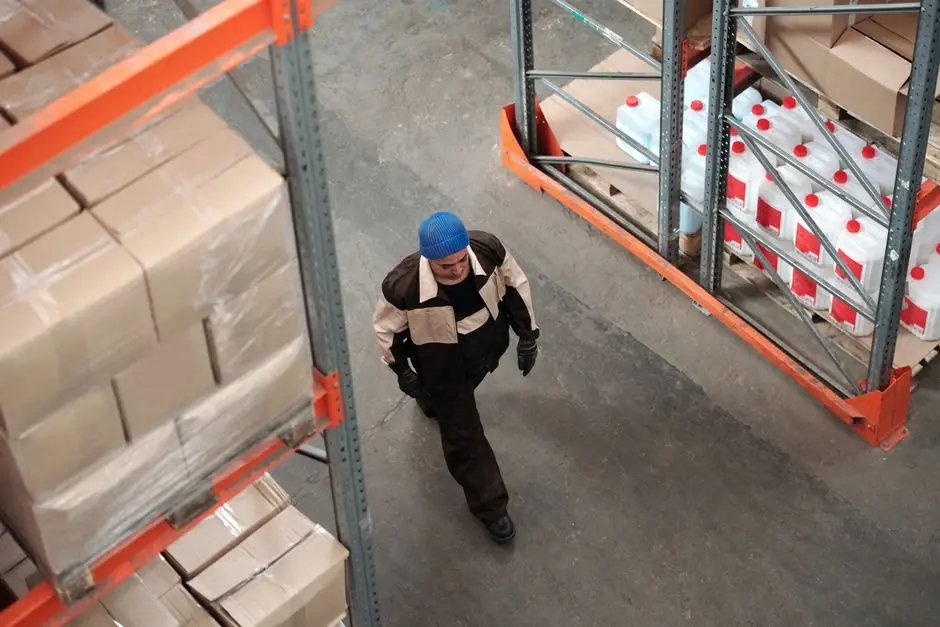
Automated storage systems, including mini load, unit load pallet stacker crane, and M-Shuttle architectures, impose stricter dimensional tolerances on adjacent storage cages than manual operations require, and the cage spec must follow the rack spec, not the other way around [S1].
Selection effectively starts upstream of the robots: the storage layer, including pallet rack, shuttle channels, and pick faces, decides which automation retrofits are viable in the next 5-10 years, and a storage cage integrated into that layer must clear the same plumb, level, and beam-elevation tolerances as the rack uprights it sits next to [S5].
Why automation changes the cage spec window
AGVs, AMRs, vision-guided forklifts, and pallet shuttles need consistent upright spacing, predictable beam elevation, and tight clearance control to navigate reliably, with rack plumb and level typically held to within 1/8 inch to support automation rather than just forklift operation [S5].
Small variances in floor flatness, bay-width consistency, and load-beam deflection that do not matter to a human driver create reliability issues for a robot, so a storage cage living inside the same aisle envelope has to be specified to the same tolerance band, not to legacy manual-rack looseness [S5].
Modular panel sizing that fits both rack and crane footprints
Stock wire-mesh panels are commonly available in widths from 1-10 feet and in two standard heights of 4 ft and 5 ft, which lets a cage be built to match the bay width of a selective rack, pushback, or pallet-flow lane without custom fabrication [S3].
Panel material options include polycarbonate, sheet metal, welded wire, woven wire, and expanded metal, while entry choices cover sliding, hinged, and double-hinged doors in steel or aluminum with locking as standard, allowing the cage skin to be matched to the duty cycle of the surrounding storage rack line [S3].
Mapping cages to the five AS/RS family archetypes
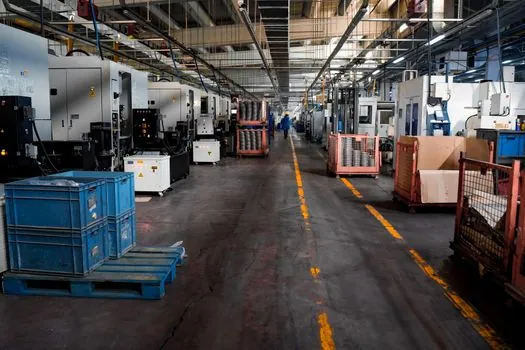
ULMA groups automated storage into five product families: Mini Load (bin/tote AS/RS for small parts), Unit Load pallet stacker crane (pallet AS/RS), M-Shuttle, Satellite system shuttles, and Pallet Shuttle, with each family setting a different cage width, height, and door-clearance envelope [S1].
Exotec describes the same architecture as a stack of ASRS, AMR, and robotic-arm subsystems inside a goods-to-person framework, where the storage media (bin, carton, or pallet) and not the robot brand defines the cage footprint [S2].
Selection criteria: who a storage cage is for, and who it is not for
A modular wire-mesh storage cage pays off in any operation with check-out accountability, shared tool fleets, or high-value consumables, because the wire panels give visual accountability without the full opacity of a sheet-metal locker and install in section-by-section builds using basic hand tools [S3].
It is the wrong pick for cleanroom or washdown zones where polycarbonate or stainless sealed cabinets are mandated, and for outdoor yards where hot-dip galvanised mesh with a documented coating thickness is the minimum to avoid early red-rust failure on the welds [S3].
Integration with the broader automation tier ladder
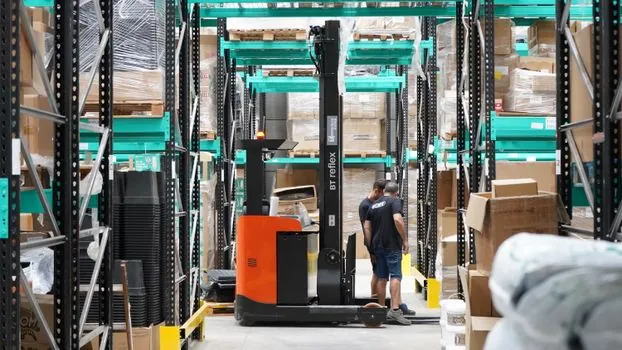
AutoStore positions AS/RS as a multi-decade investment and notes the infrastructure is rigid: traditional ASRS expansion is costly and complex, with numerous points of failure, which is exactly why adjacent cages must be modular enough to be relocated without cutting or rewelding [S4].
For operators climbing from manual to assisted to fully integrated builds, SJF Material Handling recommends matching each new automation segment to a storage system drawn from selective rack, pushback, pallet flow, carton flow, pallet shuttle, or VNA, with cages sized to that specific system rather than to a generic "warehouse cage" catalog [S5].
Failure modes and constraints specific to automated aisles
Cage panels that protrude beyond the rack footprint by even a small amount are a snagging risk for shuttle and AMR traffic, so the cage-to-rack interface has to be inside the same plumb/level 1/8-inch envelope, with bolt-down base plates rather than freestanding feet that can shift under repeated AGV passes [S5].
Doors are the second failure surface: hinged doors opening into an AMR aisle create a moving obstacle, so sliding or double-hinged doors with rigid stops and a documented swing radius are the safer default in any cell served by autonomous storage handling equipment [S3].
Sourcing, standards, and trackable signals to watch
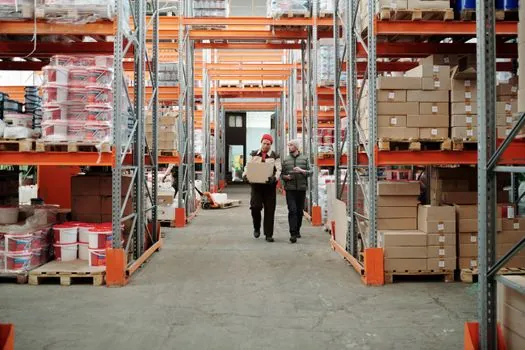
For procurement, the spec set to lock down is: panel width (1-10 ft in 1-ft increments), height (4 ft or 5 ft), material (welded wire, woven wire, expanded metal, sheet metal, or polycarbonate), door type and locking, plumb/level tolerance (1/8 in on rack and cage), and base-plate anchor pattern matched to the host rack [S3][S5].
Track these signals next: vendor releases of M-Shuttle and satellite-shuttle lines that publish updated bay-width drawings, and any revision to AS/RS infrastructure standards that tighten clearance envelopes for AMR-grade cells [S1][S4]. For related selection logic in adjacent categories, see Food and Beverage Storage Cage Selection: Spec Map and Industrial Generator Sizing: Spec Map and Selection Guide for 2026.