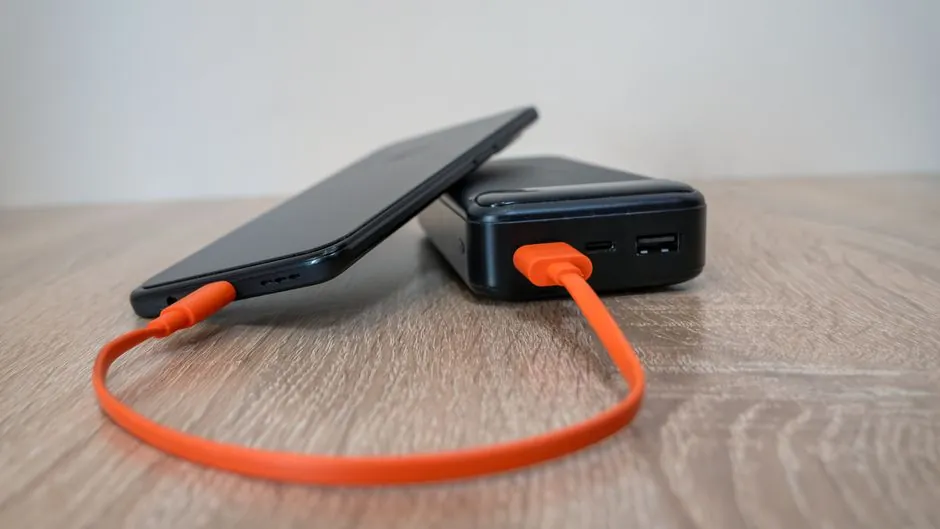
Sourcing battery packs from China in 2026 is dominated by three risks that have nothing to do with cell quality: missing UN38.3 test reports, mis-declared Class 9 dangerous goods, and trading-company markups of 18-32% over factory price [S2]. Buyers who lock the documentation chain first, then the cell chemistry, consistently clear customs and avoid the 58% of port detentions tied to absent UN38.3 paperwork [S2].
China's lithium battery export base hit 420 billion RMB in 2025, with energy-storage cells up 38.7% year over year, and overseas energy-storage orders rose another 45.3% in the first half of 2026, led by European household storage, then Australia and North America [S2]. For a B2B buyer, that depth means the cell, BMS electronics, finished pack, and even the pack-assembly equipment are usually inside the same province, which compresses lead time but also concentrates supply-chain risk in a single geography.
Chemistry and cell format: pick the working point before you pick the factory
Chemistry drives the rest of the spec. Cylindrical 18650 and 21700 cells remain the default for power-bank volumes, while prismatic LFP cells dominate stationary storage and the EV-adjacent pack market; LiFePO4 storage cabinets and lead-acid batteries cover most off-grid and budget-tier use cases [S2]. For 2026 wholesale pricing on the consumer side, a 5,000mAh basic power bank runs about $2.80-3.50 at MOQ 1,000, a 10,000mAh with display about $5.00-7.00 at MOQ 500, and a 20,000mAh 65W unit about $10.00-13.00 at MOQ 500, with a 15-25% premium for LG, Samsung SDI, or Panasonic cells over standard Chinese cells from EVE, Highstar, or BAK [S1].
Premium versus standard cell selection is the single biggest cost lever on a power-bank BOM, and the difference is documented cell-for-cell rather than cell-for-blank-label [S1]. For a buyer sourcing industrial valve cabinets alongside battery cabinets in a hybrid system build, the same principle applies: the cell and BMS brand drive warranty, not the enclosure sheet metal.
Regional clusters: where the factories actually sit
Three clusters handle most of the volume. Shenzhen is the innovation and fast-turnaround hub with the highest cost, Dongguan sits in the mid-scale balanced cost-quality band, and Guangzhou runs the highest-volume, lowest-cost lines, with most established factories running shared production for power banks, GaN chargers, and wireless chargers on the same SMT and injection-molding lines [S1]. For pack assembly rather than consumer power banks, Shenzhen and the wider Pearl River Delta host the bulk of verified pack assembly capacity, including the lines used for energy-storage cabinets shipped to Europe and Australia [S2].
Top-tier OEM factories on the consumer side share five traits: ISO 9001 plus BSCI or SEDEX certification, at least 50,000 units per month per product line, in-house SMT and injection molding, a dedicated English-speaking project manager, and a reference list of at least three Western brand clients that can be verified independently [S1]. A buyer who cannot get a production-floor video tour within 24 hours of request, or who sees a quote more than 30% below market average, is almost certainly looking at a trading company rather than a factory [S1].
Documentation chain: UN38.3, MSDS, sea-transport appraisal, and US-specific 49 CFR
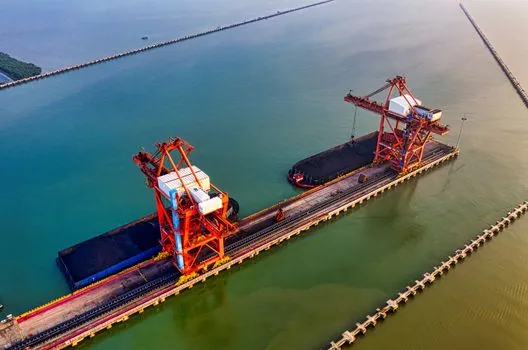
Lithium batteries are Class 9 dangerous goods, and a container without a valid UN38.3 report, MSDS, and sea-transport appraisal can be held or destroyed at port, with 58% of battery-related port detentions traced back to missing UN38.3 paperwork [S2]. For US-bound shipments, 49 CFR governs carrier acceptance, the CPSC handles product-safety documentation, and HTS classification drives duty rate, and the 2026 import guide walks through the layered paperwork required to clear US customs on lithium cells and packs [S6]. For marine and air freight, the IATA Dangerous Goods Regulations and the IMDG Code apply on top of UN38.3, and most forwarders will not book a lithium cell without all three documents plus a packing compliance statement.
Two fraud patterns repeat across the trade: capacity that is inflated on the label, and second-hand cells repackaged as new, and both tend to surface weeks after delivery, not at the quotation stage [S2]. Independent third-party inspection of cell weight, IR reading, and a 1C discharge capacity test on a random sample from the production lot is the cheapest defense. A related upstream issue is that trading-company channels add 18-32% on top of factory price, versus 3-6% for a local sourcing agent who handles vetting, inspection, and compliance paperwork [S2].
Buying channels: factory direct, sourcing agent, 1688, or trading company
Channel choice drives both price and compliance risk. Direct-from-factory gives the best unit price but pushes vetting, certification handling, and shipping onto the buyer; a local sourcing agent in the production area charges 3-6% and handles factory access, inspection, and compliance support; an online trading company adds 18-32% for convenience but no factory transparency; and 1688.com, the Alibaba-owned domestic B2B marketplace, can cut unit cost 10-50% versus Alibaba.com for buyers who can navigate the Chinese-language interface [S2][S5]. 1688 historically required a Chinese mobile number and Chinese payment method, but as of 2023 onward international buyers can register through an existing Alibaba.com account via the integrated Alibaba international login [S5].
1688 is the raw factory floor of Chinese manufacturing, with the same suppliers behind much of what later appears on Alibaba at a markup, but the platform is fully in Mandarin and MOQ terms vary by seller rather than by category [S5]. For a first-time importer still validating a product concept, Alibaba or AliExpress remains a lower-friction starting point with built-in trade assurance; for a volume buyer with a verified supplier shortlist, 1688 plus a domestic payment partner is where the price compression lives [S5]. The 2026 electronics sourcing report notes that supplier verification, compliance documentation, and quality control are the three workflows where skimping costs the most, regardless of channel [S3].
Matching the pack to the end use: solar storage, e-mobility, consumer
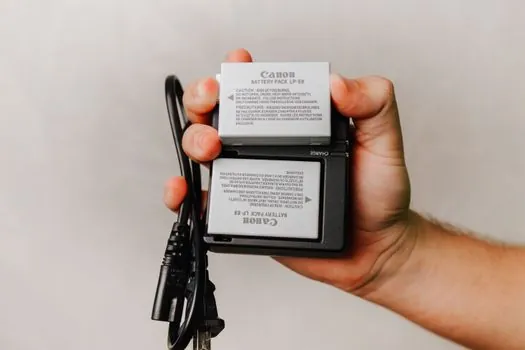
End use changes the spec conversation. A complete off-grid solar system needs panels, an off-grid inverter, batteries, mounting structures, cables, and protection devices matched together, with accurate load calculation, and the inverter must comply with the destination country's grid-connection standards, not the factory's default [S4]. A hybrid system that combines solar, battery storage, and grid or generator input is the fastest-growing 2026 configuration, and LiFePO4 is the default chemistry for residential and small-commercial storage because of cycle life and depth-of-discharge behaviour [S2][S4].
For power-bank and consumer-charging volumes, the 2026 buyer's benchmark list profiles Chinese lithium battery manufacturers by chemistry, certification, customization, and MOQ, and application fit is the primary filter, not headline capacity [S7]. Buyers in adjacent industrial categories, including flow meter and pressure transmitter sourcing for process plants, will recognize the same pattern: spec the working point, then the certification, then the supplier shortlist, in that order.
Quality control workflow that actually catches defects
Three inspection gates catch most of the failure modes seen in Chinese battery-pack sourcing. Gate one is document review before deposit: UN38.3 test report, MSDS, sea-transport appraisal, ISO 9001 certificate, and a cell brand declaration cross-checked against the BMS firmware. Gate two is a pre-shipment inspection on a random production-lot sample, with 1C capacity test, internal resistance reading, and weight check against the datasheet; for power-bank ODM runs, an AQL 2.5 sampling plan on cosmetic and functional defects is the industry default. Gate three is a container-loading photo set with pallet counts and lot numbers, which is the only way to dispute short-shipment after the goods leave the factory gate. [S2]
The 2026 sourcing report for electronics, including EV batteries, flags tariff exposure, supplier verification depth, and compliance documentation as the three cost drivers that most often blow up the landed-cost model [S3]. For grid-scale and commercial storage, a 2026 landscape snapshot of grid-scale battery storage shows where Chinese pack and cell makers actually sit in the global competitive set, and is a useful cross-reference for buyers sizing 1 MWh and above orders.
Track two signals over the next sourcing cycle: H2 2026 export licensing changes for energy-storage cabinets leaving Shenzhen and Ningbo, and any update to the 49 CFR acceptance criteria for cells above 100 Wh, both of which directly affect lead time and freight mode for US and EU buyers. Confirm UN38.3, MSDS, and the sea-transport appraisal on every PO, and treat any supplier who refuses a video production-floor tour as a trading company regardless of the website.