China produced more than 60% of the world's primary (non-rechargeable) batteries in 2025 and shipped over 420 billion RMB of lithium cells and packs in the same year, with energy-storage exports alone growing 38.7% year over year [S1][S2].
For an OEM, distributor, or ESS integrator, that concentration cuts both ways: the deepest cell, BMS, pack, and recycling base sits inside one country, but every shipment is bound by UN Class 9 rules, with 58% of port detentions linked to missing UN38.3 documentation [S1]. This guide maps chemistry choice, regional clusters, grade selection, certification, and shipping compliance against decision criteria a procurement engineer can actually defend on an internal sign-off sheet.
Chemistry And Cell Format Selection
Lithium chemistries split by application: LiFePO4 (LFP) for stationary energy storage and most e-mobility, NCM and NCA for energy-dense EV packs, and LiSOCl2, LiMnO2, or LiFeS2 for long-shelf-life industrial primary cells; lithium-polymer fits thin consumer form factors where a rigid cylindrical or prismatic can is unacceptable [S4]. For deep-cycle solar storage, LFP is the dominant Chinese offering because of thermal stability and cycle-life cost-per-kWh, and it is the cell chemistry most often paired with Grade A grading in the energy-storage supply chain [S5].
Cell form factors (cylindrical 18650, 21700, 4680, prismatic, and pouch) drive both pack design and supplier fit: a buyer building a 5 kWh residential storage unit should match prismatic LFP cell availability with a pack assembler that can weld, bolt, or laser-seal the chosen can format and source a matching BMS topology, as discussed in the load-cell adjacent spec discipline of consistent, traceable measurement upstream. Different cell formats also carry different safety-test documentation footprints under IEC 62133 and UN38.3, so format choice locks in retest costs and certificate scope [S4].
Regional Manufacturing Clusters
Four provinces host the dry-cell and lithium supply chain: Zhejiang (Ningbo-Yuyao) for alkaline, carbon-zinc, NiMH, and small-format Li-ion; Shandong (Linyi) for high-volume alkaline and button cells; Guangdong (Guangzhou-Shenzhen-Huizhou-Dongguan) for export-oriented alkaline, lithium primary, and Li-ion PACK assembly; and Fujian (Nanping) for the Nanfu consumer brand cluster [S2]. The same map is used by large lithium cell makers: CATL (Fujian), BYD (Guangdong/Shenzhen), EVE Energy (Huizhou, Guangdong), Gotion (Anhui), CALB (Jiangsu/Guangdong), Sunwoda (Guangdong), and REPT BATTERO operate inside or adjacent to these clusters, giving buyers short logistics hops from cell fab to pack integrator [S1][S4].
For sodium-ion pilot lines, the equipment and cell-development supplier base is also concentrated in the same coastal belt, with pilot-line tool builders offering co-located process support for buyers trialling Na-ion chemistries alongside Li-ion lines [S6]. Choosing a cluster usually beats choosing a brand: proximity to the cell fab shortens sample lead time, lowers inbound-logistics cost, and lets a buyer's QC team visit multiple vendors inside one trip.
Grade A, B, And C Cells: What The Tiers Actually Mean
Grade A cells pass every published spec on capacity, internal resistance, dimensional tolerance, and thermal performance, and are produced to direct order with batch-level traceability; they are the only tier most pack assemblers will accept for residential and commercial energy storage [S5]. Grade B cells are typically aged inventory (commonly 3-6 months of unused stock) or units with minor deviation, and they are functional but show capacity variation; they fit cost-sensitive, low-demand applications where consistency is not safety-critical [S5]. Grade C cells deliver roughly 50-70% of Grade A performance, show elevated safety risk, and are widely flagged as unfit for pack assembly [S5].
Verification is the only defence: request batch-level capacity test data, internal-resistance (IR) distribution histograms, and a dated cell-manufacturing record, then spot-check with a third-party capacity tester on receipt, because warehouse dwell time alone can drop a cell one grade in 3-6 months and into Grade C territory beyond 8 months [S5]. The two most common trade fraud patterns in 2025-2026 were inflated nameplate capacity and second-hand cells repackaged as new, both of which the label cannot expose without IR and capacity test data [S1].
Certifications, Documentation, And Shipping Compliance
Batteries ship as UN Class 9 dangerous goods, so a single missing document can hold or destroy a container at the destination port; the three mandatory documents are a UN38.3 test report, a current MSDS, and a sea-transport appraisal (typically an IMO dangerous-goods declaration or equivalent for air freight) [S1]. For end-market access, expect to add IEC 62133 (portable cells), UL 1642 or UL 1973 (stationary storage), UN 38.3 transport, CE-EMC, RoHS, REACH, and country-specific marks such as the KC mark for South Korea, BIS for India, and PSE for Japan; the model's exact certificate number must cover the SKU being shipped, not just the parent factory [S2][S4].
Document validation is procedural, not visual: cross-check the UN38.3 report against the issuing lab (CNAS or A2LA-accredited bodies are common in China), the test standard edition cited, and the cell model number on the report, and require the MSDS dated within 12 months of the shipment date, because most freight forwarders will reject an expired sheet [S1][S2]. Air-freight cells are further restricted by Section II of IATA DGR for small lithium battery shipments, which mandates SoC limits, packaging, and label rules separate from sea freight [S1].
Buying Channels And Price Benchmarks

Channel markup over factory price is the largest single hidden cost in battery sourcing, and the channel mix changes the certificate risk profile: direct-from-factory is 0% markup but pushes vetting, certificate, and shipping work to the buyer; a local sourcing agent adds 3-6% for factory access, inspection, and compliance support; an online trading company adds 18-32% for convenience but no factory transparency; and an overseas distributor can stack 30-50% on top with a stock-turn advantage that matters for urgent orders [S1].
For a sourcing decision matrix, score each candidate on four criteria: verifiable UN38.3 + MSDS + sea-transport appraisal, Grade A cell traceability (batch IR and capacity data), in-house PCM/BMS design capability, and in-region pack-assembly proximity; a candidate with all four at a slightly higher unit price is almost always cheaper total cost of ownership than the lowest quote with weak documentation, as a single detained container will exceed the savings of dozens of shipments. For dry-cell alkaline reference, an LR6 alkaline cell from a tier-2 Chinese factory typically ranges 0.12-0.22 USD wholesale depending on chemistry purity and OEM labelling; LiFePO4 prismatic cells for ESS at the 280-314 Ah format in 2025-2026 sat in the 35-55 USD per kWh cell-level band for direct-factory orders above 1 MWh [S1][S2].
Supplier Verification And Common Fraud Patterns
Verification is a workflow, not a single check: confirm the business license on the State Administration for Market Regulation public portal, validate ISO 9001 and IEC 60086 certificates against the issuing body's database, request a recent factory video with a dated newspaper, and run a third-party inspection (SGS, Bureau Veritas, or TUV) on the first production batch with a tested capacity, IR, and visual-defect AQL plan [S1][S2].
For new chemistries such as sodium-ion, the supplier base is still pre-consolidation, so require pilot-line evidence, third-party cycle-life data at the buyer's target DoD, and a documented process for ramping to gigawatt-hour volumes before issuing a PO, as the pressure-transmitter selection discipline shows that early-stage process maturity matters more than headline accuracy. Also confirm the supplier can issue a RoHS, REACH, and any conflict-mineral declaration (e.g. 3TG, cobalt) required by the destination OEM.
Logistics, Storage, And First-Article Inspection
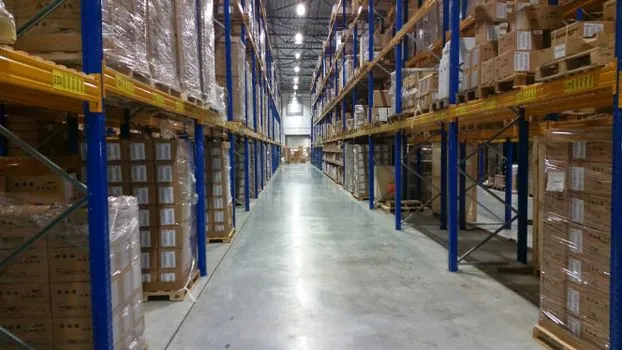
Post-shipment, the buyer's job is to protect what they paid for: stage incoming cells in a climate-controlled store (15-25 deg C, below 50% SoC for long-hold LFP) and rotate stock FIFO, because every additional month on the shelf accelerates Grade A to Grade B drift and pushes the lot closer to Grade C territory beyond 8 months [S5]. For first-article inspection, draw 30-50 cells per shipment lot, measure capacity at 0.2C and 1C discharge, IR at 1 kHz AC, and dimensional tolerance, then compare against the supplier's published data sheet with a +/- 3% capacity and +/- 5% IR acceptance band as a working spec.
The 2026 trend line is a continued shift toward LFP and sodium-ion for stationary storage, with overseas energy-storage orders up 45.3% in H1 2026 and European household storage the fastest-growing segment, followed by Australia and North America [S1]. Watch the IEC 62133-2 and UL 1973 revision pipelines and the EU Battery Regulation (2023/1542) digital battery passport rollout, both of which are reshaping the certificate set a buyer must request on new PO schedules [S1].
Trackable signals for the next sourcing cycle: (1) whether your chosen factory has registered a 2026-vintage UN38.3 report for the exact cell model, and (2) whether the supplier can deliver batch-level cycle-life data at the buyer's target DoD on a sodium-ion pilot format, both of which separate a 2027-ready vendor from a 2024 catalogue reseller. For facilities and storage design, the flow-meter selection logic of matching the meter to the chemistry in the pipe applies in spirit: match the cell grade, certificate, and cluster to the end application before signing the PO.
See also our earlier report, Automotive Parts Order Picker Spec Map: Heights, Power, and Picking Logic.